Und dann auf "Zum Home-Bildschirm [+]".

Stöbern
genialokal zum Startbildschirm hinzufügen
Installieren Sie die genialokal App auf Ihrem Startbildschirm für einen schnellen Zugriff und eine komfortable Nutzung.
Installieren Sie die genialokal App auf Ihrem Startbildschirm für einen schnellen Zugriff und eine komfortable Nutzung.
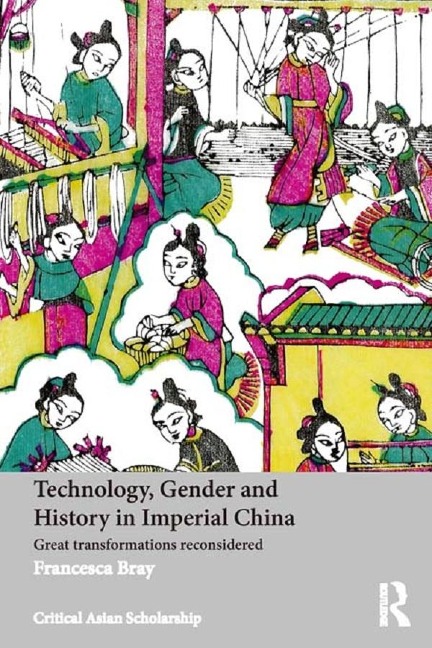
What can the history of technology contribute to our understanding of late imperial China? Most stories about technology in pre-modern China follow a well-worn plot: in about 1400 after an early ferment of creativity that made it the most technologically sophisticated civilisation in the world, China entered an era of technical lethargy and decline. But how are we to reconcile this tale, which portrays China in the Ming and Qing dynasties as a dying giant that had outgrown its own strength, with the wealth of counterevidence affirming that the country remained rich, vigorous and powerful at least until the end of the eighteenth century? Does this seeming contradiction mean that the stagnation story is simply wrong, or perhaps that technology was irrelevant to how imperial society worked? Or does it imply that historians of technology should ask better questions about what technology was, what it did and what it meant in pre-modern societies like late imperial China? In this book, Francesca Bray explores subjects such as technology and ethics, technology and gendered subjectivities (both female and male), and technology and statecraft to illuminate how material settings and practices shaped topographies of everyday experience and ideologies of government, techniques of the self and technologies of the subject. Examining technologies ranging from ploughing and weaving to drawing pictures, building a house, prescribing medicine or composing a text, this book offers a rich insight into the interplay between the micro- and macro-politics of everyday life and the workings of governmentality in late imperial China, showing that gender principles were woven into the very fabric of empire, from cosmology and ideologies of rule to the material foundations of the state and the everyday practices of the domestic sphere. This authoritative text will be welcomed by students and scholars of Chinese history, as well as those working on global history and the histories of gender, technology and agriculture. Furthermore, it will be of great use to those interested in social and cultural anthropology and material culture.
Francesca Bray is Professor of Social Anthropology at the University of Edinburgh, UK.
Introduction: the power of technology Part I: Material foundations of the moral order 1. Machines for living: domestic architecture and the engineering of the social order in late imperial China 2. Instructive and nourishing landscapes: natural resources, people and the state in late imperial China Part II: Gynotechnics: crafting womanly virtues 3. Women's work and women's place: textiles and gender 4. Structures of feeling: decorum, desire and a place of one's own 5. Tales of fertility: reproductive narratives in late imperial medical cases Part III: Androtechnics: the writing-brush, the plough and the nature of technical knowledge 6. Science, technique, technology: passages between matter and knowledge in imperial Chinese agriculture 7. A gentlemanly occupation: the domestication of farming knowledge 8. Agricultural illustrations: blueprint or icon?
Dieses eBook wird im PDF-Format geliefert und ist mit einem Adobe Kopierschutz (DRM) versehen. Sie können dieses eBook mit allen Geräten lesen, die das PDF-Format und den Adobe Kopierschutz (DRM) unterstützen.
Zum Beispiel mit den folgenden Geräten:
• tolino Reader
Laden Sie das eBook direkt über den Reader-Shop auf dem tolino herunter oder übertragen Sie das eBook auf Ihren tolino mit einer kostenlosen Software wie beispielsweise Adobe Digital Editions.
• Sony Reader & andere eBook Reader
Laden Sie das eBook direkt über den Reader-Shop herunter oder übertragen Sie das eBook mit der kostenlosen Software Sony READER FOR PC/Mac oder Adobe Digital Editions auf ein Standard-Lesegeräte mit epub- und Adobe DRM-Unterstützung.
• Tablets & Smartphones
Möchten Sie dieses eBook auf Ihrem Smartphone oder Tablet lesen, finden Sie hier unsere kostenlose Lese-App für iPhone/iPad und Android Smartphone/Tablets.
• PC & Mac
Lesen Sie das eBook direkt nach dem Herunterladen mit einer kostenlosen Lesesoftware, beispielsweise Adobe Digital Editions, Sony READER FOR PC/Mac oder direkt über Ihre eBook-Bibliothek in Ihrem Konto unter „Meine eBooks“ - „online lesen“.
Schalten Sie das eBook mit Ihrer persönlichen Adobe ID auf bis zu sechs Geräten gleichzeitig frei.
Bitte beachten Sie, dass die Kindle-Geräte das Format nicht unterstützen und dieses eBook somit nicht auf Kindle-Geräten lesbar ist.