Und dann auf "Zum Home-Bildschirm [+]".

Stöbern
genialokal zum Startbildschirm hinzufügen
Installieren Sie die genialokal App auf Ihrem Startbildschirm für einen schnellen Zugriff und eine komfortable Nutzung.
Installieren Sie die genialokal App auf Ihrem Startbildschirm für einen schnellen Zugriff und eine komfortable Nutzung.
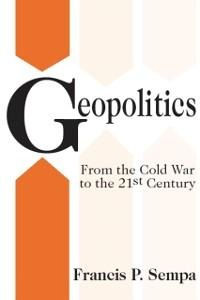
Writers, observers, and practitioners of international politics frequently invoke the term "geopolitics" to describe, explain, or analyze specific foreign policy issues and problems. Such generalized usage ignores the fact that geopolitics as a method of understanding international relations has a history that includes a common vocabulary, well-established if sometimes conflicting concepts, an extensive body of thought, and a recognized group of theorists and scholars. In Geopolitics, Francis P. Sempa presents a history of geopolitical thought and applies its classical analyses to Cold War and post-Cold War international relations. While mindful of the impact of such concepts as "globalization" and the "information revolution" on our understanding of contemporary events, Sempa emphasizes traditional geopolitical theories in explaining the outcome of the Cold War. He shows that, the struggle between the Western allies and the Soviet empire was unique in its ideological component and nuclear standoff, the Cold War fits into a recurring geopolitical pattern. It can be seen as a consequence of competition between land powers and sea powers, and between a potential Eurasian hegemonic power and a coalition of states opposed to that would-be hegemony. The collapse of the Soviet empire ended the most recent threat to global stability. Acting as a successor to the British Empire, the United States organized, funded, and led a grand coalition that successfully countered the Soviet quest for domination. No power or alliance posed an immediate threat to the global balance of power. Indeed, the end of the Cold War generated hopes for a "new world order" and predictions that economics would replace geopolitics as the driving force in international politics. Russian instability, the nuclear dimension of the India-Pakistan conflict, and Chinese bids for dominance have turned the Asia-Pacific region into what Mahan called "debatable and debated ground." Russi
1: Geopolitical Perspectives; 1: Introduction; 2: Mackinder's World; 3: The Geopolitics Man; 4: The First Cold Warrior; 2: Geopolitics from the Cold War to the Twenty-First Century; 5: Geopolitics and American Strategy in the Cold War; 6: The Geopolitics of the Post-Cold War World; 7: Why Teach Geopolitics; 8: Geopolitics in the Twenty-First Century
Dieses eBook wird im PDF-Format geliefert und ist mit einem Adobe Kopierschutz (DRM) versehen. Sie können dieses eBook mit allen Geräten lesen, die das PDF-Format und den Adobe Kopierschutz (DRM) unterstützen.
Zum Beispiel mit den folgenden Geräten:
• tolino Reader
Laden Sie das eBook direkt über den Reader-Shop auf dem tolino herunter oder übertragen Sie das eBook auf Ihren tolino mit einer kostenlosen Software wie beispielsweise Adobe Digital Editions.
• Sony Reader & andere eBook Reader
Laden Sie das eBook direkt über den Reader-Shop herunter oder übertragen Sie das eBook mit der kostenlosen Software Sony READER FOR PC/Mac oder Adobe Digital Editions auf ein Standard-Lesegeräte mit epub- und Adobe DRM-Unterstützung.
• Tablets & Smartphones
Möchten Sie dieses eBook auf Ihrem Smartphone oder Tablet lesen, finden Sie hier unsere kostenlose Lese-App für iPhone/iPad und Android Smartphone/Tablets.
• PC & Mac
Lesen Sie das eBook direkt nach dem Herunterladen mit einer kostenlosen Lesesoftware, beispielsweise Adobe Digital Editions, Sony READER FOR PC/Mac oder direkt über Ihre eBook-Bibliothek in Ihrem Konto unter „Meine eBooks“ - „online lesen“.
Schalten Sie das eBook mit Ihrer persönlichen Adobe ID auf bis zu sechs Geräten gleichzeitig frei.
Bitte beachten Sie, dass die Kindle-Geräte das Format nicht unterstützen und dieses eBook somit nicht auf Kindle-Geräten lesbar ist.