Und dann auf "Zum Home-Bildschirm [+]".

Stöbern
genialokal zum Startbildschirm hinzufügen
Installieren Sie die genialokal App auf Ihrem Startbildschirm für einen schnellen Zugriff und eine komfortable Nutzung.
Installieren Sie die genialokal App auf Ihrem Startbildschirm für einen schnellen Zugriff und eine komfortable Nutzung.

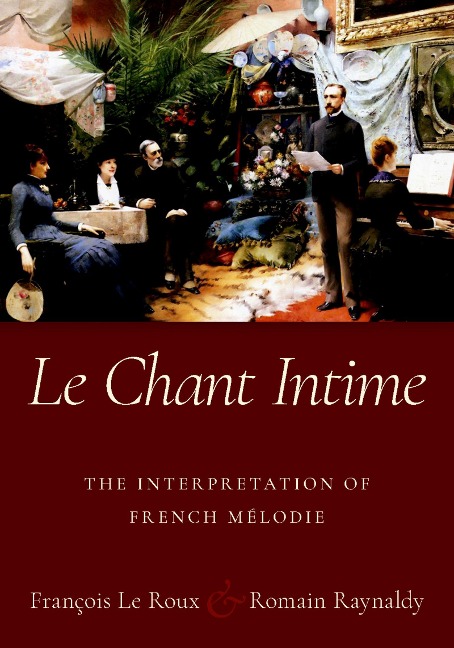
In this translation of the groundbreaking Le Chant Intime, internationally renowned baritone François Le Roux, in conversation with journalist Romain Raynaldy, presents a master class on French art song, with a thorough analysis of 60 selected songs that deviate from the traditionally narrow repertoire of the mélodie genre. Taking an approach that goes far beyond the typical limiting conventions, Le Roux and Raynaldy adhere to composer Francis Poulenc's principle that a song should always be "a love affair, not an arranged marriage." Neither theoretical nor purely academic, this guide instills in its readers a deep appreciation for the historical and artistic context of each piece by enriching each analysis with the full text of the lyrical poem and several musical examples, as well as fascinating details of historic premieres, concert halls, singers and poets. Paired with intensive and practical notes related to the nuances of melody and vocal delivery, each analysis provides an essential reference for performers and listeners alike. The translation is due to the expertise of musicologist and pianist Sylvia Kahan, Professor of Music at the Graduate Center and College of Staten Island, CUNY.
François Le Roux, Vocal studies faculty member, Ecole Normale Supérieure and Conservatoire Supérieur de Musique et de Danse de Paris, Romain Raynaldy, Correspondent, Agence France-Presse (AFP) François Le Roux is recognized as one of the best-known French opera singers of our time. Internationally known as 'Mister Mélodie', Le Roux instructs masterclasses on French operatic and recital repertoire all over the world. Romain Raynaldy is a journalist specializing in the arts, particularly music and cinema.
Foreword Introduction To listen To know To perform Georges Auric Le petit bois Hector Berlioz Au cimetière Charles Bordes Sur un vieil air Lili Boulanger Reflets Le retour Emmanuel Chabrier Pastorale des cochons roses Tes yeux bleux Cécile Chaminade Malgré nous Mignonne Ernest Chausson La chanson bien douce Le chevalier Malheur Claude Debussy NUITS BLANCHES I. Nuit sans fin II. Lorsqu'elle est entrée Apparition TROIS POÈMES DE STÉPHANE MALLARMÉ I. Soupir II. Placet futile III. Éventail Henri Duparc Sérénade Romance de Mignon Le galop Louis Durey TROIS POÈMES DE PÉTRONE I. La boule de neige II. La métempsycose III. La grenade Henri Dutilleux San Francisco Night Gabriel Fauré L'absent Puisque j'ai mis ma lèvre Tristesse d'Olympio Cygne sur l'eau Charles Gounod Ô ma belle rebelle Ma belle amie est morte (Lamento) Reynaldo Hahn En sourdine Au pays musulman Philippe Hersant Paroles peintes Augusta Holmès Rondel Arthur Honegger TROIS POÈMES DE PAUL FORT I. Le chasseur perdu en forêt II. Cloche du soir III. Chanson de fol Vincent d'Indy L'amour et le crâne. Marie Jaëll Larmes Thierry Lancino L'amour par terre Jule Massenet Le poète et le fantôme Olivier Messiaen TROIS MÉLODIES I. Pourquoi ? II. Le sourire III. La fiancée perdue Darius Milhaud L'innocence Francis Poulenc Poète et ténor Pierrot Maurice Ravel Les grands vents venus d'outre-mer Sainte DEUX ÉPIGRAMMES DE CLÉMENT MAROT I. D'Anne qui me jecta de la neige II. D'Anne jouant de l'espinette Albert Roussel La menace Camille Saint-Saëns Au cimetière Si vous n'avez rien à me dire Grasselette et maigrelette Déodat de Séverac Paysages tristes : soleils couchants Les hiboux Germaine Tailleferre Vrai Dieu, qui m'y confortera Pauline Viardot Lamento Ici-bas tous les lilas meurent Glossary Bibliography