Und dann auf "Zum Home-Bildschirm [+]".

Stöbern
genialokal zum Startbildschirm hinzufügen
Installieren Sie die genialokal App auf Ihrem Startbildschirm für einen schnellen Zugriff und eine komfortable Nutzung.
Installieren Sie die genialokal App auf Ihrem Startbildschirm für einen schnellen Zugriff und eine komfortable Nutzung.
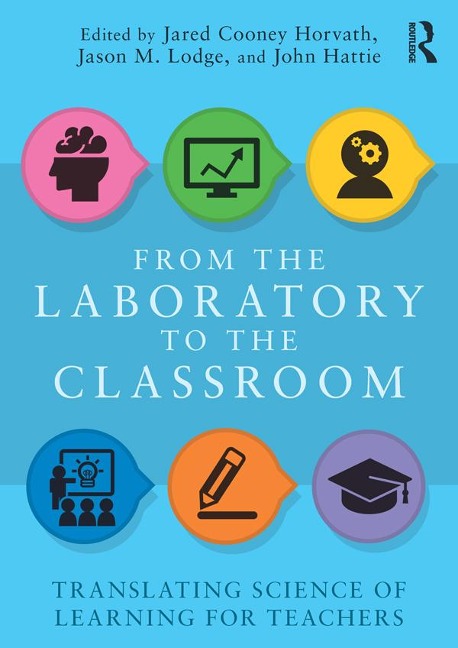
Over recent years the field of Science of Learning has increased dramatically. Unfortunately, despite claims that this work will greatly impact education, very little research makes it into teacher practice. Although the reasons for this are varied, a primary concern is the lack of a proper translation framework. From the Laboratory to the Classroom aims to consolidate information from many different research disciplines and correlate learning principles with known classroom practices in order to establish explanatory foundations for successful strategies that can be implemented into the classroom. It combines theoretical research with the diverse and dynamic classroom environment to deliver original, effective and specific teaching and learning strategies and address questions concerning what possible mechanisms are at play as people learn. Divided into five sections, chapters cover: - A Framework for Organizing and Translating Science of Learning Research - Motivation and Attention as Foundations for Student Learning - Memory and Metamemory Considerations in the Instruction of Human Beings - Science of Learning in Digital Learning Environments - Educational Approaches for Students Experiencing Learning Difficulties and Developmental Characteristics of Gifted Children - Brain, Behaviour and Classroom Practice - Forging Research/Practice Relationships via Laboratory Schools This fascinating text gathers an international team of expert scientists, teachers, and administrators to present a coherent framework for the vital translation of laboratory research for educational practice. Applying the Science of Learning framework to a number of different educational domains, it will be an essential guide for any student or researcher in education, educational psychology, neuropsychology, educational technology and the emergent field of neuroeducation.
Jared Cooney Horvath is a postdoctoral researcher at the Science of Learning Research Centre, University of Melbourne, a fellow at St. Vincent's Hospital, Melbourne, and co-founder of the Science of Learning Group-a team dedicated to bringing the latest in educationally relevant research to educators and students at all levels. Jason M. Lodge is a psychological scientist and Senior Lecturer in the Australian Research Council funded Science of Learning Research Centre and the Melbourne Centre for the Study of Higher Education, University of Melbourne. His research focuses on the application of the learning sciences to higher education and the ways in which technology is influencing learning. John Hattie is Professor and Director of the Melbourne Education Research Institute at the University of Melbourne, and Honorary Professor at the University of Auckland, New Zealand. He is the author of Visible Learning and Literacy by Corwin and Visible Learning, Visible Learning for Teachers, Visible Learning and the Science of How We Learn, Visible Learning into Action, and The International Guide to Student Achievement, all published by Routledge.
Introduction Section 1: The How and Why of Science of Learning 1. A Framework for Organizing and Translating Science of Learning Research 2. Teaching for Good Work, Teaching as Good Work Section 2: Domain General Issues and Classroom Strategies 3. Motivation and Attention as Foundations for Student Learning 4. Memory and Metamemory Considerations in the Instruction of Human Beings Revisited: implications for Optimizing Online Learning 5. The Benefits of Interleaved Practice for Learning 6. Improving Student Learning: Two Strategies to make it Stick 7. Science of Learning and Digital Learning Environments Section 3: Domain Specific Issues and Classroom Strategies 8. Aligning Neuroscience Findings with Socio-Cultural Perspectives on Learning in Science 9. Supporting Students' Learning with Multiple Visual Representations 10. Investigating Dyscalculia: a Science of Learning Perspective 11. Learning to Read: the Science of Reading in the Classroom Section 4: Special Student Groups Developmental Characteristics of Gifted Children: Educational Approaches 13. Educational Approaches for Students Experiencing Learning Difficulties Section 5: Looking Ahead - The Future of Educational Research 14. Neuroscience Research and Classroom Practice 15. Laboratory Schools: Bridging Theory, Research and Practice to Improve Education
Dieses eBook wird im PDF-Format geliefert und ist mit einem Adobe Kopierschutz (DRM) versehen. Sie können dieses eBook mit allen Geräten lesen, die das PDF-Format und den Adobe Kopierschutz (DRM) unterstützen.
Zum Beispiel mit den folgenden Geräten:
• tolino Reader
Laden Sie das eBook direkt über den Reader-Shop auf dem tolino herunter oder übertragen Sie das eBook auf Ihren tolino mit einer kostenlosen Software wie beispielsweise Adobe Digital Editions.
• Sony Reader & andere eBook Reader
Laden Sie das eBook direkt über den Reader-Shop herunter oder übertragen Sie das eBook mit der kostenlosen Software Sony READER FOR PC/Mac oder Adobe Digital Editions auf ein Standard-Lesegeräte mit epub- und Adobe DRM-Unterstützung.
• Tablets & Smartphones
Möchten Sie dieses eBook auf Ihrem Smartphone oder Tablet lesen, finden Sie hier unsere kostenlose Lese-App für iPhone/iPad und Android Smartphone/Tablets.
• PC & Mac
Lesen Sie das eBook direkt nach dem Herunterladen mit einer kostenlosen Lesesoftware, beispielsweise Adobe Digital Editions, Sony READER FOR PC/Mac oder direkt über Ihre eBook-Bibliothek in Ihrem Konto unter „Meine eBooks“ - „online lesen“.
Schalten Sie das eBook mit Ihrer persönlichen Adobe ID auf bis zu sechs Geräten gleichzeitig frei.
Bitte beachten Sie, dass die Kindle-Geräte das Format nicht unterstützen und dieses eBook somit nicht auf Kindle-Geräten lesbar ist.