Und dann auf "Zum Home-Bildschirm [+]".

Stöbern
genialokal zum Startbildschirm hinzufügen
Installieren Sie die genialokal App auf Ihrem Startbildschirm für einen schnellen Zugriff und eine komfortable Nutzung.
Installieren Sie die genialokal App auf Ihrem Startbildschirm für einen schnellen Zugriff und eine komfortable Nutzung.
Ihr gewünschter Artikel ist in 0 Buchhandlungen vorrätig - wählen Sie hier eine Buchhandlung in Ihrer Nähe aus:

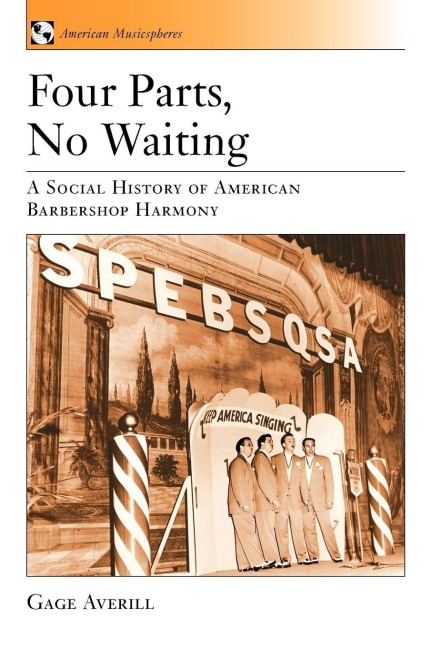
Four Parts, No Waiting investigates the role that vernacular, barbershop-style close harmony has played in American musical history, in American life, and in the American imagination. Starting with a discussion of the first craze for Austrian four-part close harmony in the 1830s, Averill traces the popularity of this musical form in minstrel shows, black recreational singing, vaudeville, early recordings, and in the barbershop revival of the 1930s. In hisexploration of barbershop, Averill uncovers a rich musical tradition-a hybrid of black and white cultural forms, practiced by amateurs, and part of a mythologized vision of small-town American life.
Gage Averill is Professor of Ethnomusicology at the University of Toronto and Vice-Principal Academic and Dean of the University of Toronto Mississauga. He serves as President of the Society of Ethnomusicology (2009-11).
Preface: "I Don't Know Why (I Love You Like I Do)"
Introduction: Past Perfect
1.: "A Little Close Harmony": A medley of nineteenth-century harmony
2.: The "golden era": Quartets, show business, and the music industry
3.: The lost chords: The early barbershop revival
4.: On Main Street, U. S. A.
5.: Romancing the Tone: Song, sound and significance in barbershop harmony
Conclusion Afterglow
Appendix: Glossary
Bibliography