Und dann auf "Zum Home-Bildschirm [+]".

Stöbern
genialokal zum Startbildschirm hinzufügen
Installieren Sie die genialokal App auf Ihrem Startbildschirm für einen schnellen Zugriff und eine komfortable Nutzung.
Installieren Sie die genialokal App auf Ihrem Startbildschirm für einen schnellen Zugriff und eine komfortable Nutzung.
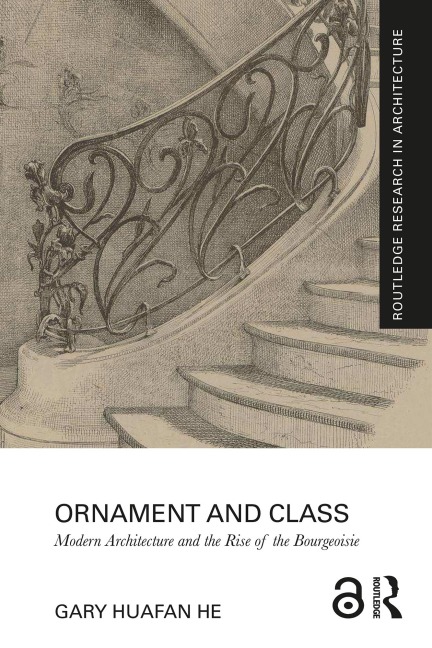
This groundbreaking study examines the intricate relationship between the rise of the nineteenth-century bourgeoisie and the emergence of modern architecture, exploring this connection through major intellectual and theoretical works while also analyzing their tangible manifestations in buildings and architectural projects. Contrary to received narratives that describe the birth of modern architecture as primarily an aesthetic movement, Ornament and Class argues that the social and political maturation of the European bourgeoisie as a distinct-yet-heterogeneous group influenced modern attitudes toward architecture at every level. Bringing architecture into conversation with recent histories of the bourgeoisie in the social sciences, the book considers how architecture was used as a tool to separate the modern bourgeoisie from the aristocratic and clerical forces above and the working classes below. It explores how architects, clients, planners, and administrators grappled with and dealt with ornament, architecture, and modernity from within the new realities of urban and global capitalism, and shows how these realities serve as pedagogical touchstones that remain with us today. Historians, architecture scholars, and students interested in modern architecture, aesthetics, and European history, especially those focusing on the interplay between modern architecture and social development, will find this book an invaluable resource. Chapter 1 of this book is freely available as a downloadable Open Access PDF at http://www.taylorfrancis.com under a Creative Commons [Attribution-Non Commercial-No Derivatives (CC BY-NC-ND)] 4.0 license.
Gary Huafan He is assistant professor and researcher at the School of Art and Archaeology, Department of Art History at Zhejiang University in Hangzhou, China. His primary research focuses on the intersection of architecture and theories of modernity, with particular interest in forms of naturality, culture, class, and social identity in nineteenth- and twentieth-century Europe and the United States.
1. Introduction: Ornament and Class 2. The Limits of Bourgeois Architecture 3. H-tel Guilbert and the Bourgeois Stylistic Regime 4. Work and Romantic Labor 5. Architecture for the Laboring Classes 6. The Polemic of Ornament 7. Architecture as Global Ornament 8. Architectural History as Bourgeois History
Dieses eBook wird im PDF-Format geliefert und ist mit einem Adobe Kopierschutz (DRM) versehen. Sie können dieses eBook mit allen Geräten lesen, die das PDF-Format und den Adobe Kopierschutz (DRM) unterstützen.
Zum Beispiel mit den folgenden Geräten:
• tolino Reader
Laden Sie das eBook direkt über den Reader-Shop auf dem tolino herunter oder übertragen Sie das eBook auf Ihren tolino mit einer kostenlosen Software wie beispielsweise Adobe Digital Editions.
• Sony Reader & andere eBook Reader
Laden Sie das eBook direkt über den Reader-Shop herunter oder übertragen Sie das eBook mit der kostenlosen Software Sony READER FOR PC/Mac oder Adobe Digital Editions auf ein Standard-Lesegeräte mit epub- und Adobe DRM-Unterstützung.
• Tablets & Smartphones
Möchten Sie dieses eBook auf Ihrem Smartphone oder Tablet lesen, finden Sie hier unsere kostenlose Lese-App für iPhone/iPad und Android Smartphone/Tablets.
• PC & Mac
Lesen Sie das eBook direkt nach dem Herunterladen mit einer kostenlosen Lesesoftware, beispielsweise Adobe Digital Editions, Sony READER FOR PC/Mac oder direkt über Ihre eBook-Bibliothek in Ihrem Konto unter „Meine eBooks“ - „online lesen“.
Schalten Sie das eBook mit Ihrer persönlichen Adobe ID auf bis zu sechs Geräten gleichzeitig frei.
Bitte beachten Sie, dass die Kindle-Geräte das Format nicht unterstützen und dieses eBook somit nicht auf Kindle-Geräten lesbar ist.