Und dann auf "Zum Home-Bildschirm [+]".

Stöbern
genialokal zum Startbildschirm hinzufügen
Installieren Sie die genialokal App auf Ihrem Startbildschirm für einen schnellen Zugriff und eine komfortable Nutzung.
Installieren Sie die genialokal App auf Ihrem Startbildschirm für einen schnellen Zugriff und eine komfortable Nutzung.
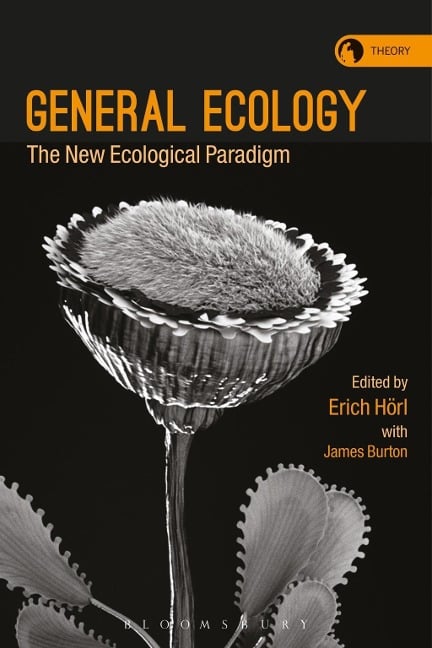
Ecology has become one of the most urgent and lively fields in both the humanities and sciences. In a dramatic widening of scope beyond its original concern with the coexistence of living organisms within a natural environment, it is now recognized that there are ecologies of mind, information, sensation, perception, power, participation, media, behavior, belonging, values, the social, the political... a thousand ecologies. This proliferation is not simply a metaphorical extension of the figurative potential of natural ecology: rather, it reflects the thoroughgoing imbrication of natural and technological elements in the constitution of the contemporary environments we inhabit, the rise of a cybernetic natural state, with its corresponding mode of power. Hence this ecology of ecologies initiates and demands that we go beyond the specificity of any particular ecology: a general thinking of ecology which may also constitute an ecological transformation of thought itself is required.
In this ambitious and radical new volume of writings, some of the most exciting contemporary thinkers in the field take on the task of revealing and theorizing the extent of the ecologization of existence as the effect of our contemporary sociotechnological condition: together, they bring out the complexity and urgency of the challenge of ecological thought-one we cannot avoid if we want to ask and indeed have a chance of affecting what forms of life, agency, modes of existence, human or otherwise, will participate-and how-in this planet's future.
Erich Hörl is a philosopher and cultural theorist. He is professor of Media Culture at the Institute of Culture and Aesthetics of Digital Media (ICAM) at Leuphana University of Lüneburg, Germany.
James Burton is a lecturer in Cultural Studies and Cultural History at Goldsmiths, University of London. He is the author of The Philosophy of Science Fiction (Bloomsbury, 2015).
Acknowledgments
Introduction to General Ecology: the Ecologization of Thinking (Erich Hörl, Professor of Media Culture, Leuphana University of Lüneburg, Germany)
1. Computational Logic and Ecological Rationality (Luciana Parisi, Reader in Cultural Theory, Goldsmith's, University of London, UK)
2. Elements for an Ecology of Separation: Beyond Ecological Constructivism (Frédéric Neyrat, a French philosopher and Assistant professor in Comparative Literature at University of Wisconsin-Madison, USA)
3. General Ecology, Economy, and Organology (Bernard Stiegler, a French philosopher. He is head of the Institut de recherche et d'innovation (IRI), which he founded in 2006 at the Centre Georges-Pompidou, France)
4. Critique of the Cosmology of the Moderns (Didier Debaise, Professor of Philosophy, ULB, Brussels, Belgium)
5. Deep Times and Media Mines: A Descent into Ecological Materiality of Technology (Jussi Parikka, media theorist, writer and Professor in Technological Culture & Aesthetics at Winchester School of Art, University of Southampton, UK)
6. Planetary Immunity: Biopolitics, Gaia Theory, the Holobiont, and the Systems Counterculture (Bruce Clarke, Paul Whitfield Horn Professor of Literature and Science, Texas Tech University, USA)
7. Ecologizing Biopolitics, or, What is the "Bio-" of Biopolitics and Bioart? (Cary Wolfe, Bruce and Elizabeth Dunlevie Professor of English and Director, 3CT: Center for Critical and Cultural Theory, Rice University, USA)
8. Ecologies of Communication, Contagion and Bataille (David Wills, Professor of French Studies, Brown University, USA)
8. Metafiction and General Ecology: Making Worlds with Worlds (James Burton, fellow of ICI, Berlin, Germany)
9. An Ecology of Differences: Communication, the Web, and the Question of Borders (Elena Esposito, Professor of Sociology at the University Modena/Reggio Emilia, Italy)
10. Specters of Ecology (Timothy Morton, Rita Shea Guffey Chair in English, Rice University, USA)
11. Devastation (Matthew Fuller, Professor of Cultural Studies and Director of the Centre for Cultural Studies, Goldsmiths, University of London, UK and Olga Goriunova, Senior Lecturer in Digital Culture, Royal Holloway, University of London, UK)
12. Virtual Ecology and the Question of Value (Brian Massumi, Professor in the Department of Communication Sciences at the University of Montréal, Canada)
List of Contributors
Bibliography
Index
Dieses eBook wird im PDF-Format geliefert und ist mit einem Adobe Kopierschutz (DRM) versehen. Sie können dieses eBook mit allen Geräten lesen, die das PDF-Format und den Adobe Kopierschutz (DRM) unterstützen.
Zum Beispiel mit den folgenden Geräten:
• tolino Reader
Laden Sie das eBook direkt über den Reader-Shop auf dem tolino herunter oder übertragen Sie das eBook auf Ihren tolino mit einer kostenlosen Software wie beispielsweise Adobe Digital Editions.
• Sony Reader & andere eBook Reader
Laden Sie das eBook direkt über den Reader-Shop herunter oder übertragen Sie das eBook mit der kostenlosen Software Sony READER FOR PC/Mac oder Adobe Digital Editions auf ein Standard-Lesegeräte mit epub- und Adobe DRM-Unterstützung.
• Tablets & Smartphones
Möchten Sie dieses eBook auf Ihrem Smartphone oder Tablet lesen, finden Sie hier unsere kostenlose Lese-App für iPhone/iPad und Android Smartphone/Tablets.
• PC & Mac
Lesen Sie das eBook direkt nach dem Herunterladen mit einer kostenlosen Lesesoftware, beispielsweise Adobe Digital Editions, Sony READER FOR PC/Mac oder direkt über Ihre eBook-Bibliothek in Ihrem Konto unter „Meine eBooks“ - „online lesen“.
Schalten Sie das eBook mit Ihrer persönlichen Adobe ID auf bis zu sechs Geräten gleichzeitig frei.
Bitte beachten Sie, dass die Kindle-Geräte das Format nicht unterstützen und dieses eBook somit nicht auf Kindle-Geräten lesbar ist.