Und dann auf "Zum Home-Bildschirm [+]".

Stöbern
genialokal zum Startbildschirm hinzufügen
Installieren Sie die genialokal App auf Ihrem Startbildschirm für einen schnellen Zugriff und eine komfortable Nutzung.
Installieren Sie die genialokal App auf Ihrem Startbildschirm für einen schnellen Zugriff und eine komfortable Nutzung.

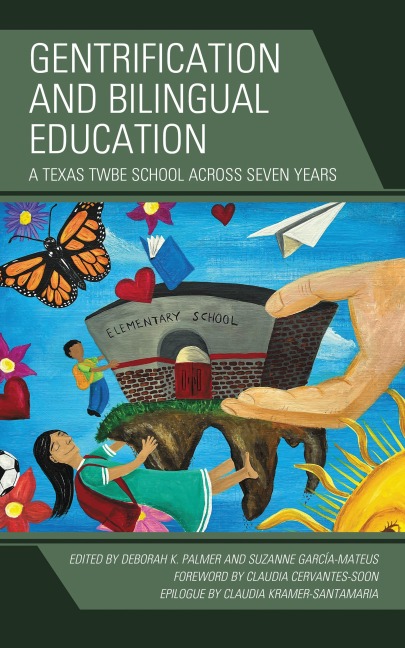
This unique volume brings together findings from six separate but interconnected studies, carried out over seven years in the same small bilingual elementary school. During a period of rapid gentrification in Austin, Texas, Hillside Elementary transformed from a predominantly Latinx, under-resourced and under-enrolled neighborhood school with a transitional bilingual program to a two-way dual language bilingual education (TWBE) school with a waiting list of middle-class families from across the school district. Chapter authors entered the context as researchers at various points along the timeline, with varied theoretical lenses, research questions, and methodological approaches. Most authors have also been parents or teachers at the school, and all were deeply invested in the school community and the education of bilingual students. They come together to argue that in order for a TWBE school to serve marginalized bilingual and BIPOC children and families, it must work collectively toward critical consciousness. Educators, parents, and students must learn to center the cultural, linguistic and racial/ethnic identities of marginalized families, and engage in ongoing dialogue at every level. The culminating product is a theme with variations: one context, one phenomenon, multiple varied positionalities and perspectives.
Suzanne García-Mateus is assistant professor and the director of the Monterey Institute for English Learners at California State University - Monterey Bay.
Deborah K. Palmer is professor of equity, bilingualism and biliteracy in the School of Education at the University of Colorado Boulder.
Chapter 1 Hillside Elementary, Our Research Collaborative, Gentrification, and TWBE in Texas
Chapter 2 Espacios de confianza: Affectively and Systemically Resisting Color-blind Ideologies in TWBE Home-school Planning
Chapter 3 "The Dual Language Program Changes Everything": The First Year of TWBE at Hillside and the (Re)negotiation of a School's Identity
Chapter 4 "I feel it's not about ability, it's about power." Bilingual Teachers' Interpretation of a Gentrifying Two-way Immersion Program
Chapter 5 "Tenemos que seguir nuestra cultura": Whiteness as Property at Hillside Elementary and Sam Houston Middle Schools
Chapter 6 Spaces of Resistance, Hope, and Justice: Centering the Foundational Goal of Critical Consciousness at Hillside
Chapter 7 From Tamales and Mole to Pizza and Pasta: Where Went the Neighborhood, So Goes the School
Chapter 8 ¡Adelante!