Und dann auf "Zum Home-Bildschirm [+]".

Stöbern
genialokal zum Startbildschirm hinzufügen
Installieren Sie die genialokal App auf Ihrem Startbildschirm für einen schnellen Zugriff und eine komfortable Nutzung.
Installieren Sie die genialokal App auf Ihrem Startbildschirm für einen schnellen Zugriff und eine komfortable Nutzung.
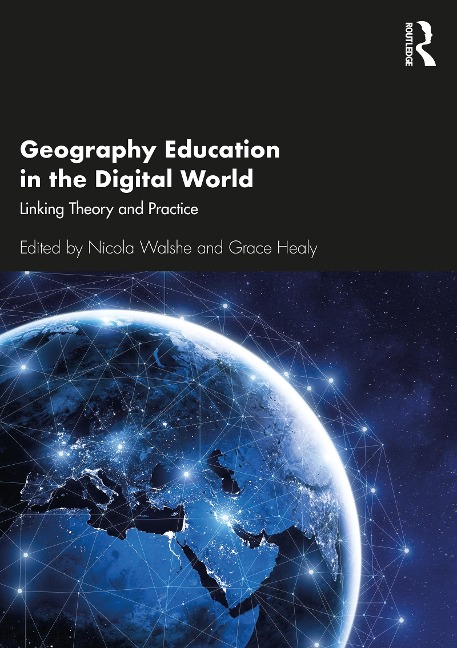
Geography Education in the Digital World draws on theory and practice to provide a critical exploration of the role and practice of geography education within the digital world. It considers how living within a digital world influences teacher identity and professionalism and is changing young people's lives. The book moves beyond the applied perspective of educational technology to engage with wider social and ethical issues of technology implementation and use of digital data within geography education. Situated at the intersection between research and practice, chapters draw on a wide range of theory to consider the role, adoption and potential challenges of a range of digital technologies in furthering geographical education for future generations. Bringing together academics from the fields of geography, geography education and teacher education, the book engages with four key themes within the digital world: - Professional practice and personal identities. - Geographical sources and connections. - Geospatial technologies. - Geographical fieldwork. This is a crucial read for geographers, geography educators and geography teacher educators, as well as those engaging with existing and new technologies to support geographical learning in the dynamic context of the digital world. It will also be of interest to any students, academics and policymakers wanting to better understand the impact of digital media on education.
Nicola Walshe is Head of the School of Education and Social Care at Anglia Ruskin University. Grace Healy is the Curriculum Director at David Ross Education Trust.
List of Illustrations Foreword David Lambert Acknowledgments List of Contributors 1. Introduction: navigating the digital world as geographers and geography educators Nicola Walshe and Grace Healy Part I: Professional practice and personal identities in the digital world 2. Teacher identity, professional practice and online social spaces Clare Brooks 3. Digital technologies and their roles in knowledge recontextualisation and curriculum making Steve Puttick 4. Navigating the theory-practice divide: developing trainee teacher pedagogical content knowledge through 360-degree immersive experiences Nicola Walshe, Paul Driver and Mandy-Jane Keenoy 5. Children, childhood and children's geographies: evolving through technology Lauren Hammond Part II: Geographical sources and connections in the digital world 6. Geographical sources in the digital world: disinformation, representation and reliability Margaret Roberts 7. 'Connecting the Classroom': teaching geographies of development via digital interactive spaces Rory Padfield 8. Social media as a tool for geographers and geography educators Francesca Fearnley Part III: Geospatial technologies in the digital world 9. Insights from professional discourse on GIS: a case for recognising geography teachers' repertoire of experience Grace Healy 10. Empowering geography teachers and students with geographical knowledge: epistemic access through GIS Mary Fargher and Grace Healy 11.GIS for young people's participatory geography Susan Pike Part IV: Geographical fieldwork in the digital world 12. Using mobile virtual reality to enhance fieldwork experiences in school geography Rebecca Kitchen 13. Teaching and learning geography with mobile technologies and fieldwork Chew-Hung Chang 14. Augmented reality: opportunities and challenges Gary Priestnall 15. Location-based games for geography and environmental education Steffen Schaal Part V: Conclusion 16. From the digital world to the post-digital world: the future generation of geographers Grace Healy and Nicola Walshe
Dieses eBook wird im PDF-Format geliefert und ist mit einem Adobe Kopierschutz (DRM) versehen. Sie können dieses eBook mit allen Geräten lesen, die das PDF-Format und den Adobe Kopierschutz (DRM) unterstützen.
Zum Beispiel mit den folgenden Geräten:
• tolino Reader
Laden Sie das eBook direkt über den Reader-Shop auf dem tolino herunter oder übertragen Sie das eBook auf Ihren tolino mit einer kostenlosen Software wie beispielsweise Adobe Digital Editions.
• Sony Reader & andere eBook Reader
Laden Sie das eBook direkt über den Reader-Shop herunter oder übertragen Sie das eBook mit der kostenlosen Software Sony READER FOR PC/Mac oder Adobe Digital Editions auf ein Standard-Lesegeräte mit epub- und Adobe DRM-Unterstützung.
• Tablets & Smartphones
Möchten Sie dieses eBook auf Ihrem Smartphone oder Tablet lesen, finden Sie hier unsere kostenlose Lese-App für iPhone/iPad und Android Smartphone/Tablets.
• PC & Mac
Lesen Sie das eBook direkt nach dem Herunterladen mit einer kostenlosen Lesesoftware, beispielsweise Adobe Digital Editions, Sony READER FOR PC/Mac oder direkt über Ihre eBook-Bibliothek in Ihrem Konto unter „Meine eBooks“ - „online lesen“.
Schalten Sie das eBook mit Ihrer persönlichen Adobe ID auf bis zu sechs Geräten gleichzeitig frei.
Bitte beachten Sie, dass die Kindle-Geräte das Format nicht unterstützen und dieses eBook somit nicht auf Kindle-Geräten lesbar ist.