Und dann auf "Zum Home-Bildschirm [+]".

Stöbern
genialokal zum Startbildschirm hinzufügen
Installieren Sie die genialokal App auf Ihrem Startbildschirm für einen schnellen Zugriff und eine komfortable Nutzung.
Installieren Sie die genialokal App auf Ihrem Startbildschirm für einen schnellen Zugriff und eine komfortable Nutzung.


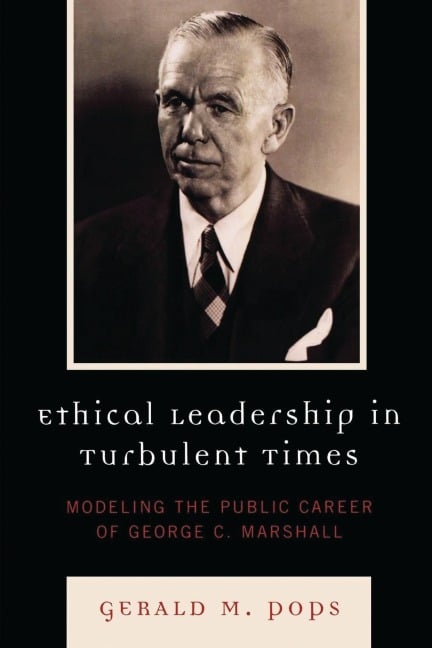
In Ethical Leadership in Turbulent Times, leadership and organizational theory are blended with early 20th Century history to model public leadership that is both monumentally effective and classically ethical. What is leadership? What makes leadership good or bad? To answer these questions, Gerald M. Pops draws on the multi-faceted career of George C. Marshall as an extended case study, focusing on the timely subject of leadership in public service.
The dominating traits of Marshall's career were his character, virtues, and ethical practices in two world wars, his efforts to keep the peace and promote economic recovery following World War II, his style of management, and his approach to international diplomacy and nation-building. Pops shows how Marshall's leadership was unique, given the ethical qualities displayed in his character and instilled in the organizations he led. All of these are examined in the context of his long career, and related to an abundant body of leadership theory, in order to successfully present Marshall as an effective public leader not only of the military and political realms, but of business and society as well. This makes the book ideal for students and scholars in the fields of political science, public administration, and the burgeoning field of leadership studies. It is also a fascinating read for all those with a love of twentieth century and military history.
Gerald M. Pops is professor in the graduate master of public administration degree program at West Virginia University. He is the author ofEmergence of the Public Sector Arbitrator andThe Case for Justice: Strengthening Decision Making and Policy in Public Administration and co-author of .Applying Standards and Ethics in the 21st Century.
Chapter 1. The Search for Ideal Leadership
Chapter 2. Growth of a Leader
Chapter 3. Core Ethical Attributes of a Leader
Chapter 4. Additional Ethical Attributes
Chapter 5. Dark Passage: Preparing the Nation for War
Chapter 6. Organizer of Victory
Chapter 7. Statesman
Chapter 8. Organizational Philosophy and Management Style
Chapter 9. Marshall and Reorganization
Chapter 10. Leading Others
Chapter 11. Democracy and Bureaucracy
Chapter 12. Leadership Lessons, Enduring Issues, and Renewable Legacies