Und dann auf "Zum Home-Bildschirm [+]".

Stöbern
genialokal zum Startbildschirm hinzufügen
Installieren Sie die genialokal App auf Ihrem Startbildschirm für einen schnellen Zugriff und eine komfortable Nutzung.
Installieren Sie die genialokal App auf Ihrem Startbildschirm für einen schnellen Zugriff und eine komfortable Nutzung.
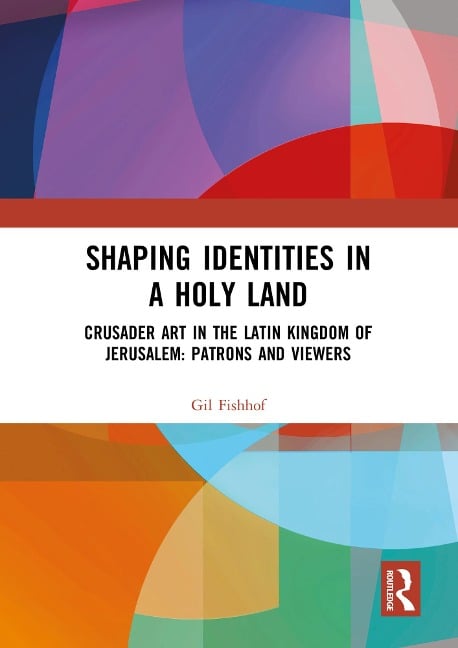
In the 88 years between its establishment by the victorious armies of the First Crusade and its collapse following the disastrous defeat at Hattin, the Latin Kingdom of Jerusalem was the site of vibrant artistic and architectural activity. As the crusaders rebuilt some of Christendom's most sacred churches, or embellished others with murals and mosaics, a unique and highly original art was created. Focusing on the sculptural, mosaic, and mural cycles adorning some of the most important shrines in the Kingdom (such as the Church of the Holy Sepulchre, The Basilica of the Annunciation, and the Church of the Nativity), this book offers a broad perspective of Crusader art and architecture. Among the many aspects discussed are competition among pilgrimage sites, crusader manipulation of biblical models, the image of the Muslim, and others. Building on recent developments in the fields of patronage studies and reception theory, the book offers a study of the complex ways in which Crusader art addressed its diverse audiences (Franks, indigenous eastern Christians, pilgrims) while serving the intentions of its patrons. Of particular interest to scholars and students of the Crusades and of Crusader art, as well as scholars and students of medieval art in general, this book will appeal to all those engaging with intercultural encounters, acculturation, Christian-Muslim relations, pilgrimage, the Holy Land, medieval devotion and theology, Byzantine art, reception theory and medieval patronage.
Gil Fishhof teaches medieval and Crusader art at the Department of Art History, University of Haifa. His main areas of expertise are Romanesque art and architecture in France, art in the Latin Kingdom of Jerusalem, art of the Cluniac order, and questions of medieval patronage and audiences. Together with Einat Segal and Assaf Pinkus he has recently published the edited volume The Basilica of the Annunciation in Nazareth - Where the Word became Flesh (2020), and with Vardit Shoten-Hallel and Judith Bronstein the volume Settlement and Crusade in the 13th Century - Multidisciplinary Studies of the Latin East (2021).
Introduction / 1. The Historiography of Crusader Art Revisited: Conceptions and Revolutions / 2. Glorious Past(s) - Tradition, Living-Memory and the Construction of Legitimacy / 3. Holy Sites: Pilgrims, Prestige and Competition / 4. The Image of the Muslim in the Art of the Latin Kingdom - Between Ideology, Demonization and Encounter / 5. Eastern Christians, Byzantine Style and the Pictorial Language of Crusader Art / 6. The Complexities of Patronage / Conclusion - Crusader Art as a Multilayered System
Dieses eBook wird im PDF-Format geliefert und ist mit einem Adobe Kopierschutz (DRM) versehen. Sie können dieses eBook mit allen Geräten lesen, die das PDF-Format und den Adobe Kopierschutz (DRM) unterstützen.
Zum Beispiel mit den folgenden Geräten:
• tolino Reader
Laden Sie das eBook direkt über den Reader-Shop auf dem tolino herunter oder übertragen Sie das eBook auf Ihren tolino mit einer kostenlosen Software wie beispielsweise Adobe Digital Editions.
• Sony Reader & andere eBook Reader
Laden Sie das eBook direkt über den Reader-Shop herunter oder übertragen Sie das eBook mit der kostenlosen Software Sony READER FOR PC/Mac oder Adobe Digital Editions auf ein Standard-Lesegeräte mit epub- und Adobe DRM-Unterstützung.
• Tablets & Smartphones
Möchten Sie dieses eBook auf Ihrem Smartphone oder Tablet lesen, finden Sie hier unsere kostenlose Lese-App für iPhone/iPad und Android Smartphone/Tablets.
• PC & Mac
Lesen Sie das eBook direkt nach dem Herunterladen mit einer kostenlosen Lesesoftware, beispielsweise Adobe Digital Editions, Sony READER FOR PC/Mac oder direkt über Ihre eBook-Bibliothek in Ihrem Konto unter „Meine eBooks“ - „online lesen“.
Schalten Sie das eBook mit Ihrer persönlichen Adobe ID auf bis zu sechs Geräten gleichzeitig frei.
Bitte beachten Sie, dass die Kindle-Geräte das Format nicht unterstützen und dieses eBook somit nicht auf Kindle-Geräten lesbar ist.