Und dann auf "Zum Home-Bildschirm [+]".

Stöbern
genialokal zum Startbildschirm hinzufügen
Installieren Sie die genialokal App auf Ihrem Startbildschirm für einen schnellen Zugriff und eine komfortable Nutzung.
Installieren Sie die genialokal App auf Ihrem Startbildschirm für einen schnellen Zugriff und eine komfortable Nutzung.
Ihr gewünschter Artikel ist in 0 Buchhandlungen vorrätig - wählen Sie hier eine Buchhandlung in Ihrer Nähe aus:

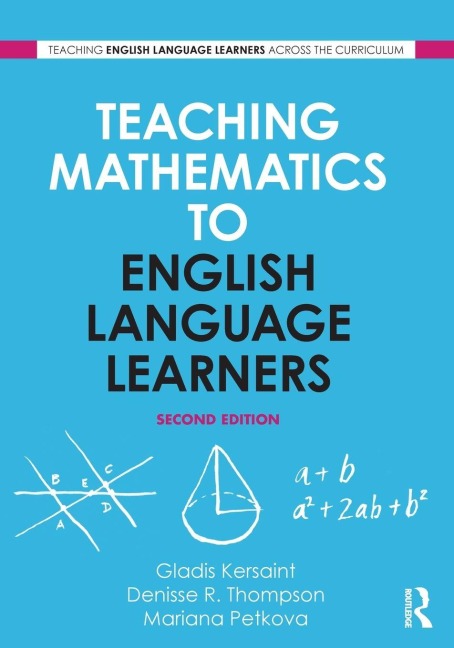
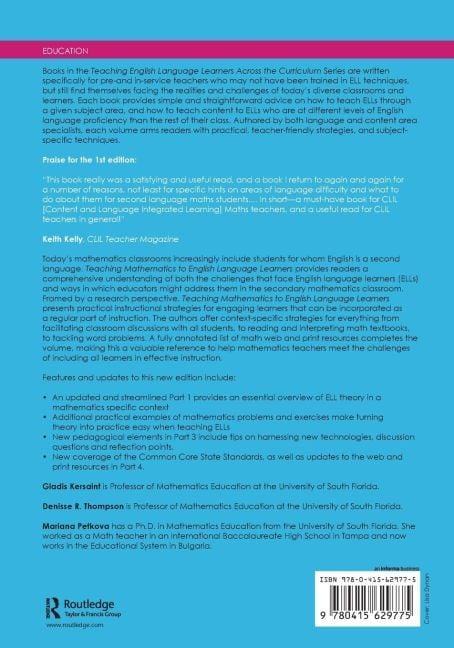
This book provides readers a comprehensive understanding of both the challenges that face English language learners (ELLs) and ways in which educators might address them in the secondary mathematics classroom.
Gladis Kersaint is Professor of Mathematics Education at the University of South Florida, USA. Denisse R. Thompson is a Professor of Mathematics Education at the University of South Florida, USA. Mariana Petkova has a Ph.D. in Mathematics Education from University of South Florida, USA.She worked as a Math teacher in an International Baccalaureate High School in Tampa and now works in the Educational System in Bulgaria.
Part 1 - Your English Language Learner by Tony Erben 1.1 Orientation 1.2 - The Process of English Language Learning and What to Expect 1.3 -- Different Types of ESOL Programs 1.4 - Teaching for English Language 1.5 - Not All ELLs are the Same1.6 - Questions for Discussion and Reflection Part 2 - Influences on the Mathematics Attainment of English Language Learners 2.1 - Overview: Influences on the Mathematical Attainment of English Language Learners 2.2 - Providing an Equitable Mathematics Education to English Language Learners: Mathematics Education 2.3 - The Nature of Mathematics 2.4 - Mathematics Teaching and Learning 2.5 - Cultural Influences on Mathematics Learning and Engagement 2.6 - Assessment Results, Practices, and Procedures 2.7 - Questions for Discussion and Reflection Part 3 - Best Practices to Support English Language Learners in the Mathematics Classroom 3.1 - Overview: Classroom Environments that Support English Language Learners 3.2 - Orchestrating Classroom Discourse to Support Mathematics Concepts and Language Development 3.3 - Strategies to Help English Language Learners Understand Mathematics Language 3.4 - Emphasizing and Supporting Problem 3.5 - Assessing English Language Learners in Equitable Ways 3.6 - Teaching Mathematics in Ways that are Culturally 3.7 - Questions for Discussion and Reflection Part 4 Collaborations to Support ELLs 4.1 Overview: Collaborations to Support ELLs 4.2 - Strategies for Mathematics Teachers Who are Themselves ELLs 4.3 Mathematics Teachers Collaborating with English as Second Language Learners 4.4 ELL Home-School Communication 4.5 Questions for Discussion and Reflection