Und dann auf "Zum Home-Bildschirm [+]".

Stöbern
genialokal zum Startbildschirm hinzufügen
Installieren Sie die genialokal App auf Ihrem Startbildschirm für einen schnellen Zugriff und eine komfortable Nutzung.
Installieren Sie die genialokal App auf Ihrem Startbildschirm für einen schnellen Zugriff und eine komfortable Nutzung.
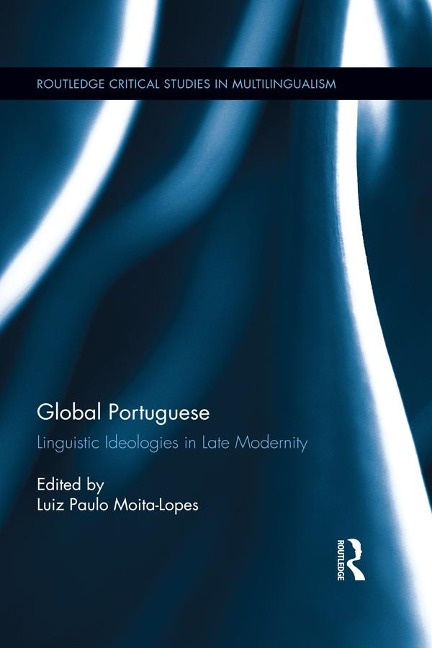
This book aims at deconstructing and problematizing linguistic ideologies related to Portuguese in late modernity and questioning the theoretical presuppositions which have led us to call Portuguese 'a language.' Such an endeavor is crucial when we know that Portuguese is a language which is increasingly internationalized, used as the official language in four continents (in ten countries) and which has come to play a relevant role in the so-called linguistic market on the basis of the geopolitical transformations in a multipolar world. The book covers a wide range of social, political and historical contexts in which 'Portuguese' is used (in Brazil, Canada, East-Timor, England, Portugal, Mozambique and Uruguay), and considers diverse linguistic practices. Through this critique, contributors chart new directions for research on language ideologies and language practices (including research related to Portuguese and to other 'languages') and consider ways of developing new conceptual compasses that are better attuned to the sociolinguistic realities of the late modern era, in which people, texts and languages are increasingly in movement through national borders and those of digital networks of communication.
Luiz Paulo Moita-Lopes is Professor of Applied Linguistics at Federal University of Rio de Janeiro and a Researcher of the Brazilian National Council for Scientific and Technological Development.
Introduction: Linguistic Ideology: How Portuguese is Being Discursively Constructed in Late Modernity Luiz Paulo Moita-Lopes 1. Language Policy and Globalization: The Portuguese Language in the Twenty First Century Gilvan Müller de Oliveira 2. Portuguese Language Globalism Inês Signorini 3. Policing the Borderland in a Digital Lusophone World Territory: The Pragmatics of Entextualization Branca Falabella Fabrício 4. Portuguese as a Communicative Resource in a Globalized World: The How and Why of New Directions in Theory-Building Luiz Paulo Moita-Lopes 5. From Prefigured Speaker Identities to the Disinvention of Portuguese Joana Plaza Pinto 6. Sociolinguistic Tensions in the Portuguese/Lusophone Community of Toronto, Canada Emanuel da Silva 7. Migrations, Multilingualism and Language Policies in Portugal and in the UK: A Polycentric Approach Clara Keating, Olga Solovova and Olga Barradas 8. Language Practices and Identities in Transit: Spanish and Portuguese in Everyday Life in a Uruguayan School Community near the Border with Brazil Leticia Soares Bortolini, Pedro de Moraes Garcez and Margarete Schlatter 9. Portuguese and African Languages in Education in Mozambique: Language Ideological Debates about Unity and Diversity Samima A. Patel and Marilda C. Cavalcanti 10. Conflicts Around the (de-)Construction of Legitimate Language(s): The Situation of Portuguese in the Multilingual Context of East-Timor Alan Silvio Ribeiro Carneiro Afterword Chris Stroud
Dieses eBook wird im PDF-Format geliefert und ist mit einem Adobe Kopierschutz (DRM) versehen. Sie können dieses eBook mit allen Geräten lesen, die das PDF-Format und den Adobe Kopierschutz (DRM) unterstützen.
Zum Beispiel mit den folgenden Geräten:
• tolino Reader
Laden Sie das eBook direkt über den Reader-Shop auf dem tolino herunter oder übertragen Sie das eBook auf Ihren tolino mit einer kostenlosen Software wie beispielsweise Adobe Digital Editions.
• Sony Reader & andere eBook Reader
Laden Sie das eBook direkt über den Reader-Shop herunter oder übertragen Sie das eBook mit der kostenlosen Software Sony READER FOR PC/Mac oder Adobe Digital Editions auf ein Standard-Lesegeräte mit epub- und Adobe DRM-Unterstützung.
• Tablets & Smartphones
Möchten Sie dieses eBook auf Ihrem Smartphone oder Tablet lesen, finden Sie hier unsere kostenlose Lese-App für iPhone/iPad und Android Smartphone/Tablets.
• PC & Mac
Lesen Sie das eBook direkt nach dem Herunterladen mit einer kostenlosen Lesesoftware, beispielsweise Adobe Digital Editions, Sony READER FOR PC/Mac oder direkt über Ihre eBook-Bibliothek in Ihrem Konto unter „Meine eBooks“ - „online lesen“.
Schalten Sie das eBook mit Ihrer persönlichen Adobe ID auf bis zu sechs Geräten gleichzeitig frei.
Bitte beachten Sie, dass die Kindle-Geräte das Format nicht unterstützen und dieses eBook somit nicht auf Kindle-Geräten lesbar ist.