Und dann auf "Zum Home-Bildschirm [+]".

Stöbern
genialokal zum Startbildschirm hinzufügen
Installieren Sie die genialokal App auf Ihrem Startbildschirm für einen schnellen Zugriff und eine komfortable Nutzung.
Installieren Sie die genialokal App auf Ihrem Startbildschirm für einen schnellen Zugriff und eine komfortable Nutzung.
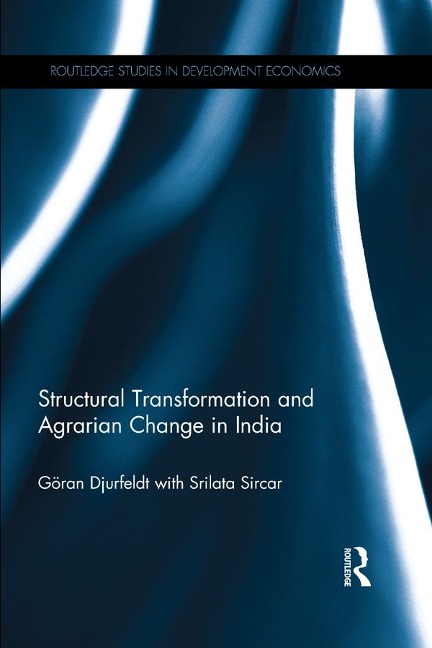
The landlord and his emaciated labourer are symbolic of Indian agriculture. However, this relationship has now changed as large landowners have fallen from their superior position. This volume explores how this emblematic pair is becoming a thing of the past. Structural Transformation and Agrarian Change in India investigates whether family labour farms are gaining prominence as a consequence of the structural transformation of the economy. The authors work alongside Weberian methodology of ideal types and develop different types of family farms; among them family labour farms that rely mainly on family workers, contrasted with capitalist farms that depend on hired labour. Agriculture is shrinking as a part of the total GDP at the same time as agricultural labour is shrinking as part of the total labour force. The changing agrarian structure is explored with the use of unique long-term survey data and statistical models. Results show that India is approaching farm structures that are typical of East and South East Asia, with pluriactive smallholders as the norm. This book successfully criticizes popular narratives about Indian agricultural development as well as simplistic evolutionist, Marxist or neoclassical prognoses. It is of great importance to those who study development economics, development studies and South Asian economics.
Göran Djurfeldt is Senior Professor at the Department of Sociology, Lund University, Sweden. Srilata Sircar is currently a Doctoral student at the Department of Human Geography, Lund University, Sweden.
INTRODUCTION CHAPTER 1. CAPITALISM AND FAMILY FARMING CHAPTER 2. STRUCTURAL TRANSFORMATION AND FARMING CHAPTER 3. URBANIZATION AND AGRARIAN CHANGE: A VIEW FROM THE MARGINS CHAPTER 4. WHAT YOU MIGHT LIKE TO KNOW ABOUT REGRESSION CHAPTER 5. DRIVERS OF AGRARIAN TRANSFORMATION CHAPTER 6. VOLATILITY IN LAND DISTRIBUTION CHAPTER 7. RELATIVE CHANGE IN INCOME CHAPTER 8. CONCLUSIONS: NO PLACE FOR FAMILY FARMS? APPENDIX 1: DATA SOURCES APPENDIX 2: MULTILEVEL MODELLING WITH MLWIN APPENDIX 3: DETAILED MODEL RESULTS AND ANALYSES OF RESIDUALS APPENDIX 4: DESCRIPTIVE STATISTICS
Dieses eBook wird im PDF-Format geliefert und ist mit einem Adobe Kopierschutz (DRM) versehen. Sie können dieses eBook mit allen Geräten lesen, die das PDF-Format und den Adobe Kopierschutz (DRM) unterstützen.
Zum Beispiel mit den folgenden Geräten:
• tolino Reader
Laden Sie das eBook direkt über den Reader-Shop auf dem tolino herunter oder übertragen Sie das eBook auf Ihren tolino mit einer kostenlosen Software wie beispielsweise Adobe Digital Editions.
• Sony Reader & andere eBook Reader
Laden Sie das eBook direkt über den Reader-Shop herunter oder übertragen Sie das eBook mit der kostenlosen Software Sony READER FOR PC/Mac oder Adobe Digital Editions auf ein Standard-Lesegeräte mit epub- und Adobe DRM-Unterstützung.
• Tablets & Smartphones
Möchten Sie dieses eBook auf Ihrem Smartphone oder Tablet lesen, finden Sie hier unsere kostenlose Lese-App für iPhone/iPad und Android Smartphone/Tablets.
• PC & Mac
Lesen Sie das eBook direkt nach dem Herunterladen mit einer kostenlosen Lesesoftware, beispielsweise Adobe Digital Editions, Sony READER FOR PC/Mac oder direkt über Ihre eBook-Bibliothek in Ihrem Konto unter „Meine eBooks“ - „online lesen“.
Schalten Sie das eBook mit Ihrer persönlichen Adobe ID auf bis zu sechs Geräten gleichzeitig frei.
Bitte beachten Sie, dass die Kindle-Geräte das Format nicht unterstützen und dieses eBook somit nicht auf Kindle-Geräten lesbar ist.