Und dann auf "Zum Home-Bildschirm [+]".

Stöbern
genialokal zum Startbildschirm hinzufügen
Installieren Sie die genialokal App auf Ihrem Startbildschirm für einen schnellen Zugriff und eine komfortable Nutzung.
Installieren Sie die genialokal App auf Ihrem Startbildschirm für einen schnellen Zugriff und eine komfortable Nutzung.
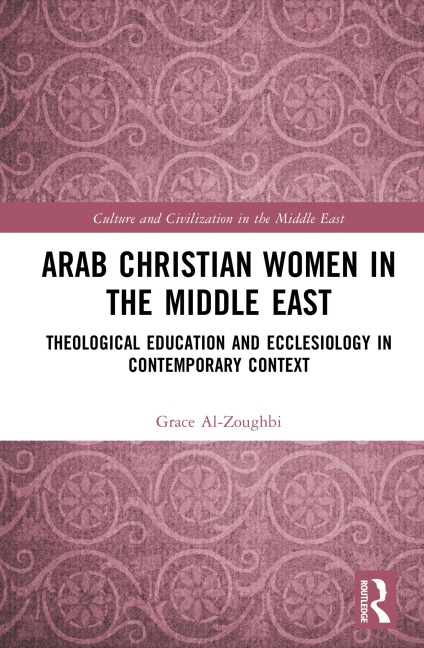
Arab Christian Women in the Middle East: Theological Education and Ecclesiology in Contemporary Context explores the voices, experiences, and theological contributions of Arab Protestant women within the region's evolving Christian landscape. Drawing on oral histories, field observations, and theological reflection, the book examines how Arab Protestant women engage theological education, leadership, and ministry within complex social, religious, and ecclesial contexts. Situating their experiences within the broader history of Middle Eastern Christianity and the legacy of the Nahda (Arab Renaissance), it argues that contemporary developments represent a new moment of renewal - a "Third Nahda" - in which women are playing an increasingly visible and transformative role. By highlighting their lived realities and intellectual contributions, the study proposes a contextual Protestant ecclesiology rooted in dialogue, local tradition, and lived faith, offering a nuanced understanding of how Protestant identity is being reshaped in the Arab world. This book will appeal to scholars and students of theology, religious studies, Middle Eastern Christianity, and gender studies, as well as educators, church leaders, and practitioners interested in theological education, ecclesial renewal, and women's leadership in the global church.
Grace Al-Zoughbi is a Palestinian theologian from Bethlehem whose scholarship focuses on the participation of Arab women in theological education. She served for several years on the faculty of Bethlehem Bible College, including as Head of the Biblical Studies Department (2011-2018), and is currently faculty at the Arab Baptist Theological Seminary (ABTS) in Beirut. Grace is the accreditation officer for the Middle East and North Africa Association for Theological Accreditation (MENATE).
Contents Table of Figures Foreword Preface Acknowledgements Introduction Reframing Theological Education for Arab Protestant Women in the Middle East Research Questions An Autoethnographic Narrative: Exploring the Researcher's Dual Identity as a Middle Eastern Christian and a Woman in Theological Education References Chapter 1: The History of Arab Protestant Women in Middle Eastern Theological Education An Autoethnographic Narrative: A Middle Eastern Christian Woman in Theological Education Introduction The First Nah-a of the Thirteenth Century (1024-1318) Second Nah-a of the Nineteenth Century (1860-1915) Arab Protestant Women of the Nah-a (1860-1915) The Ecclesial Milieu for Arab Protestant Women in Theological Education The Sociological Background for Arab Protestant Women in Theological Education Conclusion Reference List Chapter 2: Eastern Christian Perspectives on the Theological Education of Arab Protestant Women Introduction Why an Eastern Christian Perspective? Retrieving Models of Women in Theological Education from Early Church History The Coptic Model-Making Space for Women through Monastic Culture The Desert Mothers and the Monastic Movement The Historical Context of the Coptic Church The Modern Revival within the Coptic Church The Coptic Sunday School Movement Modern Women Monastics: Mother Irini as a Saintly Model The Present Ecclesial Context of the Copts The Maronite Model-Making Space for Women through 'Identifying the Presence and Mission of Women in Church and Society' The Historical Context of the Maronite Church The Life of Hindiyya Al-Ujaimy-A Maronite Arab Woman (1720-1798) Recent Developments in the Maronite Church The Present Ecclesial Context in Lebanon The Role of Women Deacons in Eastern Christianity Conclusion Chapter 3: Arab Protestant Women and the Religious Education of Muslim Women Introduction Four Positions of Viewing Women in Islam Four Waves of Feminism: Implications of Feminism on Muslim Women Islamic Religious Education for Women Pedagogy for Muslim Women in the Mosque Movement What can Arab Protestant Women in Theological Education learn from Islamic Religious Education? Limitations of the Mosque Movement Conclusion Chapter 4: Field Research Strategy: Scenes from the Qualitative Data Introduction The Context of Protestant Women in Theological Education across Palestine, Egypt, and Lebanon Research Orientation Data Collection Methods The Population Sample Validity and Reliability Summary of Thematic Analysis Methodology (for the Interviews) Conclusion Chapter 5: Arab Protestant Women in Theological Education Introduction Meta Theme One: Ecclesial Contributions of Arab Women Meta Theme Two: Cultural Realities Limit Arab Protestant Women's Roles in the Academy and Church Meta Theme Three: Western Influence Meta Theme Four: Theological and Educational Perspectives of Arab Protestant Women Conclusion Chapter 6: Towards a Third Nah-a: Arab Protestant Women in Theological Education Introduction Exploring Ecumenism for Arab Women in Theological Education Arab Protestant Women Engaging as Lay Theologians Reframing Arab Protestant Women's Engagement Beyond Mission Work Theological Institutions in the Theological Education of Arab Protestant Women Other Recommendations Conclusion Conclusion: An Autoethnographic Narrative: Where to from here? Introduction Original Contribution Limitations of the Study Emerging Areas for Further Inquiries. Appendices Appendix 1: Protestant Theological Institutions (Chapter One) Appendix 2: Religious Islamic Institutions (Chapter Three) Appendix 3: ECTE Gender Distribution in Theological Education (Chapter Four) Appendix 4: Gender Distribution Follow Up (Chapter Four) Appendix 5: Field Research Schedule (Chapter Four) Appendix 6: Interview Questions (Chapter Four) Appendix 7: Rationale for Interview Questions (Chapter Four) Appendix 8: Summary of Characteristics of the Participants Interviewed (Chapter Four) INDEX