Und dann auf "Zum Home-Bildschirm [+]".

Stöbern
genialokal zum Startbildschirm hinzufügen
Installieren Sie die genialokal App auf Ihrem Startbildschirm für einen schnellen Zugriff und eine komfortable Nutzung.
Installieren Sie die genialokal App auf Ihrem Startbildschirm für einen schnellen Zugriff und eine komfortable Nutzung.
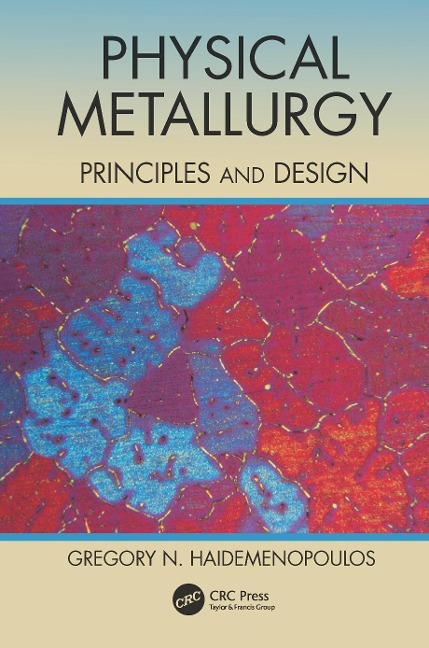
Physical metallurgy is one of the main fields of metallurgical science dealing with the development of the microstructure of metals in order to achieve desirable properties required in technological applications. Physical Metallurgy: Principles and Design focuses on the processing-structure-properties triangle as it applies to metals and alloys. It introduces the fundamental principles of physical metallurgy and the design methodologies for alloys and processing. The first part of the book discusses the structure and change of structure through phase transformations. The latter part of the books deals with plastic deformation, strengthening mechanisms, and mechanical properties as they relate to structure. The book also includes a chapter on physical metallurgy of steels and concludes by discussing the computational tools, involving computational thermodynamics and kinetics, to perform alloy and process design.
Gregory N. Haidemenopoulos has been Professor of Physical Metallurgy and Director of the Laboratory of Materials (LoM) at University of Thessaly, Greece since 1992. His research is concerned with processing-structure-properties in metallic materials, dealing with transformation kinetics in TRIP steels, corrosion-induced hydrogen trapping in aluminum alloys and rolling contact fatigue in rails. More recent research focuses on computational alloy and process simulation with applications in the design of homogenization of extrudable aluminum alloys, the design of medium-Mn steels and the thermomechanical process design of HSLA steels. In addition to teaching and research, Prof. Haidemenopoulos has provided consulting services to industry in the fields of process design, failure analysis, materials selection and corrosion control. Prof. Haidemenopoulos has supervised several PhD students and has earned the University of Thessaly's Mechanical Engineering Departmental Best Teaching Award for the years 2007, 2008, 2009, 2011, 2014, and 2015. He is Member of Editorial Board of The Open Corrosion Journal and International Journal of Metallurgical and Materials Engineering, published 10 book chapters, 70 papers in refereed journals, and presented many keynote and invited lectures worldwide. Prof. Haidemenopoulos received his PhD in Metallurgy, MSc in Metallurgy, and MSc in Naval Architecture and Marine Engineering from MIT.
Introduction. Structure of Metals. Structural Imperfections. Alloy Thermodynamics and Phase Diagrams. Diffusion. Phase Transformations. Plastic Deformation and Annealing. Strengthening Mechanisms. Fracture, Fatigue and Creep of Metals. Physical Metallurgy of Steels. Alloy Design. Index
Dieses eBook wird im PDF-Format geliefert und ist mit einem Adobe Kopierschutz (DRM) versehen. Sie können dieses eBook mit allen Geräten lesen, die das PDF-Format und den Adobe Kopierschutz (DRM) unterstützen.
Zum Beispiel mit den folgenden Geräten:
• tolino Reader
Laden Sie das eBook direkt über den Reader-Shop auf dem tolino herunter oder übertragen Sie das eBook auf Ihren tolino mit einer kostenlosen Software wie beispielsweise Adobe Digital Editions.
• Sony Reader & andere eBook Reader
Laden Sie das eBook direkt über den Reader-Shop herunter oder übertragen Sie das eBook mit der kostenlosen Software Sony READER FOR PC/Mac oder Adobe Digital Editions auf ein Standard-Lesegeräte mit epub- und Adobe DRM-Unterstützung.
• Tablets & Smartphones
Möchten Sie dieses eBook auf Ihrem Smartphone oder Tablet lesen, finden Sie hier unsere kostenlose Lese-App für iPhone/iPad und Android Smartphone/Tablets.
• PC & Mac
Lesen Sie das eBook direkt nach dem Herunterladen mit einer kostenlosen Lesesoftware, beispielsweise Adobe Digital Editions, Sony READER FOR PC/Mac oder direkt über Ihre eBook-Bibliothek in Ihrem Konto unter „Meine eBooks“ - „online lesen“.
Schalten Sie das eBook mit Ihrer persönlichen Adobe ID auf bis zu sechs Geräten gleichzeitig frei.
Bitte beachten Sie, dass die Kindle-Geräte das Format nicht unterstützen und dieses eBook somit nicht auf Kindle-Geräten lesbar ist.