Und dann auf "Zum Home-Bildschirm [+]".

Stöbern
genialokal zum Startbildschirm hinzufügen
Installieren Sie die genialokal App auf Ihrem Startbildschirm für einen schnellen Zugriff und eine komfortable Nutzung.
Installieren Sie die genialokal App auf Ihrem Startbildschirm für einen schnellen Zugriff und eine komfortable Nutzung.

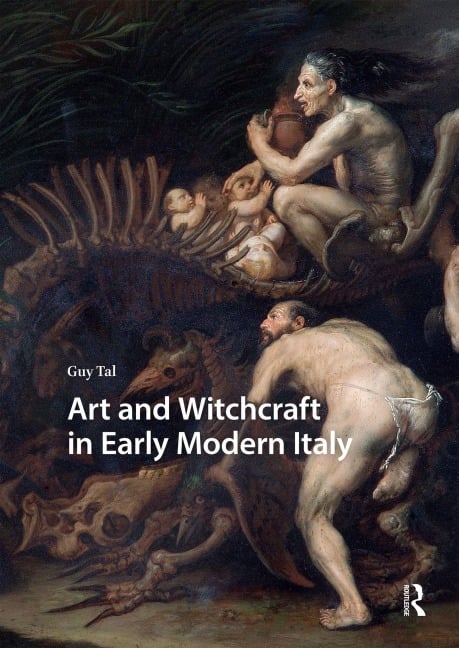
The figure of the witch is familiar from the work of early modern German, Dutch, and Flemish artists, but much less so in the work of their Italian counterparts. Art and Witchcraft in Early Modern Italy seeks to explore the ways in which representations of witchcraft emerged from and coincided with the main cultural currents and artistic climate of an epoch chiefly celebrated for its humanistic and rational approaches. Through an in-depth examination of a panoply of arresting paintings, engravings, and drawings-variously portraying a hag-ridden colossal phallus, a horror-stricken necromancer dodging the devil's scrabbling claws, and a nocturnal procession presided over by an infanticidal crone-Guy Tal offers new ways of reading witchcraft images through and beyond conventional iconography. Artists such as Parmigianino, Alessandro Allori, Leonello Spada, and Angelo Caroselli effected visual commentaries on demonological notions that engaged their audience in a tantalizing experience of interpretation.
Guy Tal is Senior Lecturer in the Unit of History and Philosophy at Shenkar College, Israel. His publications on body language, gender, imagination, and witchcraft in early modern Italian, Spanish, and Dutch art appeared in such venues as Simiolus, Word and Image, Print Quarterly, Poetics Today and Zeitschrift für Kunstgeschichte.
Acknowledgements, List of Illustrations, Introduction, Chapter 1 Old Women under Investigation: The Drab Housewife and the Grotesque Hag, Chapter 2 Chimerical Procession: The Poetics of Inversion and Monstrosity, Chapter 3 Priapic Ride: Gigantic Genitals, Penile Theft, and Other Phallic Fantasies, Chapter 4 Magical Metamorphoses: Variations on the Myths of Circe and Medea, Chapter 5 A Visit from the Devil: Horror and Liminality in Caravaggesque Paintings, Epilogue, Bibliography, Index