Und dann auf "Zum Home-Bildschirm [+]".

Stöbern
genialokal zum Startbildschirm hinzufügen
Installieren Sie die genialokal App auf Ihrem Startbildschirm für einen schnellen Zugriff und eine komfortable Nutzung.
Installieren Sie die genialokal App auf Ihrem Startbildschirm für einen schnellen Zugriff und eine komfortable Nutzung.
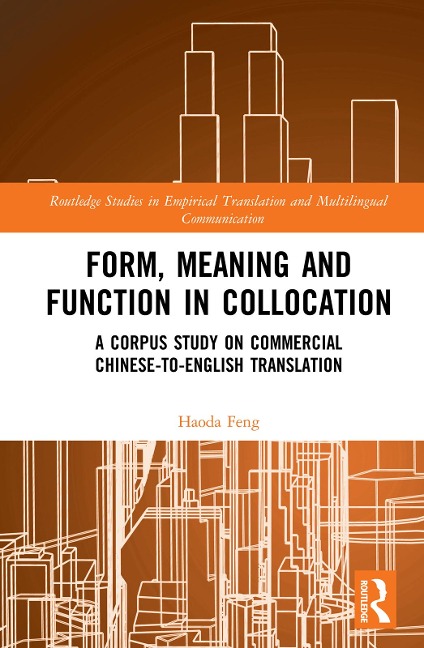
The issue of differences between translational language and native-speaker language has become a topic of increasing interest in linguistics and Translation Studies (TS). One of the primary tasks in this research area is to employ a corpus approach and analyse collocations with authentic language data by comparing comparable corpora consisting of translated and native-speaker texts. Collocation in linguistics and TS refers to the relationship of co-occurrence between lexical items. The book shows that examining the use of collocations constitutes an integral part in assessing the naturalness of second language (L2) use, and therefore can be a valid measure to make a distinction between translational language and native-speaker language. Nevertheless, the role of collocation has not been given enough attention or discussed systematically in TS and, to date, there are hardly any translation theorists who have clarified the mechanism of collocation in TS, by which translators acquire receptive and productive knowledge of collocations in their L2. In addition, previous research in this area is largely confined to Indo-European languages, resulting in a lack of empirical evidence involving Asian languages. This book therefore attempts to bridge the gap in the literature and constitute an integral part in the research area.
Haoda Feng is Deputy Dean of the School of Foreign Languages and Associate Professor at Bohai University, China. He completed his PhD at the Auckland University of Technology, New Zealand.
1. Form, meaning and function in collocation: a corpus study on commercial Chinese-to-English translation 2. Literature review: collocation and Translation Studies 3. Preliminary study: setting the stage 4. Research design: methodology and data processing 5. Data analysis: features of Chinese translators' use of English collocations in the commercial register (Part I) 6. Data analysis: features of Chinese translators' use of English collocations in the commercial register (Part II) 7. Translation universals in Chinese translators' use of L2 English collocations 8. Implications of findings 9. Conclusion
Dieses eBook wird im PDF-Format geliefert und ist mit einem Adobe Kopierschutz (DRM) versehen. Sie können dieses eBook mit allen Geräten lesen, die das PDF-Format und den Adobe Kopierschutz (DRM) unterstützen.
Zum Beispiel mit den folgenden Geräten:
• tolino Reader
Laden Sie das eBook direkt über den Reader-Shop auf dem tolino herunter oder übertragen Sie das eBook auf Ihren tolino mit einer kostenlosen Software wie beispielsweise Adobe Digital Editions.
• Sony Reader & andere eBook Reader
Laden Sie das eBook direkt über den Reader-Shop herunter oder übertragen Sie das eBook mit der kostenlosen Software Sony READER FOR PC/Mac oder Adobe Digital Editions auf ein Standard-Lesegeräte mit epub- und Adobe DRM-Unterstützung.
• Tablets & Smartphones
Möchten Sie dieses eBook auf Ihrem Smartphone oder Tablet lesen, finden Sie hier unsere kostenlose Lese-App für iPhone/iPad und Android Smartphone/Tablets.
• PC & Mac
Lesen Sie das eBook direkt nach dem Herunterladen mit einer kostenlosen Lesesoftware, beispielsweise Adobe Digital Editions, Sony READER FOR PC/Mac oder direkt über Ihre eBook-Bibliothek in Ihrem Konto unter „Meine eBooks“ - „online lesen“.
Schalten Sie das eBook mit Ihrer persönlichen Adobe ID auf bis zu sechs Geräten gleichzeitig frei.
Bitte beachten Sie, dass die Kindle-Geräte das Format nicht unterstützen und dieses eBook somit nicht auf Kindle-Geräten lesbar ist.