Und dann auf "Zum Home-Bildschirm [+]".

Stöbern
genialokal zum Startbildschirm hinzufügen
Installieren Sie die genialokal App auf Ihrem Startbildschirm für einen schnellen Zugriff und eine komfortable Nutzung.
Installieren Sie die genialokal App auf Ihrem Startbildschirm für einen schnellen Zugriff und eine komfortable Nutzung.
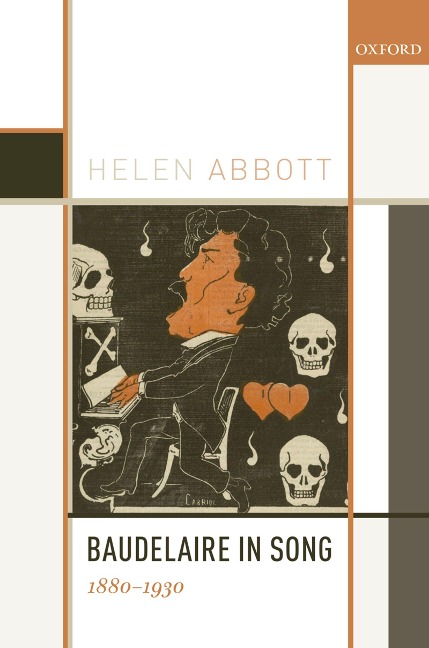
Why do we find it hard to explain what happens when words are set to music? This study looks at the kind of language we use to describe word/music relations, both in the academic literature and in manuals for singers or programme notes prepared by professional musicians. Helen Abbott's critique of word/music relations interrogates overlaps emerging from a range of academic disciplines including translation theory, adaptation theory, word/music theory, as well as critical musicology, métricométrie, and cognitive neuroscience. It also draws on other resources-whether adhesion science or financial modelling-to inform a new approach to analysing song in a model proposed here as the assemblage model. The assemblage model has two key stages of analysis. The first stage examines the bonds formed between the multiple layers that make up a song setting (including metre/prosody, form/structure, sound repetition, semantics, and live performance options). The second stage considers the overall outcome of each song in terms of the intensity or stability of the words and music present in a song (accretion/dilution). Taking the work of the major nineteenth-century French poet Charles Baudelaire (1821-67) as its main impetus, the volume examines how Baudelaire's poetry has inspired composers of all genres across the globe, from the 1860s to the present day. The case studies focus on Baudelaire song sets by European composers between 1880 and 1930, specifically Maurice Rollinat, Gustave Charpentier, Alexander Gretchaninov, Louis Vierne, and Alban Berg. Using this corpus, it tests out the assemblage model to uncover what happens to Baudelaire's poetry when it is set to music. It factors in the realities of song as a live performance genre, and reveals which parameters of song emerge as standard for French text-setting, and where composers diverge in their approach.
Helen Abbott is Professor of Modern Languages at the University of Birmingham, and specializes in nineteenth-century French poetry and music, with particular emphasis on voice and performance. She leads an international team of researchers on the Baudelaire Song Project researching all the song settings of Baudelaire's poetry, from the nineteenth century to the present day, including classical and popular music settings, and songs in translation as well as the original French. Major publications include Parisian Intersections: Baudelaire's Legacy to Composers (Peter Lang, 2012) and Between Baudelaire and Mallarmé: Voice, Conversation and Music (Ashgate, 2009).
- 1: Baudelaire's musical contexts: Approaches to analysing poetry's relationship with music - 2: Baudelaire's assemblage: A new model for analysing poetry-as-song - 3: Repackaging Baudelaire - 4: Maurice Rollinat - 5: Gustave Charpentier - 6: Alexander Gretchaninov - 7: Louis Vierne - 8: Alban Berg - Conclusions - Appendix I: Shared critical language used in adaptation, translation, and word/music theory - Bibliography - Discography
Dieses eBook wird im PDF-Format geliefert und ist mit einem Adobe Kopierschutz (DRM) versehen. Sie können dieses eBook mit allen Geräten lesen, die das PDF-Format und den Adobe Kopierschutz (DRM) unterstützen.
Zum Beispiel mit den folgenden Geräten:
• tolino Reader
Laden Sie das eBook direkt über den Reader-Shop auf dem tolino herunter oder übertragen Sie das eBook auf Ihren tolino mit einer kostenlosen Software wie beispielsweise Adobe Digital Editions.
• Sony Reader & andere eBook Reader
Laden Sie das eBook direkt über den Reader-Shop herunter oder übertragen Sie das eBook mit der kostenlosen Software Sony READER FOR PC/Mac oder Adobe Digital Editions auf ein Standard-Lesegeräte mit epub- und Adobe DRM-Unterstützung.
• Tablets & Smartphones
Möchten Sie dieses eBook auf Ihrem Smartphone oder Tablet lesen, finden Sie hier unsere kostenlose Lese-App für iPhone/iPad und Android Smartphone/Tablets.
• PC & Mac
Lesen Sie das eBook direkt nach dem Herunterladen mit einer kostenlosen Lesesoftware, beispielsweise Adobe Digital Editions, Sony READER FOR PC/Mac oder direkt über Ihre eBook-Bibliothek in Ihrem Konto unter „Meine eBooks“ - „online lesen“.
Schalten Sie das eBook mit Ihrer persönlichen Adobe ID auf bis zu sechs Geräten gleichzeitig frei.
Bitte beachten Sie, dass die Kindle-Geräte das Format nicht unterstützen und dieses eBook somit nicht auf Kindle-Geräten lesbar ist.