Und dann auf "Zum Home-Bildschirm [+]".

Stöbern
genialokal zum Startbildschirm hinzufügen
Installieren Sie die genialokal App auf Ihrem Startbildschirm für einen schnellen Zugriff und eine komfortable Nutzung.
Installieren Sie die genialokal App auf Ihrem Startbildschirm für einen schnellen Zugriff und eine komfortable Nutzung.
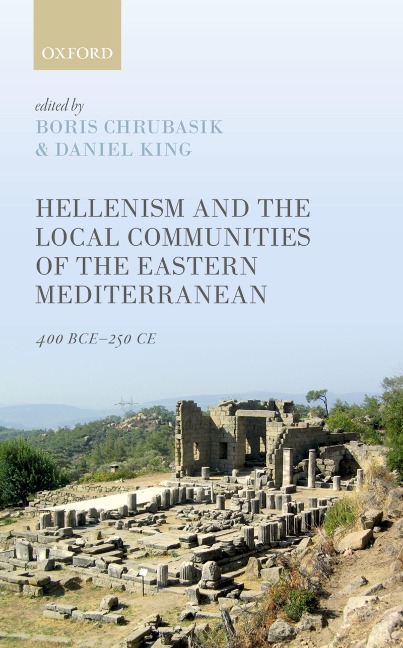
Hellenism and the Local Communities of the Eastern Mediterranean offers a timely re-examination of the relationship between Greek and non-Greek cultures in this region between 400 BCE and 250 CE. The conquests of Alexander the Great and his Successors not only radically reshaped the political landscape, but also significantly accelerated cultural change: in recent decades there has been an important historiographical emphasis on the study of the non-Greek cultures of the Eastern Mediterranean, but less focus on how Greek cultural elements became increasingly visible. Although the process of cross-cultural interaction differed greatly across Asia Minor, Egypt, the Levant, and Mesopotamia, the same overarching questions apply: why did the non-Greek communities of the Eastern Mediterranean engage so closely with Greek cultural forms as well as political practices, and how did this engagement translate into their daily lives? In exploring the versatility and adaptability of Greek political structures, such as the polis, and the ways in which Greek and non-Greek cultures interacted in fields such as medicine, literature, and art, the essays in this volume aim to provide new insight into these questions. At the same time, they prompt a re-interrogation of the process of Hellenization, exploring whether it is still a useful concept for explaining and understanding the dynamics of cultural exchange in the Eastern Mediterranean of this period.
Boris Chrubasik is an ancient historian with a particular interest in the history of the Eastern Mediterranean from the Achaemenid to the early Roman periods. He is Assistant Professor in Historical Studies and Classics at the University of Toronto and author of Kings and Usurpers in the Seleukid Empire: The Men who would be King (OUP, 2016). Daniel King is the Leventis Lecturer in the Impact of Greek Culture at the University of Exeter. His research interests focus particularly on questions of cultural interaction in antiquity and the modern world, as well as on aspects of imperial Greek culture, such as its literary history and the representation of the body. His monograph, Experiencing Pain in Imperial Greek Culture, is forthcoming from Oxford University Press.
- Frontmatter - List of Illustrations - List of Tables - List of Abbreviations - Notes on Contributors - 1: Boris Chrubasik and Daniel King: Hellenism? An Introduction - 2: Stephen Mitchell: The Greek Impact in Asia Minor 400-250 BCE - 3: Ted Kaizer: Trajectories of Hellenism at Tadmor-Palmyra and Dura-Europos - 4: Philippe Clancier: The Polis of Babylon: An Historiographical Approach - 5: Boris Chrubasik: From Pre-Makkabaean Judaea to Hekatomnid Karia and Back Again: The Question of Hellenization - 6: Johannes Haubold: Converging Perspectives on Antiochos III - 7: Mario C. D. Paganini: Greek and Egyptian Associations in Egypt: Fact or Fiction? - 8: Myrto Hatzimichali: Text and Wisdom in the Letter of Aristeas - 9: Daniel King: Medicine between Cultures in the Hellenistic Fayum - Endmatter - Bibliography - Index
Dieses eBook wird im PDF-Format geliefert und ist mit einem Adobe Kopierschutz (DRM) versehen. Sie können dieses eBook mit allen Geräten lesen, die das PDF-Format und den Adobe Kopierschutz (DRM) unterstützen.
Zum Beispiel mit den folgenden Geräten:
• tolino Reader
Laden Sie das eBook direkt über den Reader-Shop auf dem tolino herunter oder übertragen Sie das eBook auf Ihren tolino mit einer kostenlosen Software wie beispielsweise Adobe Digital Editions.
• Sony Reader & andere eBook Reader
Laden Sie das eBook direkt über den Reader-Shop herunter oder übertragen Sie das eBook mit der kostenlosen Software Sony READER FOR PC/Mac oder Adobe Digital Editions auf ein Standard-Lesegeräte mit epub- und Adobe DRM-Unterstützung.
• Tablets & Smartphones
Möchten Sie dieses eBook auf Ihrem Smartphone oder Tablet lesen, finden Sie hier unsere kostenlose Lese-App für iPhone/iPad und Android Smartphone/Tablets.
• PC & Mac
Lesen Sie das eBook direkt nach dem Herunterladen mit einer kostenlosen Lesesoftware, beispielsweise Adobe Digital Editions, Sony READER FOR PC/Mac oder direkt über Ihre eBook-Bibliothek in Ihrem Konto unter „Meine eBooks“ - „online lesen“.
Schalten Sie das eBook mit Ihrer persönlichen Adobe ID auf bis zu sechs Geräten gleichzeitig frei.
Bitte beachten Sie, dass die Kindle-Geräte das Format nicht unterstützen und dieses eBook somit nicht auf Kindle-Geräten lesbar ist.