Und dann auf "Zum Home-Bildschirm [+]".

Stöbern
genialokal zum Startbildschirm hinzufügen
Installieren Sie die genialokal App auf Ihrem Startbildschirm für einen schnellen Zugriff und eine komfortable Nutzung.
Installieren Sie die genialokal App auf Ihrem Startbildschirm für einen schnellen Zugriff und eine komfortable Nutzung.
Ihr gewünschter Artikel ist in 0 Buchhandlungen vorrätig - wählen Sie hier eine Buchhandlung in Ihrer Nähe aus:

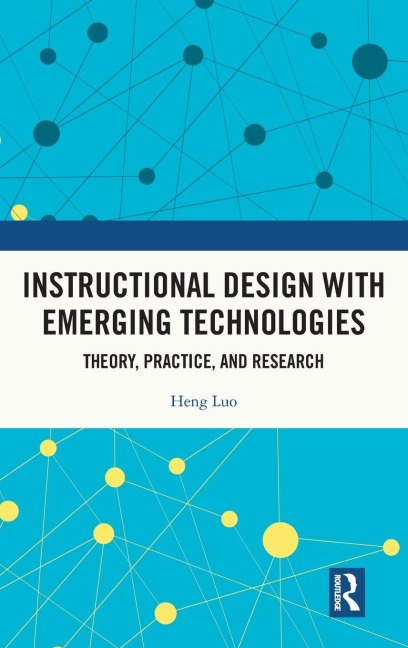

Bridging the gap between Instructional Design (ID) theory and practice in today's technology-enhanced learning environments, the book extends the current understanding of instructional science with an up-to-date perspective on emerging technologies and their affordances for teaching and learning.
Heng Luo is an associate professor at Faculty of Artificial Intelligence in Education from Central China Normal University. His research work focuses on the effective integration of learning sciences, instructional design, and AI technologies to promote quality and equity of education in diverse contexts, leading to over 40 publications in SCI/SSCI journals.
Unit 1: Instructional Design in the Information Age 1: What is instructional design and how is it evolving? 2: Perspectives on theories, technology, practice, and research Unit 2: Useful Theories in Learning and Instruction 3: Behaviorist views of learning and learning analytics 4: Case method to promote meaningful learning experiences 5: Inquiry-based learning and interdisciplinary teaching (PjBL, STEM, and maker) 6: Computer-supported collaborative learning: a social-constructivist approach Unit 3: Emerging Technologies for Education 7: Educational data mining 8: Multimodal learning analytics 9: Mixed reality 10: Artificial intelligence generated content (AIGC) Unit 4: Research Methods for Instructional Design and Technology 11: Quantitative methods 12: Qualitative methods 13: Design-based research Unit 5: Reflections and Future Direction 14: Essential competencies for instructional design practitioners and researchers 15: What have we learned in the past, and what to do in the future?