Und dann auf "Zum Home-Bildschirm [+]".

Stöbern
genialokal zum Startbildschirm hinzufügen
Installieren Sie die genialokal App auf Ihrem Startbildschirm für einen schnellen Zugriff und eine komfortable Nutzung.
Installieren Sie die genialokal App auf Ihrem Startbildschirm für einen schnellen Zugriff und eine komfortable Nutzung.


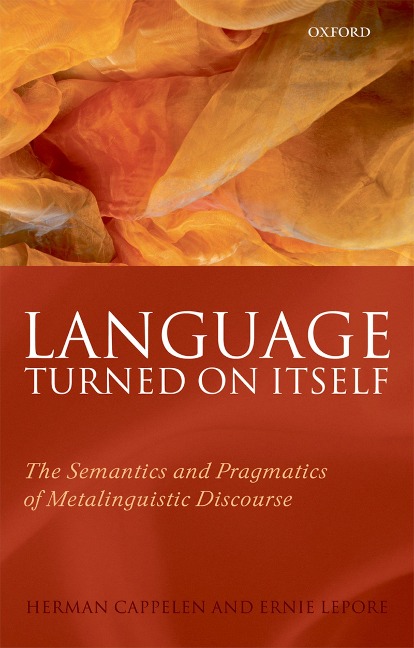
Language Turned on Itself examines what happens when language becomes self-reflexive; when language is used to talk about language. Those who think, talk, and write about language are habitual users of various metalinguistic devices, but reliance on these devices begins early: kids are told, 'That's called a "rabbit"'. It's not implausible that a primitive capacity for the meta-linguistic kicks in at the beginning stages of language acquisition. But no matter when or how frequently these devices are invoked, one thing is clear: they present theorists of language with a complex data pattern. Herman Cappelen and Ernest Lepore show that the study of these devices and patterns not only represents an interesting and neglected project in the philosophy of language, but also carries important consequences for other parts of philosophy. Part I is devoted to presenting data about various aspects of our metalinguistic practices. In Part II, the authors examine and reject the four leading metalinguistic theories, and offer a new account of our use of quotation in a variety of different contexts. But the primary goal of this book is not to promote one theory over another. Rather, it is to present a deeply puzzling set of problems and explain their significance
- Preface and Acknowledgements - 1: Advertisement - 2: Preliminaries: 'Quotation' and Varieties of Quotation - Part I: Data - 3: Overview - 4: Omitted Quotation Marks - 5: 'Impure' Direct Quotes - 6: Mixed Quotation - 7: Quotation and Context Sensitivity - Part II: Theory - 8: Use Theories of Quotation - 9: Proper Names and Description Theories of Quotation - 10: Davidson's Theory of Quotation - 11: Minimal Theory of Quotation - 12: On the Nature of Quotable Items - Bibliography
Dieses eBook wird im PDF-Format geliefert und ist mit einem Adobe Kopierschutz (DRM) versehen. Sie können dieses eBook mit allen Geräten lesen, die das PDF-Format und den Adobe Kopierschutz (DRM) unterstützen.
Zum Beispiel mit den folgenden Geräten:
• tolino Reader
Laden Sie das eBook direkt über den Reader-Shop auf dem tolino herunter oder übertragen Sie das eBook auf Ihren tolino mit einer kostenlosen Software wie beispielsweise Adobe Digital Editions.
• Sony Reader & andere eBook Reader
Laden Sie das eBook direkt über den Reader-Shop herunter oder übertragen Sie das eBook mit der kostenlosen Software Sony READER FOR PC/Mac oder Adobe Digital Editions auf ein Standard-Lesegeräte mit epub- und Adobe DRM-Unterstützung.
• Tablets & Smartphones
Möchten Sie dieses eBook auf Ihrem Smartphone oder Tablet lesen, finden Sie hier unsere kostenlose Lese-App für iPhone/iPad und Android Smartphone/Tablets.
• PC & Mac
Lesen Sie das eBook direkt nach dem Herunterladen mit einer kostenlosen Lesesoftware, beispielsweise Adobe Digital Editions, Sony READER FOR PC/Mac oder direkt über Ihre eBook-Bibliothek in Ihrem Konto unter „Meine eBooks“ - „online lesen“.
Schalten Sie das eBook mit Ihrer persönlichen Adobe ID auf bis zu sechs Geräten gleichzeitig frei.
Bitte beachten Sie, dass die Kindle-Geräte das Format nicht unterstützen und dieses eBook somit nicht auf Kindle-Geräten lesbar ist.