Und dann auf "Zum Home-Bildschirm [+]".

Stöbern
genialokal zum Startbildschirm hinzufügen
Installieren Sie die genialokal App auf Ihrem Startbildschirm für einen schnellen Zugriff und eine komfortable Nutzung.
Installieren Sie die genialokal App auf Ihrem Startbildschirm für einen schnellen Zugriff und eine komfortable Nutzung.
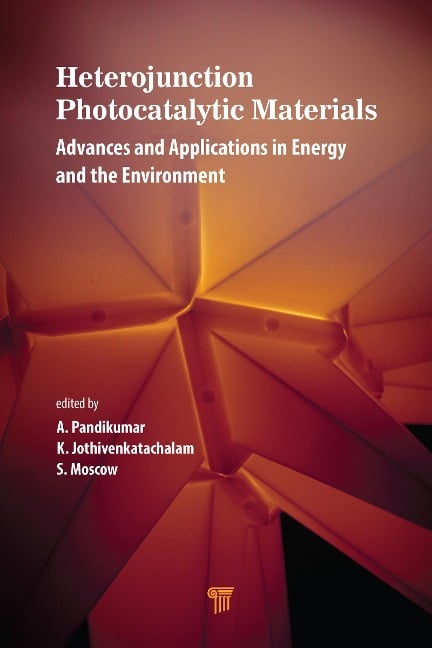
Clean environment and green energy are the basic requirements of a sustainable human life. Semiconductor materials play a crucial role in addressing the issues related to increased global energy demand and environmental remediation. The development of photocatalysts has experienced almost exponential progress since their popularization in the early 1970s. Therefore, researchers have started to consider the diversity of photocatalysts globally by approaching this domain from a materials science perspective for applications in various areas. Recently, heterojunction photocatalytic materials have attracted a great amount of multidisciplinary research to face the global concerns of energy production and environmental protection. The unique potential of these technologies has been the stimulus to develop heterojunction photocatalysts with improved structural, morphological, and electronic properties, effectively increasing their efficiency. This book overviews the latest advances in this field, offering insights into the materials and applications of the latest generation of photocatalytic materials. It presents the challenges, future directions, and strategies for design within the area of heterojunction photocatalysts and will be a useful resource to enhance understanding of students, researchers, and academicians for promoting research in this field.
A. Pandikumar is a scientist in the Organic and Materials Electrochemistry Division of the CSIR-Central Electrochemical Research Institute, Karaikudi, Tamil Nadu, India. He obtained his PhD in chemistry (2014) from the Madurai Kamaraj University, Madurai, India. He successfully completed his postdoctoral fellowship (2014-2016) from the University of Malaya, Malaysia, under its High Impact Research grant. He then joined the Functional Materials Division of the CSIR-Central Electrochemical Research Institute as a scientist. His current research involves development of novel materials with graphene and graphitic carbon nitride, in combination with metals, metal oxides, polymers, and carbon nanotubes, for photocatalysis, photoelectrocatalysis, dye-sensitized solar cells, and electrochemical sensor applications. K. Jothivenkatachalam is head and a professor at the Department of Chemistry, Anna University-BIT Campus, Tiruchirappalli, India. He obtained his PhD in chemistry from the University of Madras, Chennai, India. His current research focuses on photocatalysis for energy and environmental applications and his other research interests are functional materials, photocatalysis, photoelectrochemistry, photoelectrocatalysis, and dye-sensitized solar cells. S. Moscow is an assistant professor at the Department of Chemistry, University College of Engineering, BIT Campus, Tiruchirappalli, India. He has been a lecturer at AVVM Sri Pushpam College and an assistant professor at SASTRA University and Anna University-BIT Campus. He has authored and co-authored book chapters and papers in publications of international repute. His areas of research are photochemistry, geochemistry, environmental sciences, and materials chemistry.
1. Heterojunction Photocatalysts: Boon for Water Purification 2. Role of Heterostructure for the Photocatalytic Application 3. Type II Heterojunction Photocatalysts for Environmental Applications 4. Two-Dimensional Photocatalytic Heterojunction Hybrid Nanomaterials for Environmental Applications 5. Heterojunction Photocatalytic Materials for Energy and Environmental Applications 6. Graphitic Carbon Nitride Heterostructures for Energy and Environmental Applications 7. Graphene-Metal Oxides Nanocomposite Heterojunction as an Efficient Photocatalyst for Energy and Environmental Applications 8. Heterojunction Perovskite Oxide/Halide Materials for Photocatalytic Solar Hydrogen Production 9. Deep Eutectic Solvent-Assisted Synthesis of Bismuth-Based Heterostructured Photocatalysts for Water Splitting and Wastewater Treatment 10. Synergistic Effect of ZnO and g-C3N4: Photocatalytic Activity Toward Cost-Effective Decomposition of Toxic Organic Dyes 11. Nanostructured Metal Oxide and Hybrid Photocatalyst for Water Treatment and Hydrogen Generation 12. Two-Dimensional-Based Hybrid Materials for Photocatalytic and Electrochemical Conversion from Carbon Dioxide to Hydrocarbon Fuels
Dieses eBook wird im PDF-Format geliefert und ist mit einem Adobe Kopierschutz (DRM) versehen. Sie können dieses eBook mit allen Geräten lesen, die das PDF-Format und den Adobe Kopierschutz (DRM) unterstützen.
Zum Beispiel mit den folgenden Geräten:
• tolino Reader
Laden Sie das eBook direkt über den Reader-Shop auf dem tolino herunter oder übertragen Sie das eBook auf Ihren tolino mit einer kostenlosen Software wie beispielsweise Adobe Digital Editions.
• Sony Reader & andere eBook Reader
Laden Sie das eBook direkt über den Reader-Shop herunter oder übertragen Sie das eBook mit der kostenlosen Software Sony READER FOR PC/Mac oder Adobe Digital Editions auf ein Standard-Lesegeräte mit epub- und Adobe DRM-Unterstützung.
• Tablets & Smartphones
Möchten Sie dieses eBook auf Ihrem Smartphone oder Tablet lesen, finden Sie hier unsere kostenlose Lese-App für iPhone/iPad und Android Smartphone/Tablets.
• PC & Mac
Lesen Sie das eBook direkt nach dem Herunterladen mit einer kostenlosen Lesesoftware, beispielsweise Adobe Digital Editions, Sony READER FOR PC/Mac oder direkt über Ihre eBook-Bibliothek in Ihrem Konto unter „Meine eBooks“ - „online lesen“.
Schalten Sie das eBook mit Ihrer persönlichen Adobe ID auf bis zu sechs Geräten gleichzeitig frei.
Bitte beachten Sie, dass die Kindle-Geräte das Format nicht unterstützen und dieses eBook somit nicht auf Kindle-Geräten lesbar ist.