Und dann auf "Zum Home-Bildschirm [+]".

Stöbern
genialokal zum Startbildschirm hinzufügen
Installieren Sie die genialokal App auf Ihrem Startbildschirm für einen schnellen Zugriff und eine komfortable Nutzung.
Installieren Sie die genialokal App auf Ihrem Startbildschirm für einen schnellen Zugriff und eine komfortable Nutzung.
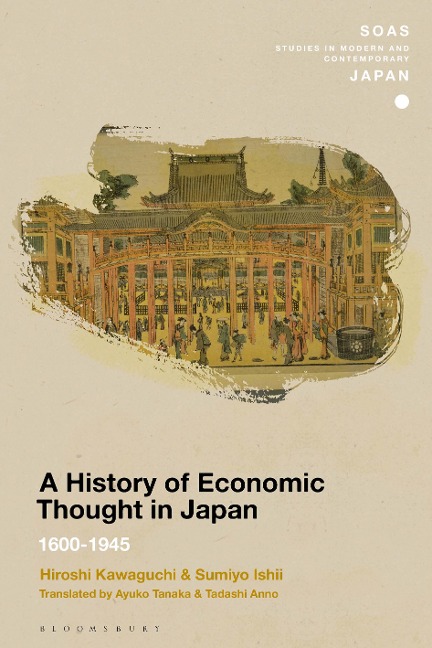
This ground-breaking book provides the first English-language survey of economic thought in modern Japan. Significantly, it offers both a detailed study of economic thought from 1600 to 1945 and a nuanced analysis of Western and Asian perspectives on the field of Japanese economic history.
Expertly translated from Japanese and written by leading scholars in the field, this exciting study includes:
* A novel approach to economic thought which contextualizes the core values of thinkers across the period
* A comparative analysis of Japanese economic history which looks at the continuities across the Meiji divide
* The extensive use of archival sources, many of which were previously unavailable in English
A History of Economic Thought in Japan, 1600 - 1945 serves as a case study of how Western economic ideas spread to non-Western regions and interacted with indigenous ideas. It will therefore be of immense value to both scholars of economic thought and those seeking a deeper understanding of the moral, intellectual, and societal forces that shaped modern Japan.
Hiroshi Kawaguchi is Professor of History of Japanese Economy and Economic Thought at Waseda University, Japan.
Sumiyo Ishii is Associate Professor of History of Japanese Economic Thought at Daito Bunka University, Japan.
Ayuko Tanaka is Translator of Academic Texts. With Tadashi Anno she has translated Economic Thought in Early Modern Japan (2010) and From Leavenworth to Lhasa: Living in a Revolutionary Era (2008).
Tadashi Anno is Professor of Political Science at Sophia University, Japan. He is the author of National Identity and the Search for Great-Power Status in Russia and Japan (2018) and the co-editor of The Dynamism of Global Society (2007).
List of Maps
List of Tables
About the Authors and Translators
Preface to the English Edition
Preface to the Japanese Edition
Notes on Style
Introduction
Module I. The Development of the Theory of Political Economy
1. The Emergence of an Estate-Based Society
2. Samurai in Time of Peace
3. Administering the Society and Saving the People through De-Marketization
4. De-Marketization through Shogunal Power
Module II. A Turn Toward Economic Pragmatism
5. A Turning Point in the Theory of Keisei Saimin
6. Shogun Yoshimune and Pragmatic Officials
7. Tanuma Okitsugu and the Era of Intellectual Pluralism
8. The Way of the Market and Domainal Interest
Module III. Estate-Based Society and Occupational Duty
9. Occupational Duty and the Self-Assertion of Peasants, Artisans, and of Merchants
10. Economic Thought in a Stationary Society
Module IV. Reconceptualizing Japan and the World
11. Japan and National Learning
12. Changes in the Japanese Worldview in the Nineteenth Century
13. Arguments for Opening up the Country
Module V. Modern Japan: Its Birth and Economic Vision
14. East Asian vs. Western Views on Human Beings and Society
15. Intellectuals of the "Meiji Enlightenment"
16. The Meiji State and the Promotion of Industry
17. Visions for Policy on Industry and Trade
Module VI. Managers of Modern Industrial Enterprises
18. Higher Education and Entrepreneurship
19. Organizers of Entrepreneurial Activities
20. New Industries of the Twentieth Century
Module VII. Questioning Modernity
21. Critical Perspectives on Japanese Capitalism
22. Social Policy and Japanese-Style Marxism
23. Japan in an Era of Crises
References
Index
Dieses eBook wird im PDF-Format geliefert und ist mit einem Adobe Kopierschutz (DRM) versehen. Sie können dieses eBook mit allen Geräten lesen, die das PDF-Format und den Adobe Kopierschutz (DRM) unterstützen.
Zum Beispiel mit den folgenden Geräten:
• tolino Reader
Laden Sie das eBook direkt über den Reader-Shop auf dem tolino herunter oder übertragen Sie das eBook auf Ihren tolino mit einer kostenlosen Software wie beispielsweise Adobe Digital Editions.
• Sony Reader & andere eBook Reader
Laden Sie das eBook direkt über den Reader-Shop herunter oder übertragen Sie das eBook mit der kostenlosen Software Sony READER FOR PC/Mac oder Adobe Digital Editions auf ein Standard-Lesegeräte mit epub- und Adobe DRM-Unterstützung.
• Tablets & Smartphones
Möchten Sie dieses eBook auf Ihrem Smartphone oder Tablet lesen, finden Sie hier unsere kostenlose Lese-App für iPhone/iPad und Android Smartphone/Tablets.
• PC & Mac
Lesen Sie das eBook direkt nach dem Herunterladen mit einer kostenlosen Lesesoftware, beispielsweise Adobe Digital Editions, Sony READER FOR PC/Mac oder direkt über Ihre eBook-Bibliothek in Ihrem Konto unter „Meine eBooks“ - „online lesen“.
Schalten Sie das eBook mit Ihrer persönlichen Adobe ID auf bis zu sechs Geräten gleichzeitig frei.
Bitte beachten Sie, dass die Kindle-Geräte das Format nicht unterstützen und dieses eBook somit nicht auf Kindle-Geräten lesbar ist.