Und dann auf "Zum Home-Bildschirm [+]".

Stöbern
genialokal zum Startbildschirm hinzufügen
Installieren Sie die genialokal App auf Ihrem Startbildschirm für einen schnellen Zugriff und eine komfortable Nutzung.
Installieren Sie die genialokal App auf Ihrem Startbildschirm für einen schnellen Zugriff und eine komfortable Nutzung.
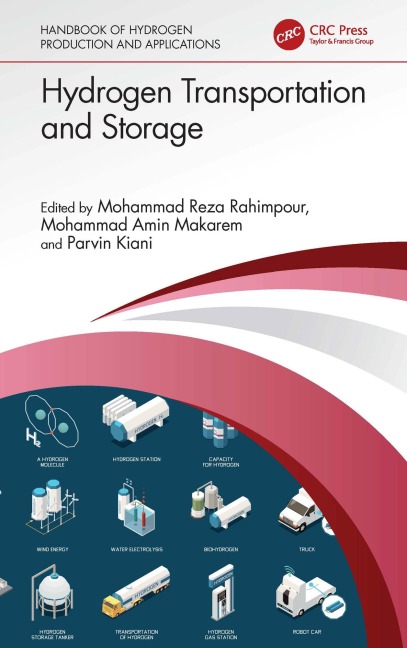
The success of hydrogen energy markets depends on developing efficient hydrogen storage and transportation methods. Hydrogen may be stored in various ways, including compression, liquefaction, adsorption, hydrides, and reformed fuels. Hydrogen's application, transport method, storage time, and other factors all have an impact on the technology choices available for its long-term storage. This book comprehensively reviews hydrogen storage and transportation technologies along with related safety hazards and challenges. - Introduces hydrogen storage and transportation materials and standards - Includes miscellaneous hydrogen storage methods - Covers different hydrogen transportation technologies - Comprehensively describes hydrogen storage and transportation safety considerations - Provides economic assessments and environmental challenges related to hydrogen storage and transportation Part of the multivolume Handbook of Hydrogen Production and Applications, this standalone book guides researchers and academics in chemical, environmental, energy, and related areas of engineering interested in development and implementation of hydrogen production technologies.
Mohammad Reza Rahimpour is a Distinguished Professor of Chemical Engineering at Shiraz University, Iran. He earned a PhD in chemical engineering at Shiraz University, in collaboration with the University of Sydney, Australia, in 1988. He leads a pioneering research group specializing in fuel processing technology, with a particular focus on the catalytic conversion of both fossil fuels, such as natural gas, and renewable fuels, like bio-oils derived from lignin, into valuable energy sources. Throughout his academic career, Dr. Rahimpour has specialized in hydrogen production technologies, including steam methane reforming, water electrolysis, photocatalytic hydrogen production, and hydrogen production from both renewable sources and fossil fuels. His extensive expertise and innovative research significantly contribute to advancements in hydrogen production and its practical applications. Mohammad Amin Makarem earned a PhD in chemical engineering at Shiraz University. His research interests include gas separation and purification, nanofluids, microfluidics, catalyst synthesis, reactor design, and green energy. Parvin Kiani earned a degree in chemical engineering at Shiraz University. Her research has focused on gas separation, clean energy, and catalyst synthesis.
Section I: An Overview of Hydrogen Storage and Transportation Technologies. 1. Introduction to Hydrogen Storage, Transportation, and Distribution Technologies and Challenges. 2. Engineering Properties of Hydrogen Storage Materials. Section II: Hydrogen Storage and Transportation Methods. 3. Liquid Hydrogen Carriers. 4. Pressurized Gaseous Hydrogen Storage. 5. Low-Temperature Liquefaction Hydrogen Storage. 6. Carbonaceous Materials for Hydrogen Storage. 7. Glass Microspheres for Hydrogen Storage. 8. Metal-Organic Frameworks (MOF) for Hydrogen Storage. 9. Pipelines for Hydrogen Transportation. 10. Cryogenic Liquid Tankers for Hydrogen Transportation. Section III: Hydrogen Storage and Transportation Safety Considerations. 11. Prevention of Hydrogen Pipeline Cracking and Leakage. 12. Delayed Hydrogen Ignition and Explosion. 13. Liquid Hydrogen Release from Pressurized and Non-pressurized Tanks.
Dieses eBook wird im PDF-Format geliefert und ist mit einem Adobe Kopierschutz (DRM) versehen. Sie können dieses eBook mit allen Geräten lesen, die das PDF-Format und den Adobe Kopierschutz (DRM) unterstützen.
Zum Beispiel mit den folgenden Geräten:
• tolino Reader
Laden Sie das eBook direkt über den Reader-Shop auf dem tolino herunter oder übertragen Sie das eBook auf Ihren tolino mit einer kostenlosen Software wie beispielsweise Adobe Digital Editions.
• Sony Reader & andere eBook Reader
Laden Sie das eBook direkt über den Reader-Shop herunter oder übertragen Sie das eBook mit der kostenlosen Software Sony READER FOR PC/Mac oder Adobe Digital Editions auf ein Standard-Lesegeräte mit epub- und Adobe DRM-Unterstützung.
• Tablets & Smartphones
Möchten Sie dieses eBook auf Ihrem Smartphone oder Tablet lesen, finden Sie hier unsere kostenlose Lese-App für iPhone/iPad und Android Smartphone/Tablets.
• PC & Mac
Lesen Sie das eBook direkt nach dem Herunterladen mit einer kostenlosen Lesesoftware, beispielsweise Adobe Digital Editions, Sony READER FOR PC/Mac oder direkt über Ihre eBook-Bibliothek in Ihrem Konto unter „Meine eBooks“ - „online lesen“.
Schalten Sie das eBook mit Ihrer persönlichen Adobe ID auf bis zu sechs Geräten gleichzeitig frei.
Bitte beachten Sie, dass die Kindle-Geräte das Format nicht unterstützen und dieses eBook somit nicht auf Kindle-Geräten lesbar ist.