Und dann auf "Zum Home-Bildschirm [+]".

Stöbern
genialokal zum Startbildschirm hinzufügen
Installieren Sie die genialokal App auf Ihrem Startbildschirm für einen schnellen Zugriff und eine komfortable Nutzung.
Installieren Sie die genialokal App auf Ihrem Startbildschirm für einen schnellen Zugriff und eine komfortable Nutzung.
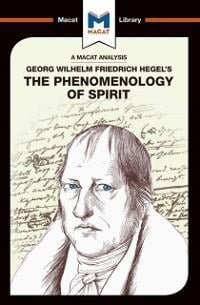
Hegel's 1807 Phenomenology of Spirit is renowned for being one of the most challenging and important books in Western philosophy. Above all, it is famous for laying out a new approach to reasoning and philosophical argument, an approach that has been credited with influencing Karl Marx, Jean-Paul Sartre, and many other key modern philosophers. That approach is the so-called "Hegelian dialectic" - an open-ended sequence of reasoning and argument in which contradictory concepts generate and are incorporated into a third, more sophisticated concept. While the Phenomenology does not always clearly use this dialectical method - and it is famously one of the most difficult works of philosophy ever written - the Hegelian dialectic provides a perfect template for critical thinking reasoning skills. A hallmark of good reasoning in the construction of an argument, and the searching out of answers must necessarily consider contradictory viewpoints or evidence. For Hegel, contradiction is key: it is precisely what allows reasoning to progress. Only by incorporating and overcoming contradictions, according to his method, is it possible for thought to progress at all. While writing like Hegel might not be advisable, thinking like him can help take your reasoning to the next level.
Ian Jackson is a PhD student in the Politics, Philosophy and Religion department at Lancaster University. He is interested in the role new media plays in the dissemination of ideas.
Ways in to the Text Who was George W.F. Hegel? What does The Phenomenology of Spirit Say? Why does The Phenomenology of Spirit Matter? Section 1: Influences Module 1: The Author and the Historical Context Module 2: Academic Context Module 3: The Problem Module 4: The Author's Contribution Section 2: Ideas Module 5: Main Ideas Module 6: Secondary Ideas Module 7: Achievement Module 8: Place in the Author's Work Section 3: Impact Module 9: The First Responses Module 10: The Evolving Debate Module 11: Impact and Influence Today Module 12: Where Next? Glossary of Terms People Mentioned in the Text Works Cited
Dieses eBook wird im PDF-Format geliefert und ist mit einem Adobe Kopierschutz (DRM) versehen. Sie können dieses eBook mit allen Geräten lesen, die das PDF-Format und den Adobe Kopierschutz (DRM) unterstützen.
Zum Beispiel mit den folgenden Geräten:
• tolino Reader
Laden Sie das eBook direkt über den Reader-Shop auf dem tolino herunter oder übertragen Sie das eBook auf Ihren tolino mit einer kostenlosen Software wie beispielsweise Adobe Digital Editions.
• Sony Reader & andere eBook Reader
Laden Sie das eBook direkt über den Reader-Shop herunter oder übertragen Sie das eBook mit der kostenlosen Software Sony READER FOR PC/Mac oder Adobe Digital Editions auf ein Standard-Lesegeräte mit epub- und Adobe DRM-Unterstützung.
• Tablets & Smartphones
Möchten Sie dieses eBook auf Ihrem Smartphone oder Tablet lesen, finden Sie hier unsere kostenlose Lese-App für iPhone/iPad und Android Smartphone/Tablets.
• PC & Mac
Lesen Sie das eBook direkt nach dem Herunterladen mit einer kostenlosen Lesesoftware, beispielsweise Adobe Digital Editions, Sony READER FOR PC/Mac oder direkt über Ihre eBook-Bibliothek in Ihrem Konto unter „Meine eBooks“ - „online lesen“.
Schalten Sie das eBook mit Ihrer persönlichen Adobe ID auf bis zu sechs Geräten gleichzeitig frei.
Bitte beachten Sie, dass die Kindle-Geräte das Format nicht unterstützen und dieses eBook somit nicht auf Kindle-Geräten lesbar ist.