Und dann auf "Zum Home-Bildschirm [+]".

Stöbern
genialokal zum Startbildschirm hinzufügen
Installieren Sie die genialokal App auf Ihrem Startbildschirm für einen schnellen Zugriff und eine komfortable Nutzung.
Installieren Sie die genialokal App auf Ihrem Startbildschirm für einen schnellen Zugriff und eine komfortable Nutzung.
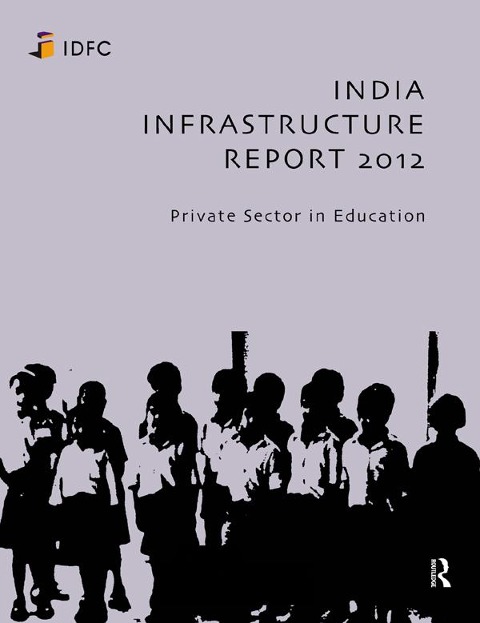
Today, India's education sector remains a victim of poor policies, restrictive regulations and orthodoxy. Despite being enrolled in schools, children are not learning adequately. Increasingly, parents are seeking alternatives through private inputs in school and tuition. Students are dropping out from secondary school in spite of high financial returns of secondary education, and those who do complete it have inferior conceptual knowledge. Higher education is over-regulated and under-governed, keeping away serious private providers and reputed global institutes. Graduates from high schools, colleges and universities are not readily employable, and few are willing to pay for skill development. Ironically, the Right to Education Act, if strictly enforced, will result in closure of thousands of non-state schools, and millions of poor children will be left without access to education. Eleventh in the series, India Infrastructure Report 2012 discusses challenges in the education sector - elementary, secondary, higher, and vocational - and explores strategies for constructive change and opportunities for the private sector. It suggests that immediate steps are required to reform the sector to reap the benefits from India's 'demographic dividend' due to a rise in the working age population. Result of a collective effort led by the IDFC Foundation, this Report brings together a range of perspectives from academics, researchers and practitioners committed to enhancing educational practices. It will be an invaluable resource for policymakers, researchers and corporates.
Idfc Foundation
Foreword. Acknowledgements. List of Tables, Figures and Boxes. List of Abbreviations. Private Sector in Education: An Overview Sambit Basu Section I. Education Landscape in India 1. Regulations in the Education Sector M. R. Madhavan and Kaushiki Sanyal 2. Public Expenditure on Education in India by the Union Government and Roadmap for the Future Anit N. Mukherjee and Satadru Sikdar Section II. Elementary and Secondary Education 3. Right of Children to Free and Compulsory Education Act, 2009 and its Implementation Chanchal Chand Sarkar 4. Social Inequalities in Education Sonalde Desai and Amit Thorat 5. Every Child in School and Learning Well in India: Investigating the Implications of School Provision and Supplemental Help Rukmini Banerji and Wilima Wadhwa 6. From the Right to Schooling to the Right to Learning: Towards a New Frontier for Governing Elementary Education Finances in India Yamini Aiyar 7. Private Initiative in India's Education Miracle Parth J. Shah and Luis Miranda 8. Low-Cost Private Schools for the Poor in India: Some Reflections Geetha B. Nambissan 9. The Idea of Quality in Inclusive Schools Annie Koshi 10. Thinking Outside the Government Box: The Role of the Non-Government Sector in Achieving Quality Education for All Suzana Andrade Brinkmann 11. Learning the Right Lessons: Measurement, Experimentation and the Need to Turn India's Right to Education Act Upside-Down Shobhini Mukerji and Michael Walton 12. Secondary Education Toby Linden Section III. Higher and Vocational Education 13. Private Higher Education: The Global Surge and Indian Concerns N. V. Varghese 14. The Emerging Market for Higher Education: Rationalising Regulation to Address Equity and Quality Concern Saumen Chattopadhyay 15. Quality, Accreditation and Global University Ranking: Issues before Indian Higher Education Emon Nandi and Saumen Chattopadhyay 16. Private Sector's Role in Indian Higher Education Anand Sudarshan and Sandhya Subramanian 17. Higher Education Law and Privately-Funded University Education in India: Towards a Vision? Amlanjyoti Goswami 18. Skill Development in India: A Transformation in the Making Dilip Chenoy 19. Private Sector in Professional and Vocational Education Manish Sabharwal and Neeti Sharma Section IV. Role of Teacher Training and ICT in Education 20. Positioning Teachers in the Emerging Education Landscape of Contemporary India Poonam Batra 21. Educational Technology: Relevance and Possibilities for Education in India Manish Upadhyay and Amitava Maitra Section V. Review of Infrastructure Sector in India The Infrastructure Sector in India 2012 Megha Maniar. Contributors
Dieses eBook wird im PDF-Format geliefert und ist mit einem Adobe Kopierschutz (DRM) versehen. Sie können dieses eBook mit allen Geräten lesen, die das PDF-Format und den Adobe Kopierschutz (DRM) unterstützen.
Zum Beispiel mit den folgenden Geräten:
• tolino Reader
Laden Sie das eBook direkt über den Reader-Shop auf dem tolino herunter oder übertragen Sie das eBook auf Ihren tolino mit einer kostenlosen Software wie beispielsweise Adobe Digital Editions.
• Sony Reader & andere eBook Reader
Laden Sie das eBook direkt über den Reader-Shop herunter oder übertragen Sie das eBook mit der kostenlosen Software Sony READER FOR PC/Mac oder Adobe Digital Editions auf ein Standard-Lesegeräte mit epub- und Adobe DRM-Unterstützung.
• Tablets & Smartphones
Möchten Sie dieses eBook auf Ihrem Smartphone oder Tablet lesen, finden Sie hier unsere kostenlose Lese-App für iPhone/iPad und Android Smartphone/Tablets.
• PC & Mac
Lesen Sie das eBook direkt nach dem Herunterladen mit einer kostenlosen Lesesoftware, beispielsweise Adobe Digital Editions, Sony READER FOR PC/Mac oder direkt über Ihre eBook-Bibliothek in Ihrem Konto unter „Meine eBooks“ - „online lesen“.
Schalten Sie das eBook mit Ihrer persönlichen Adobe ID auf bis zu sechs Geräten gleichzeitig frei.
Bitte beachten Sie, dass die Kindle-Geräte das Format nicht unterstützen und dieses eBook somit nicht auf Kindle-Geräten lesbar ist.