Und dann auf "Zum Home-Bildschirm [+]".

Stöbern
genialokal zum Startbildschirm hinzufügen
Installieren Sie die genialokal App auf Ihrem Startbildschirm für einen schnellen Zugriff und eine komfortable Nutzung.
Installieren Sie die genialokal App auf Ihrem Startbildschirm für einen schnellen Zugriff und eine komfortable Nutzung.
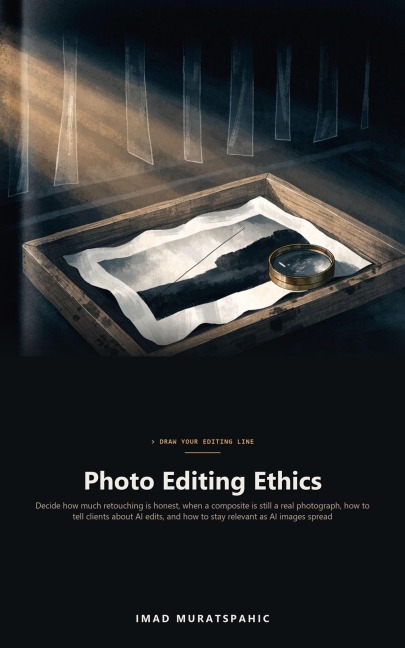

A viewer says your best shot is fake. A client finds out after delivery that a tool you used was AI-assisted. A thread tells you photographers are about to be replaced. Everybody has a strong opinion about where editing becomes cheating, and almost nobody gives you a way to decide for yourself. Photo Editing Ethics is a practical, even-handed guide for hobbyists and working photographers who want a line they can explain and keep. It is not a contracts-and-pricing manual, a software tutorial or a shooting course: it focuses on the honest use of editing, compositing and AI tools, what to say about them, and how to stay relevant when AI images are everywhere. Inside, you'll learn: A three-question test (capture, change, claim) for deciding whether any edit is honest Five tiers of editing, from basic development to AI-generated pixels, so you can place any adjustment How far heavy perspective correction, retouching and compositing can go before the claim changes How context moves the line for news, contests, weddings, portraits, commercial work and personal art A one-line way to disclose AI-assisted work, with wording you can adapt A short editing conversation to hold with clients before a shoot, and what to do when a delivery goes wrong How to respond calmly when someone calls your image fake, and what records to keep What AI changes and does not change about paid photography, and a one-page editing policy you can publish You will not be told where your line must be. You will finish with a position that is honest, clear and yours.
Imad Muratspahic is an independent author of practical how-to guides, technical handbooks, history and fiction. The books aim to be clear, honest and useful from the first page.