Und dann auf "Zum Home-Bildschirm [+]".

Stöbern
genialokal zum Startbildschirm hinzufügen
Installieren Sie die genialokal App auf Ihrem Startbildschirm für einen schnellen Zugriff und eine komfortable Nutzung.
Installieren Sie die genialokal App auf Ihrem Startbildschirm für einen schnellen Zugriff und eine komfortable Nutzung.
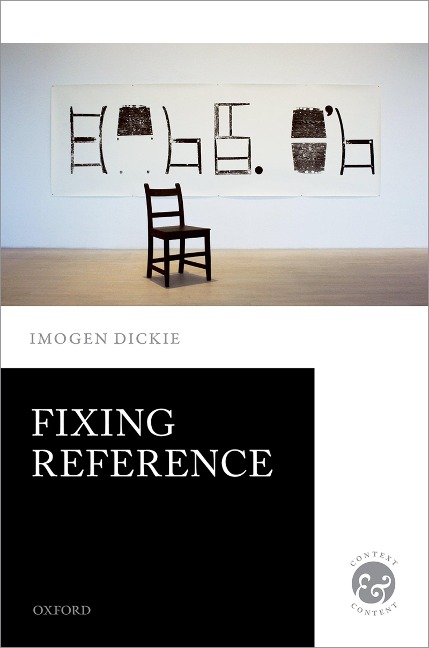
Imogen Dickie develops an account of aboutness-fixing for thoughts about ordinary objects, and of reference-fixing for the singular terms we use to express them. Extant discussions of this topic tread a weary path through descriptivist proposals, causalist alternatives, and attempts to combine the most attractive elements of each. The account developed here is a new beginning. It starts with two basic principles. The first connects aboutness and truth: a belief is about the object upon whose properties its truth or falsity depends. The second connects truth and justification: justification is truth conducive; in general and allowing exceptions, a subject whose beliefs are justified will be unlucky if they are not true, and not merely lucky if they are. These principles--one connecting aboutness and truth; the other truth and justification--combine to yield a third principle connecting aboutness and justification: a body of beliefs is about the object upon which its associated means of justification converges; the object whose properties a subject justifying beliefs in this way will be unlucky to get wrong and not merely luck to get right. The first part of the book proves a precise version of this principle. Its remaining chapters use the principle to explain how the relations to objects that enable us to think about them--perceptual attention; understanding of proper names; grasp of descriptions--do their aboutness-fixing and thought-enabling work. The book includes discussions of the nature of singular thought and the relation between thought and consciousness.
Imogen Dickie did her first degree in New Zealand and her graduate work at Oxford. She is currently a Professor of Philosophy at the University of Toronto.
- 1: Introduction - 2: In which a precise version of the connection between aboutness and justification is derived from more basic principles - 3: The mind has a basic need to represent things outside itself - 4: Perceptual demonstratives - 5: Proper names - 6: The delicate question of reference by description - 7: Descriptions and singular thought - 8: Thought and consciousness - Appendix: Key to notation - References - Index
Dieses eBook wird im PDF-Format geliefert und ist mit einem Adobe Kopierschutz (DRM) versehen. Sie können dieses eBook mit allen Geräten lesen, die das PDF-Format und den Adobe Kopierschutz (DRM) unterstützen.
Zum Beispiel mit den folgenden Geräten:
• tolino Reader
Laden Sie das eBook direkt über den Reader-Shop auf dem tolino herunter oder übertragen Sie das eBook auf Ihren tolino mit einer kostenlosen Software wie beispielsweise Adobe Digital Editions.
• Sony Reader & andere eBook Reader
Laden Sie das eBook direkt über den Reader-Shop herunter oder übertragen Sie das eBook mit der kostenlosen Software Sony READER FOR PC/Mac oder Adobe Digital Editions auf ein Standard-Lesegeräte mit epub- und Adobe DRM-Unterstützung.
• Tablets & Smartphones
Möchten Sie dieses eBook auf Ihrem Smartphone oder Tablet lesen, finden Sie hier unsere kostenlose Lese-App für iPhone/iPad und Android Smartphone/Tablets.
• PC & Mac
Lesen Sie das eBook direkt nach dem Herunterladen mit einer kostenlosen Lesesoftware, beispielsweise Adobe Digital Editions, Sony READER FOR PC/Mac oder direkt über Ihre eBook-Bibliothek in Ihrem Konto unter „Meine eBooks“ - „online lesen“.
Schalten Sie das eBook mit Ihrer persönlichen Adobe ID auf bis zu sechs Geräten gleichzeitig frei.
Bitte beachten Sie, dass die Kindle-Geräte das Format nicht unterstützen und dieses eBook somit nicht auf Kindle-Geräten lesbar ist.