Und dann auf "Zum Home-Bildschirm [+]".

Stöbern
genialokal zum Startbildschirm hinzufügen
Installieren Sie die genialokal App auf Ihrem Startbildschirm für einen schnellen Zugriff und eine komfortable Nutzung.
Installieren Sie die genialokal App auf Ihrem Startbildschirm für einen schnellen Zugriff und eine komfortable Nutzung.
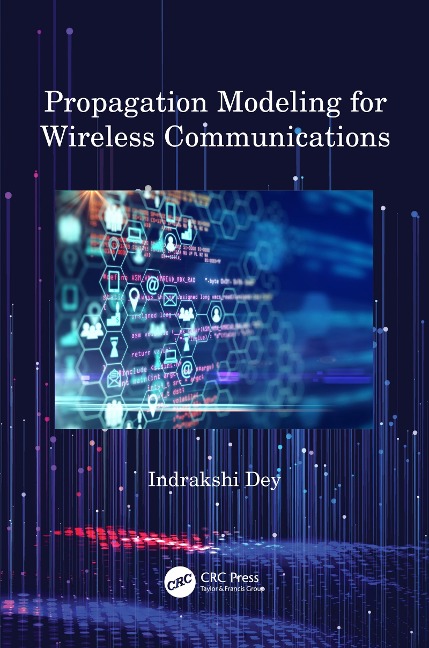
This book introduces the various approaches and tools used for modelling different propagation environments and lays the foundation for developing a unified theoretical framework for future integrated communication networks. In the case of each type of network, the book uses basic concepts of physics, mathematics, geometry and probability theory to study the impact of the dimension and shape of the propagation environment and relative transmit-receive position on the information flow. The book provides an introduction into wireless communication systems and networks and their applications. For both systems and networks, the basic hard (encoder, modulator, etc.) and soft components (information, signal, etc.) are discussed through schematic block diagrams. Next each of the modes of communication, namely radio waves, acoustic waves, magnetic induction, optical waves, biological particles (molecules, aerosols, neural synapse etc.) and quantum field, are discussed. For each communication scenario presented, the impact of different environmental factors on the propagation phenomenon is articulated, followed by different channel modelling (deterministic, analytical, and stochastic) techniques that are used to characterize the propagation environment. Finally future trends in wireless communication networks are examined and envisioned for next generations 6G/7G of communication systems, like space information networks, sea-to-sky internet of vehicles, and internet of bio-nano things. Based on the future trends of integrated networks, the book drives the need for a generalized channel model irrespective of the media and mode of information transfer. The primary audience for the book is post-graduate students, researchers and academics in electronics and communications engineering, electrical engineering and computer science.
Dr. I. Dey is a Lecturer/Assistant Professor at Dept. of Electronic Engineering of National University of Ireland, Maynooth.
Part 1. Introduction. 1. Introduction. Part 2. Wave-based Propagation. 2. Radiowave Propagation. 3. Acoustic Wave Propagation. 4. Mageto-Inductive Propagation. 5. Optical Wave Propagation. Part 3. Particle-based Propagation. 6. Molecular Communication. 7. Quantum Field Propagation. Part 4. Conclusion. 8. The Future.
Dieses eBook wird im PDF-Format geliefert und ist mit einem Adobe Kopierschutz (DRM) versehen. Sie können dieses eBook mit allen Geräten lesen, die das PDF-Format und den Adobe Kopierschutz (DRM) unterstützen.
Zum Beispiel mit den folgenden Geräten:
• tolino Reader
Laden Sie das eBook direkt über den Reader-Shop auf dem tolino herunter oder übertragen Sie das eBook auf Ihren tolino mit einer kostenlosen Software wie beispielsweise Adobe Digital Editions.
• Sony Reader & andere eBook Reader
Laden Sie das eBook direkt über den Reader-Shop herunter oder übertragen Sie das eBook mit der kostenlosen Software Sony READER FOR PC/Mac oder Adobe Digital Editions auf ein Standard-Lesegeräte mit epub- und Adobe DRM-Unterstützung.
• Tablets & Smartphones
Möchten Sie dieses eBook auf Ihrem Smartphone oder Tablet lesen, finden Sie hier unsere kostenlose Lese-App für iPhone/iPad und Android Smartphone/Tablets.
• PC & Mac
Lesen Sie das eBook direkt nach dem Herunterladen mit einer kostenlosen Lesesoftware, beispielsweise Adobe Digital Editions, Sony READER FOR PC/Mac oder direkt über Ihre eBook-Bibliothek in Ihrem Konto unter „Meine eBooks“ - „online lesen“.
Schalten Sie das eBook mit Ihrer persönlichen Adobe ID auf bis zu sechs Geräten gleichzeitig frei.
Bitte beachten Sie, dass die Kindle-Geräte das Format nicht unterstützen und dieses eBook somit nicht auf Kindle-Geräten lesbar ist.