Und dann auf "Zum Home-Bildschirm [+]".

Stöbern
genialokal zum Startbildschirm hinzufügen
Installieren Sie die genialokal App auf Ihrem Startbildschirm für einen schnellen Zugriff und eine komfortable Nutzung.
Installieren Sie die genialokal App auf Ihrem Startbildschirm für einen schnellen Zugriff und eine komfortable Nutzung.
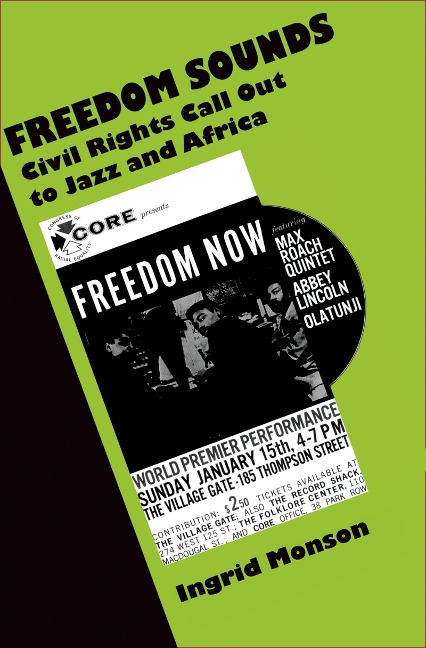
An insightful examination of the impact of the Civil Rights Movement and African Independence on jazz in the 1950s and 60s, Freedom Sounds traces the complex relationships among music, politics, aesthetics, and activism through the lens of the hot button racial and economic issues of the time. Ingrid Monson illustrates how the contentious and soul-searching debates in the Civil Rights, African Independence, and Black Power movements shaped aesthetic debates and exerted a moral pressure on musicians to take action. Throughout, her arguments show how jazz musicians' quest for self-determination as artists and human beings also led to fascinating and far reaching musical explorations and a lasting ethos of social critique and transcendence. Across a broad body of issues of cultural and political relevance, Freedom Sounds considers the discursive, structural, and practical aspects of life in the jazz world in the 1950s and 1960s. In domestic politics, Monson explores the desegregation of the American Federation of Musicians, the politics of playing to segregated performance venues in the 1950s, the participation of jazz musicians in benefit concerts, and strategies of economic empowerment. Issues of transatlantic importance such as the effects of anti-colonialism and African nationalism on the politics and aesthetics of the music are also examined, from Paul Robeson's interest in Africa, to the State Department jazz tours, to the interaction of jazz musicians such Art Blakey and Randy Weston with African and African diasporic aesthetics. Monson deftly explores musicians' aesthetic agency in synthesizing influential forms of musical expression from a multiplicity of stylistic and cultural influences--African American music, popular song, classical music, African diasporic aesthetics, and other world musics--through examples from cool jazz, hard bop, modal jazz, and the avant-garde. By considering the differences between aesthetic and socio-economic mobility, she presents a fresh interpretation of debates over cultural ownership, racism, reverse racism, and authenticity. Freedom Sounds will be avidly read by students and academics in musicology, ethnomusicology, anthropology, popular music, African American Studies, and African diasporic studies, as well as fans of jazz, hip hop, and African American music.
Ingrid Monson is the Quincy Jones Professor of African American Music, Supported by the Time Warner Endowment at Harvard University where she holds a joint appointment in the departments of Music and African and African American Studies. Her research interests include jazz, African American music, and the music of Mali.
1. Introduction 2. Jim Crow, Economics, and the Politics of Musicianship 3. Modernism, Race, and Aesthetics 4. Africa, The Cold War and the Diaspora at Home 5. Activism and Fundraising from Freedom Now to the Freedom Rides 6. Activism and Fundraising from Birmingham to Black Power 7. The Debate Within: White Backlash, The New Thing, and Economics 8. Aesthetic Agency and Self-Determination 9. Coda
Dieses eBook wird im PDF-Format geliefert und ist mit einem Adobe Kopierschutz (DRM) versehen. Sie können dieses eBook mit allen Geräten lesen, die das PDF-Format und den Adobe Kopierschutz (DRM) unterstützen.
Zum Beispiel mit den folgenden Geräten:
• tolino Reader
Laden Sie das eBook direkt über den Reader-Shop auf dem tolino herunter oder übertragen Sie das eBook auf Ihren tolino mit einer kostenlosen Software wie beispielsweise Adobe Digital Editions.
• Sony Reader & andere eBook Reader
Laden Sie das eBook direkt über den Reader-Shop herunter oder übertragen Sie das eBook mit der kostenlosen Software Sony READER FOR PC/Mac oder Adobe Digital Editions auf ein Standard-Lesegeräte mit epub- und Adobe DRM-Unterstützung.
• Tablets & Smartphones
Möchten Sie dieses eBook auf Ihrem Smartphone oder Tablet lesen, finden Sie hier unsere kostenlose Lese-App für iPhone/iPad und Android Smartphone/Tablets.
• PC & Mac
Lesen Sie das eBook direkt nach dem Herunterladen mit einer kostenlosen Lesesoftware, beispielsweise Adobe Digital Editions, Sony READER FOR PC/Mac oder direkt über Ihre eBook-Bibliothek in Ihrem Konto unter „Meine eBooks“ - „online lesen“.
Schalten Sie das eBook mit Ihrer persönlichen Adobe ID auf bis zu sechs Geräten gleichzeitig frei.
Bitte beachten Sie, dass die Kindle-Geräte das Format nicht unterstützen und dieses eBook somit nicht auf Kindle-Geräten lesbar ist.