Und dann auf "Zum Home-Bildschirm [+]".

Stöbern
genialokal zum Startbildschirm hinzufügen
Installieren Sie die genialokal App auf Ihrem Startbildschirm für einen schnellen Zugriff und eine komfortable Nutzung.
Installieren Sie die genialokal App auf Ihrem Startbildschirm für einen schnellen Zugriff und eine komfortable Nutzung.
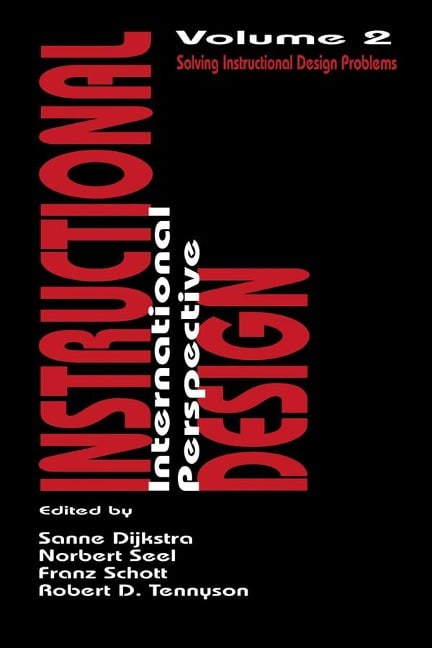
Instructional design theory and practice has evolved over the past 30 years from an initial narrow focus on programmed instruction to a multidimensional field of study integrating psychology, technology, evaluation, measurement, and management. The growth of instructional design (ID) has occurred because of direct needs, problems, and goals from society. Its application in planning instruction first developed in the United States with the Department of Defense during World War II with the purpose of meeting immediate concerns for effective training of larger numbers of military personnel. From the beginning, ID has rapidly expanded into applications in industrial and executive training, vocational training, classroom learning, and professional education. Although ID has its roots in the U.S., applications and theoretical growth is an international activity. However, literature at the international level is still limited to either individual author contributions or collections primarily represented by single countries. As a result, there is no standard reference source that contains the rich variety of theories and applications to form the international foundation for the field. The goal of this two-volume set is to establish international foundations for ID theory, research, and practice within the framework of the two following objectives: * to identify and define the theoretical, research, and model foundations for ID, and * to bridge the gap between ID foundations and application. Volume I includes chapters on philosophical and theoretical issues on learning theory and ID models. Volume II provides an overview of the state of the art of solving ID problems. The contributors offer contrasting points of view which provide a rare opportunity to see the diversity and complexity in the field. The editorial committee has selected a wide range of internationally known authors to make presentations in the topic areas of the field.
Sanne Dijkstra, Franz Schott, Norbert M. Seel, Robert D. Tennyson
Contents: Volume I: Theory, Research, and Models. R.D. Tennyson, F. Schott, Instructional Design Theory, Research, and Models. Part I:Theoretical Foundations of Instructional Design. S. Dijkstra, Theoretical Foundations of Instructional Design: Introduction and Overview. K-H. Flechsig, Cultural Transmission, Teaching and Organized Learning as Culture-Embedded Activities. M. Molenda, Historical and Philosophical Foundations of Instructional Design: A North American View. R.D. Tennyson, R.L. Elmore, Learning Theory Foundations for Instructional Design. G. Steiner, Educational Learning Theory. R.D. Tennyson, K. Breuer, Psychological Foundations for Instructional Design Theory. F. Schott, M.P. Driscoll, On the Architechtonics of Instructional Theory. Part II:Research Foundations for Instructional Design. R.D. Tennyson, Research Foundations for Instructional Design: Introduction and Overview. R.E. Clark, S.B. Blake, Designing Cognitively-Based Training for the Far Transfer of Problem Solving Expertise. R. Snow, Individual Differences. T. Andre, Selected Microinstructional Methods to Facilitate Knowledge Construction: Implications for Instructional Design. W. Einsiedler, Research on Instructional Methods: A European Perspective. N.M. Seel, W.D. Winn, Research on Media and Learning: Distributed Cognition and Semiotics. S.M. Ross, G.R. Morrison, Measurement and Evaluation Approaches in Educational Technology: Historical Roots and Current Practices. Part III:Models of Instructional Design. N.M. Seel, Models of Instructional Design: Introduction and Overview. W. Dick, A Model for the Systematic Design of Instruction. H-D. Haller, Alternative Instructional Models and Knowledge-Organization and Design-Support with CEDID. M.D. Merrill, Instructional Transaction Theory: An Instructional Design Model B
Dieses eBook wird im PDF-Format geliefert und ist mit einem Adobe Kopierschutz (DRM) versehen. Sie können dieses eBook mit allen Geräten lesen, die das PDF-Format und den Adobe Kopierschutz (DRM) unterstützen.
Zum Beispiel mit den folgenden Geräten:
• tolino Reader
Laden Sie das eBook direkt über den Reader-Shop auf dem tolino herunter oder übertragen Sie das eBook auf Ihren tolino mit einer kostenlosen Software wie beispielsweise Adobe Digital Editions.
• Sony Reader & andere eBook Reader
Laden Sie das eBook direkt über den Reader-Shop herunter oder übertragen Sie das eBook mit der kostenlosen Software Sony READER FOR PC/Mac oder Adobe Digital Editions auf ein Standard-Lesegeräte mit epub- und Adobe DRM-Unterstützung.
• Tablets & Smartphones
Möchten Sie dieses eBook auf Ihrem Smartphone oder Tablet lesen, finden Sie hier unsere kostenlose Lese-App für iPhone/iPad und Android Smartphone/Tablets.
• PC & Mac
Lesen Sie das eBook direkt nach dem Herunterladen mit einer kostenlosen Lesesoftware, beispielsweise Adobe Digital Editions, Sony READER FOR PC/Mac oder direkt über Ihre eBook-Bibliothek in Ihrem Konto unter „Meine eBooks“ - „online lesen“.
Schalten Sie das eBook mit Ihrer persönlichen Adobe ID auf bis zu sechs Geräten gleichzeitig frei.
Bitte beachten Sie, dass die Kindle-Geräte das Format nicht unterstützen und dieses eBook somit nicht auf Kindle-Geräten lesbar ist.