Und dann auf "Zum Home-Bildschirm [+]".

Stöbern
genialokal zum Startbildschirm hinzufügen
Installieren Sie die genialokal App auf Ihrem Startbildschirm für einen schnellen Zugriff und eine komfortable Nutzung.
Installieren Sie die genialokal App auf Ihrem Startbildschirm für einen schnellen Zugriff und eine komfortable Nutzung.
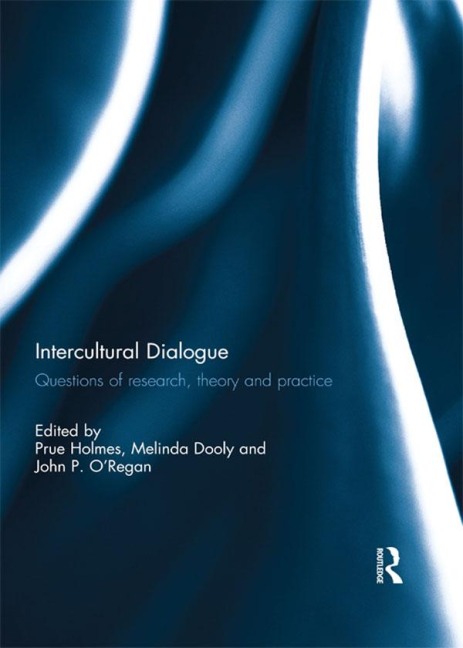
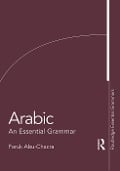
'Intercultural dialogue', as a concept and ideology in the European Union, stimulates a rational 21st century society where people can engage in (intercultural) communication on a global scale, and can do so openly and freely in conditions of security and mutual respect. Intercultural dialogue connotes dialogic communication that is peaceful, reconciliatory, and democratic. Yet the term and its accompanying rhetoric belie the intercultural communicative undercurrents and their manifestations that people encounter in their daily lives. The research-informed chapters in this book, which are situated in international contexts, provide more nuanced understandings, and many even challenge this non-critical ideology by suggesting that the concept of intercultural dialogue is inoperable and problematic under the present conditions of globalisation and migration, where there exists conflict, vulnerability, and instability. The different theoretical perspectives and analyses presented by the authors are a reminder that researchers in the field of intercultural communication require robust and appropriate theories, methods, and pedagogies in order to research these complex conditions and contexts, particularly where different languages and identities are present. The book is also a reminder of how context and power both (re)shape and contest the central tenets of intercultural dialogue-in particular, of who speaks for whom, when, how, and under what circumstances and conditions. This book was originally published as a special issue of Language and Intercultural Communication.
Prue Holmes is Reader in the School of Education at Durham University, UK, and Adjunct Professor at the University of Helsinki, Finland. She teaches and researches in intercultural communication and education. She has published widely in international journals, leads the AHRC-funded project 'Researching Multilingually', and holds several editorial board positions on international journals. Melinda Dooly holds a Serra Húnter fellowship as teacher and researcher at the Education Faculty of the Universitat Autònoma de Barcelona, Spain, where she teaches English as a Foreign Language Methodology and research methods courses. Her teaching and research address technology-enhanced project-based language learning in teacher preparation as well as with very young language learners. She has been involved in several national and international projects as both team member and as principal manager. John P. O'Regan is Senior Lecturer in Applied Linguistics at the Institute of Education, University College London, UK, where he is a doctoral supervisor and leads the MA Applied Linguistics programme. His research interests include the political economy of global English, intercultural communication theory, identity politics, and critical discourse analysis. He is the author of articles covering a wide range of topics in the fields of applied linguistics and cultural studies.
Introduction - Intercultural dialogue: challenges to theory, practice and research 1. Ethical communication and intercultural responsibility: a philosophical perspective 2. Zones of interculturality and linguistic identity: tales of Ladino by Sephardic Jews in Bulgaria 3. Cultural identities in international, interorganisational meetings: a corpus-informed discourse analysis of indexical we 4. Faithful imitator, legitimate speaker, playful creator and dialogical communicator: shift in English learners' identity prototypes 5. Interreligious dialogue in schools: beyond asymmetry and categorisation? 6. Capabilities for intercultural dialogue 7. 'They are bombing now': 'Intercultural Dialogue' in times of conflict Pedagogical Forum 8. The application of general education and intercultural communication in a 'news-listening' class 9. How pedagogical blogging helps prepare students for intercultural communication in the global workplace 10. Intercultural education in primary school: a collaborative project
Dieses eBook wird im PDF-Format geliefert und ist mit einem Adobe Kopierschutz (DRM) versehen. Sie können dieses eBook mit allen Geräten lesen, die das PDF-Format und den Adobe Kopierschutz (DRM) unterstützen.
Zum Beispiel mit den folgenden Geräten:
• tolino Reader
Laden Sie das eBook direkt über den Reader-Shop auf dem tolino herunter oder übertragen Sie das eBook auf Ihren tolino mit einer kostenlosen Software wie beispielsweise Adobe Digital Editions.
• Sony Reader & andere eBook Reader
Laden Sie das eBook direkt über den Reader-Shop herunter oder übertragen Sie das eBook mit der kostenlosen Software Sony READER FOR PC/Mac oder Adobe Digital Editions auf ein Standard-Lesegeräte mit epub- und Adobe DRM-Unterstützung.
• Tablets & Smartphones
Möchten Sie dieses eBook auf Ihrem Smartphone oder Tablet lesen, finden Sie hier unsere kostenlose Lese-App für iPhone/iPad und Android Smartphone/Tablets.
• PC & Mac
Lesen Sie das eBook direkt nach dem Herunterladen mit einer kostenlosen Lesesoftware, beispielsweise Adobe Digital Editions, Sony READER FOR PC/Mac oder direkt über Ihre eBook-Bibliothek in Ihrem Konto unter „Meine eBooks“ - „online lesen“.
Schalten Sie das eBook mit Ihrer persönlichen Adobe ID auf bis zu sechs Geräten gleichzeitig frei.
Bitte beachten Sie, dass die Kindle-Geräte das Format nicht unterstützen und dieses eBook somit nicht auf Kindle-Geräten lesbar ist.