Und dann auf "Zum Home-Bildschirm [+]".

Stöbern
genialokal zum Startbildschirm hinzufügen
Installieren Sie die genialokal App auf Ihrem Startbildschirm für einen schnellen Zugriff und eine komfortable Nutzung.
Installieren Sie die genialokal App auf Ihrem Startbildschirm für einen schnellen Zugriff und eine komfortable Nutzung.
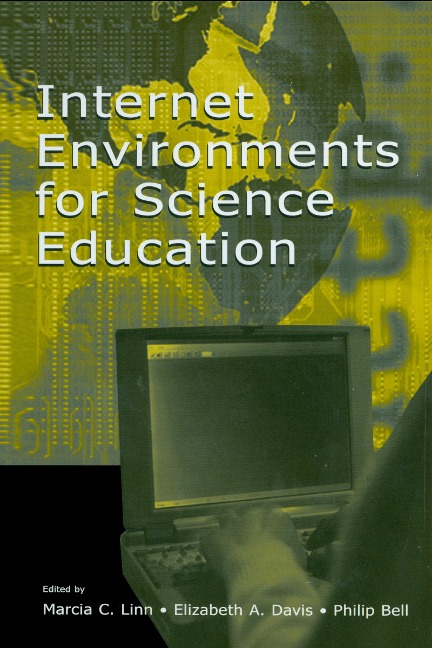
Internet Environments for Science Education synthesizes 25 years of research to identify effective, technology-enhanced ways to convert students into lifelong science learners--one inquiry project at a time. It offers design principles for development of innovations; features tested, customizable inquiry projects that students, teachers, and professional developers can enact and refine; and introduces new methods and assessments to investigate the impact of technology on inquiry learning. The methodology--design-based research studies--enables investigators to capture the impact of innovations in the complex, inertia-laden educational enterprise and to use these findings to improve the innovation. The approach--technology-enhanced inquiry--takes advantage of global, networked information resources, sociocognitive research, and advances in technology combined in responsive learning environments. Internet Environments for Science Education advocates leveraging inquiry and technology to reform the full spectrum of science education activities--including instruction, curriculum, policy, professional development, and assessment. The book offers: *the knowledge integration perspective on learning, featuring the interpretive, cultural, and deliberate natures of the learner; *the scaffolded knowledge integration framework on instruction summarized in meta-principles and pragmatic principles for design of inquiry instruction; *a series of learning environments, including the Computer as Learning Partner (CLP), the Knowledge Integration Environment (KIE), and the Web-based Inquiry Science Environment (WISE) that designers can use to create new inquiry projects, customize existing projects, or inspire thinking about other learning environments; *curriculum design patterns for inquiry projects describing activity sequences to promote critique, debate, design, and investigation in science; *a partnership model establishing activity structures for teachers, pedagogical researchers, discipline experts, and technologists to jointly design and refine inquiry instruction; *a professional development model involving mentoring by an expert teacher; *projects about contemporary controversy enabling students to explore the nature of science; *a customization process guiding teachers to adapt inquiry projects to their own students, geographical characteristics, curriculum framework, and personal goals; and *a Web site providing additional links, resources, and community tools at www.InternetScienceEducation.org
Marcia C. Linn (University of California, Berkeley), Elizabeth A. Davis (University of Michigan) and Philip Bell (University of Washington)
Contents: D. Kirkpatrick, Foreword. M.C. Linn, E.A. Davis, P. Bell, Introduction. Part I: Starting Points.M.C. Linn, E.A. Davis, P. Bell, Inquiry and Technology. M.C. Linn, B-S. Eylon, E.A. Davis, The Knowledge Integration Perspective on Learning. M.C. Linn, E.A. Davis, B-S. Eylon, The Scaffolded Knowledge Integration Framework for Instruction. P. Bell, C.M. Hoadley, M.C. Linn, Designed-Based Research in Education. Part II: Curriculum Design Patterns for Knowledge Integration.E.A. Davis, Creating Critique Projects. P. Bell, Promoting Students' Argument Construction and Collaborative Debate in the Science Classroom. C.M. Hoadley, Fostering Productive Collaboration Offline and Online: Learning From Each Other. D. Clark, Hands-on Investigation in Internet Environments: Teaching Thermal Equilibrium. Part III: New Partnerships.J.D. Slotta, The Web-Based Inquiry Science Environment (WISE): Scaffolding Knowledge Integration in the Science Classroom. P. Bell, The Educational Opportunities of Contemporary Controversies in Science. E. Baumgartner, Synergy Research and Knowledge Integration: Customizing Activities Around Stream Ecology. L. Shear, P. Bell, M.C. Linn, Partnership Models: The Case of the Deformed Frogs. Part IV: Next Steps.M.C. Linn, P. Bell, E.A. Davis, Specific Design Principles: Elaborating the Scaffolded Knowledge Integration Framework. M.C. Linn, E.A. Davis, P. Bell, B-S. Eylon, Closing Thoughts: Internet Environments for Science Education.
Dieses eBook wird im PDF-Format geliefert und ist mit einem Adobe Kopierschutz (DRM) versehen. Sie können dieses eBook mit allen Geräten lesen, die das PDF-Format und den Adobe Kopierschutz (DRM) unterstützen.
Zum Beispiel mit den folgenden Geräten:
• tolino Reader
Laden Sie das eBook direkt über den Reader-Shop auf dem tolino herunter oder übertragen Sie das eBook auf Ihren tolino mit einer kostenlosen Software wie beispielsweise Adobe Digital Editions.
• Sony Reader & andere eBook Reader
Laden Sie das eBook direkt über den Reader-Shop herunter oder übertragen Sie das eBook mit der kostenlosen Software Sony READER FOR PC/Mac oder Adobe Digital Editions auf ein Standard-Lesegeräte mit epub- und Adobe DRM-Unterstützung.
• Tablets & Smartphones
Möchten Sie dieses eBook auf Ihrem Smartphone oder Tablet lesen, finden Sie hier unsere kostenlose Lese-App für iPhone/iPad und Android Smartphone/Tablets.
• PC & Mac
Lesen Sie das eBook direkt nach dem Herunterladen mit einer kostenlosen Lesesoftware, beispielsweise Adobe Digital Editions, Sony READER FOR PC/Mac oder direkt über Ihre eBook-Bibliothek in Ihrem Konto unter „Meine eBooks“ - „online lesen“.
Schalten Sie das eBook mit Ihrer persönlichen Adobe ID auf bis zu sechs Geräten gleichzeitig frei.
Bitte beachten Sie, dass die Kindle-Geräte das Format nicht unterstützen und dieses eBook somit nicht auf Kindle-Geräten lesbar ist.