Und dann auf "Zum Home-Bildschirm [+]".

Stöbern
genialokal zum Startbildschirm hinzufügen
Installieren Sie die genialokal App auf Ihrem Startbildschirm für einen schnellen Zugriff und eine komfortable Nutzung.
Installieren Sie die genialokal App auf Ihrem Startbildschirm für einen schnellen Zugriff und eine komfortable Nutzung.
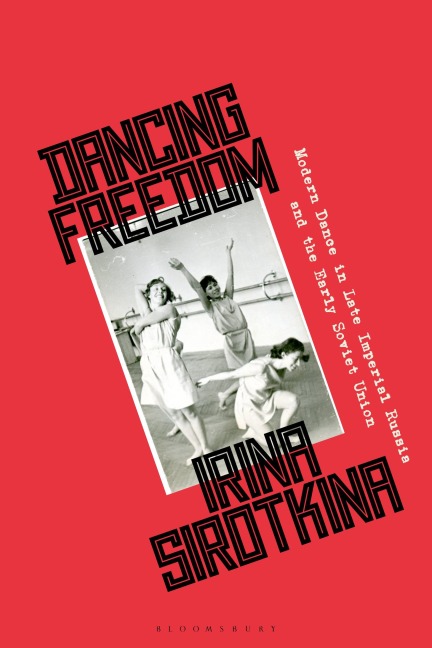
For a long time, dance scholars and the public were hardly aware that modern dance existed in Russia. This book, however, delves into its presence, significance and survival in the late Tsarist and Soviet era, showing the large and significant positive contribution this made to the history of modern dance.
A creation of liberal body politics, 'free' or 'modern' dance flourished in late Imperial Russia and the early Soviet Union, before the hardening of communist regimes. An ideal embodiment of emancipation, free dance attracted dancers and audiences, including a significant number of modernist artists and intellectuals.
This book looks in particular at Isadora Duncan and her impact on Stanislavsky's methods, as well as on the ballet choreographer Michel Fokine. It throws light on Duncan's Moscow School, biomechanics and many modern dance studios of the time, their role in creating new systems of training - different from ballet - and their creation of a modern dance 'body'.
We come to see free dance into the years of Stalin's Cultural Revolution, where choreographers had to adapt to the new ideological environment - a far cry from the previous freedom of modern dance.
Irina Sirotkina holds her PhD from Manchester and was awarded Honorary Professorship by Durham University. She is a dance scholar and a practitioner of early modern dance.
Introduction
Chapter 1. Techniques of freedom
Hypnotic dancer vs the dancing self
Liberated body, class body
New kinaesthetic regime
Chapter 2. Free dance travels east
Artful simplicity: Duncan and Stanislavsky
Impressionism in dance: Duncan and Fokine
On the way to a New Woman: The Moscow Duncan School
Chapter 3. The music issue
Eurhythmics
Musical Movement
A reflex to music
Chapter 4. Studios of free dance
Danse plastique
The art of movement
Dance theatre
The other ballet
The beginning of the end
Chapter 5. Rationalizing movement
Prof-Sid
Choreolab
Recording and displaying movement
Scientific organization of work and dance
Chapter 6. Ecstasy and the Machine
Dance to words
Machine dances
Biomechanics
The Soviet Girls
Chapter 7. Dance as physical culture
Dance gymnastics
Tefizkult
The Theatre of Physical Culture
Chapter 8. Taming dance
Partying to the Party instructions
Wolf, the Soviet entertainer
Conclusion: Re-performing freedom
Further reading
Index
Dieses eBook wird im PDF-Format geliefert und ist mit einem Adobe Kopierschutz (DRM) versehen. Sie können dieses eBook mit allen Geräten lesen, die das PDF-Format und den Adobe Kopierschutz (DRM) unterstützen.
Zum Beispiel mit den folgenden Geräten:
• tolino Reader
Laden Sie das eBook direkt über den Reader-Shop auf dem tolino herunter oder übertragen Sie das eBook auf Ihren tolino mit einer kostenlosen Software wie beispielsweise Adobe Digital Editions.
• Sony Reader & andere eBook Reader
Laden Sie das eBook direkt über den Reader-Shop herunter oder übertragen Sie das eBook mit der kostenlosen Software Sony READER FOR PC/Mac oder Adobe Digital Editions auf ein Standard-Lesegeräte mit epub- und Adobe DRM-Unterstützung.
• Tablets & Smartphones
Möchten Sie dieses eBook auf Ihrem Smartphone oder Tablet lesen, finden Sie hier unsere kostenlose Lese-App für iPhone/iPad und Android Smartphone/Tablets.
• PC & Mac
Lesen Sie das eBook direkt nach dem Herunterladen mit einer kostenlosen Lesesoftware, beispielsweise Adobe Digital Editions, Sony READER FOR PC/Mac oder direkt über Ihre eBook-Bibliothek in Ihrem Konto unter „Meine eBooks“ - „online lesen“.
Schalten Sie das eBook mit Ihrer persönlichen Adobe ID auf bis zu sechs Geräten gleichzeitig frei.
Bitte beachten Sie, dass die Kindle-Geräte das Format nicht unterstützen und dieses eBook somit nicht auf Kindle-Geräten lesbar ist.