Und dann auf "Zum Home-Bildschirm [+]".

Stöbern
genialokal zum Startbildschirm hinzufügen
Installieren Sie die genialokal App auf Ihrem Startbildschirm für einen schnellen Zugriff und eine komfortable Nutzung.
Installieren Sie die genialokal App auf Ihrem Startbildschirm für einen schnellen Zugriff und eine komfortable Nutzung.
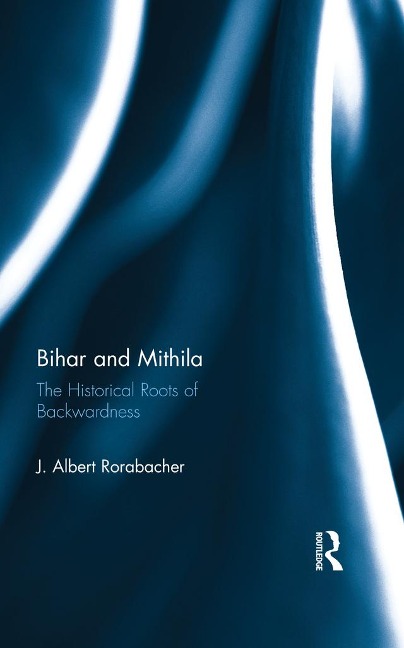
The world has become obsessed with the Western notions of progress, development, and globalization, the latter a form of human and economic homogenization. These processes, through the aegis of the United Nations, are comparatively monitored. Those nations deemed to be 'lagging behind' are then provided with foreign aid and developmental assistance. For nearly seventy years, India has sought its place in this global endeavour; yet, even today, abject poverty and backwardness can be observed in districts in almost every state; with the highest concentration of such districts found in the state of Bihar and a cultural enclave, known as Mithila. Development in India has been elusive because it is difficult to define; and because the Western concepts of development and progress have no absolute equivalents within many non-Western settings. As a consequence, development programmes often fail because they are unable to ask the right questions, but equally important is the political economy derived from foreign aid. For politicians, there is no long-term benefit to be derived from successful development. In general, foreign aid only serves to corrupt governments and politicians and, in the end, does very little for those who need help. The struggling states of Bihar and Mithila serve as extreme examples of India's problems. Development here has been thwarted by a hereditary landed aristocracy supported by religion, casteism, custom, social stratification, tradition, and patterns of behaviour that can be traced back millennia. In turn, all these have been masterfully manipulated by co-opted politicians, who have turned politics into a veritable art form as this volume comprehensively demonstrates.
John A. Rorabacher has taught at the Universities of Texas (Austin); Wisconsin (Green Bay); Minnesota (Minneapolis) and South Dakota State University, as well as working in the private sector as a consultant. He is now retired, residing in Barrie, Ontario, Canada with his wife, Hava, and continues to write on the topics of hunger and development, flooding, land relations, and development in India.
1. Development and Backwardness: What are they; How do we Deal with them? 2. Bihar and Mithila: What Went Wrong? 3. The Environmental Roots of Backwardness in Bihar and Mithila, Part I: Floods 4. The Environmental Roots of Backwardness in Bihar and Mithila, Part II: Drought 5. Orientalism and India's Gordian Knot: Religion, Secularism and Caste 6. The Darbhanga Raj: The Heart of Mithila 7. Pulling the Threads Together 8. Some Final Thoughts and Observations 9. Postscript: The 2014 Lok Sabha Elections in Bihar: What Happened and What it Means?
Dieses eBook wird im PDF-Format geliefert und ist mit einem Adobe Kopierschutz (DRM) versehen. Sie können dieses eBook mit allen Geräten lesen, die das PDF-Format und den Adobe Kopierschutz (DRM) unterstützen.
Zum Beispiel mit den folgenden Geräten:
• tolino Reader
Laden Sie das eBook direkt über den Reader-Shop auf dem tolino herunter oder übertragen Sie das eBook auf Ihren tolino mit einer kostenlosen Software wie beispielsweise Adobe Digital Editions.
• Sony Reader & andere eBook Reader
Laden Sie das eBook direkt über den Reader-Shop herunter oder übertragen Sie das eBook mit der kostenlosen Software Sony READER FOR PC/Mac oder Adobe Digital Editions auf ein Standard-Lesegeräte mit epub- und Adobe DRM-Unterstützung.
• Tablets & Smartphones
Möchten Sie dieses eBook auf Ihrem Smartphone oder Tablet lesen, finden Sie hier unsere kostenlose Lese-App für iPhone/iPad und Android Smartphone/Tablets.
• PC & Mac
Lesen Sie das eBook direkt nach dem Herunterladen mit einer kostenlosen Lesesoftware, beispielsweise Adobe Digital Editions, Sony READER FOR PC/Mac oder direkt über Ihre eBook-Bibliothek in Ihrem Konto unter „Meine eBooks“ - „online lesen“.
Schalten Sie das eBook mit Ihrer persönlichen Adobe ID auf bis zu sechs Geräten gleichzeitig frei.
Bitte beachten Sie, dass die Kindle-Geräte das Format nicht unterstützen und dieses eBook somit nicht auf Kindle-Geräten lesbar ist.