Und dann auf "Zum Home-Bildschirm [+]".

Stöbern
genialokal zum Startbildschirm hinzufügen
Installieren Sie die genialokal App auf Ihrem Startbildschirm für einen schnellen Zugriff und eine komfortable Nutzung.
Installieren Sie die genialokal App auf Ihrem Startbildschirm für einen schnellen Zugriff und eine komfortable Nutzung.
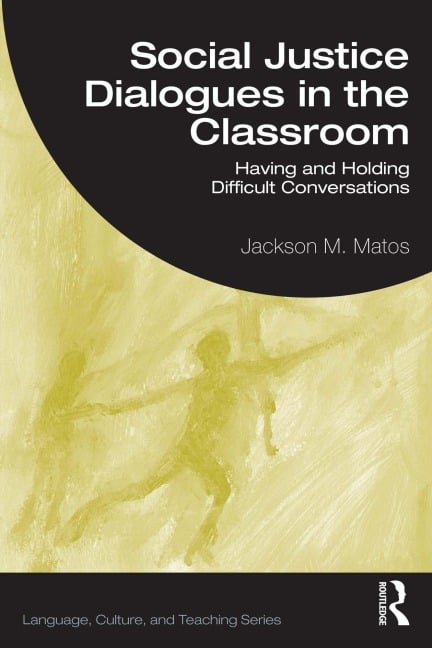
Social Justice Dialogues in the Classroom demonstrates how pre-service and in-service teachers can initiate and hold conversations about social justice and liberation with youth of all ages in their classrooms. Educators and practitioners are facing unprecedented national challenges in the work of supporting youth around issues of social justice, making it even more important to learn how to navigate these conversations in order to support students. This book showcases how pre-service and in-service teachers can have and hold challenging conversations in the classroom, particularly around issues of race, gender, disability, classism, multilingualism, and youth oppression. Each chapter of this book features a vignette of a social justice topic, along with discussion questions and the language needed for classroom teachers to navigate these discussions. The book also has featured dialogues and examples of conversations that uphold social justice and equity ideals in the classroom, as well as examples of dialogue moments that went successfully, and how to recover from unsuccessful and unforeseen moments in dialogue. This book approaches those difficult conversations with humor, hope, and joy, showing readers that fruitful and generative conversations about social justice are possible. This book can be used in teacher preparation programs and in equity and inclusion courses, as well as by scholars interested in social justice.
Jackson M. Matos is an assistant professor in the Department of Psychology and Education, and the director of middle, secondary, and the arts teacher licensure programs, at Mount Holyoke College.
Foreword Acknowledgements Introduction PART I: Shared Understandings Chapter One: Atrevidx Teaching and Social Justice Chapter Two: Social Justice and Language Chapter Three: Understanding the Learning Community Landscape Chapter Four: Setting the Stage for Healthy Dialogues and Engaged Spaces PART II: Having and Holding Challenging Conversations Chapter Five: We Need to Talk (about Racism): Racial Dialogues with Youth Chapter Six: Personal Pronouns, Chosen Names, and Safe(r) Spaces: Addressing Gender Chapter Seven: More than Ramps and Accommodations: Embracing Dialogues about Disability Chapter Eight: Battling the Monsters of Adult Supremacy: Dismantling Youth Oppression PART III: Shared Liberation Chapter Nine: Freedom Dreaming, Action Planning, and Co-Conspiratorship
Dieses eBook wird im PDF-Format geliefert und ist mit einem Adobe Kopierschutz (DRM) versehen. Sie können dieses eBook mit allen Geräten lesen, die das PDF-Format und den Adobe Kopierschutz (DRM) unterstützen.
Zum Beispiel mit den folgenden Geräten:
• tolino Reader
Laden Sie das eBook direkt über den Reader-Shop auf dem tolino herunter oder übertragen Sie das eBook auf Ihren tolino mit einer kostenlosen Software wie beispielsweise Adobe Digital Editions.
• Sony Reader & andere eBook Reader
Laden Sie das eBook direkt über den Reader-Shop herunter oder übertragen Sie das eBook mit der kostenlosen Software Sony READER FOR PC/Mac oder Adobe Digital Editions auf ein Standard-Lesegeräte mit epub- und Adobe DRM-Unterstützung.
• Tablets & Smartphones
Möchten Sie dieses eBook auf Ihrem Smartphone oder Tablet lesen, finden Sie hier unsere kostenlose Lese-App für iPhone/iPad und Android Smartphone/Tablets.
• PC & Mac
Lesen Sie das eBook direkt nach dem Herunterladen mit einer kostenlosen Lesesoftware, beispielsweise Adobe Digital Editions, Sony READER FOR PC/Mac oder direkt über Ihre eBook-Bibliothek in Ihrem Konto unter „Meine eBooks“ - „online lesen“.
Schalten Sie das eBook mit Ihrer persönlichen Adobe ID auf bis zu sechs Geräten gleichzeitig frei.
Bitte beachten Sie, dass die Kindle-Geräte das Format nicht unterstützen und dieses eBook somit nicht auf Kindle-Geräten lesbar ist.