Und dann auf "Zum Home-Bildschirm [+]".

Stöbern
genialokal zum Startbildschirm hinzufügen
Installieren Sie die genialokal App auf Ihrem Startbildschirm für einen schnellen Zugriff und eine komfortable Nutzung.
Installieren Sie die genialokal App auf Ihrem Startbildschirm für einen schnellen Zugriff und eine komfortable Nutzung.
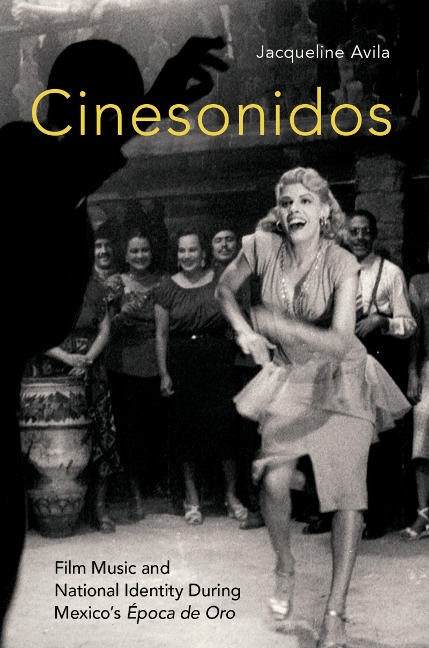
During Mexico's silent (1896-1930) and early sound (1931-52) periods, cinema saw the development of five significant genres: the prostitute melodrama (including the cabaretera subgenre), the indigenista film (on indigenous themes or topics), the cine de añoranza porfiriana (films of Porfirian nostalgia), the Revolution film, and the comedia ranchera (ranch comedy). In this book, author Jacqueline Avila looks at examples from all genres, exploring the ways that the popular, regional, and orchestral music in these films contributed to the creation of tropes and archetypes now central to Mexican cultural nationalism. Integrating primary source material--including newspaper articles, advertisements, films--with film music studies, sound studies, and Mexican film and cultural history, Avila examines how these tropes and archetypes mirrored changing perceptions of mexicanidad manufactured by the State and popular and transnational culture. As she shows, several social and political agencies were heavily invested in creating a unified national identity in an attempt to merge the previously fragmented populace as a result of the Revolution. The commercial medium of film became an important tool to acquaint a diverse urban audience with the nuances of Mexican national identity, and music played an essential and persuasive role in the process. In this heterogeneous environment, cinema and its music continuously reshaped the contested, fluctuating space of Mexican identity, functioning both as a sign and symptom of social and political change.
Jacqueline Avila is Associate Professor in Musicology at the University of Tennessee. Her research focuses on film music and sound practice from the silent period to present, and the intersections of cultural identity, tradition, and modernity in the Hollywood and Mexican film industries. Dr. Avila was the recipient of the UC MEXUS Dissertation Research Grant, the American Musicological Society's Howard Mayer Brown Fellowship, the UC MEXUS Postdoctoral Fellowship (2014-15), and the University of New Mexico's Robert E. Greenleaf Visiting Library Scholar Award (2016). Her publications can be found in the Journal of Film Music, Latin American Music Review, Opera Quarterly, and the Oxford Research Encyclopedia of Latin American History.
Acknowledgements Introduction Chapter One: The Prostitute and the Cinematic Cabaret: Musicalizing the "Fallen Woman" and Mexico City's Nightlife Chapter Two: The Salon, the Stage, and Porfirian Nostalgia Chapter Three: The Sounds of Indigenismo: Cultural Integration and Musical Exoticism in Janitzio (1934) and María Candelaria (1943) Chapter Four: The Singing Charro in the Comedia Ranchera: Music, Machismo, and the Invention of a Tradition Chapter Five: The Strains of the Revolution: Musicalizing the Soldadera in the Revolutionary Melodrama Epilogue Bibliography
Dieses eBook wird im PDF-Format geliefert und ist mit einem Adobe Kopierschutz (DRM) versehen. Sie können dieses eBook mit allen Geräten lesen, die das PDF-Format und den Adobe Kopierschutz (DRM) unterstützen.
Zum Beispiel mit den folgenden Geräten:
• tolino Reader
Laden Sie das eBook direkt über den Reader-Shop auf dem tolino herunter oder übertragen Sie das eBook auf Ihren tolino mit einer kostenlosen Software wie beispielsweise Adobe Digital Editions.
• Sony Reader & andere eBook Reader
Laden Sie das eBook direkt über den Reader-Shop herunter oder übertragen Sie das eBook mit der kostenlosen Software Sony READER FOR PC/Mac oder Adobe Digital Editions auf ein Standard-Lesegeräte mit epub- und Adobe DRM-Unterstützung.
• Tablets & Smartphones
Möchten Sie dieses eBook auf Ihrem Smartphone oder Tablet lesen, finden Sie hier unsere kostenlose Lese-App für iPhone/iPad und Android Smartphone/Tablets.
• PC & Mac
Lesen Sie das eBook direkt nach dem Herunterladen mit einer kostenlosen Lesesoftware, beispielsweise Adobe Digital Editions, Sony READER FOR PC/Mac oder direkt über Ihre eBook-Bibliothek in Ihrem Konto unter „Meine eBooks“ - „online lesen“.
Schalten Sie das eBook mit Ihrer persönlichen Adobe ID auf bis zu sechs Geräten gleichzeitig frei.
Bitte beachten Sie, dass die Kindle-Geräte das Format nicht unterstützen und dieses eBook somit nicht auf Kindle-Geräten lesbar ist.