Und dann auf "Zum Home-Bildschirm [+]".

Stöbern
genialokal zum Startbildschirm hinzufügen
Installieren Sie die genialokal App auf Ihrem Startbildschirm für einen schnellen Zugriff und eine komfortable Nutzung.
Installieren Sie die genialokal App auf Ihrem Startbildschirm für einen schnellen Zugriff und eine komfortable Nutzung.
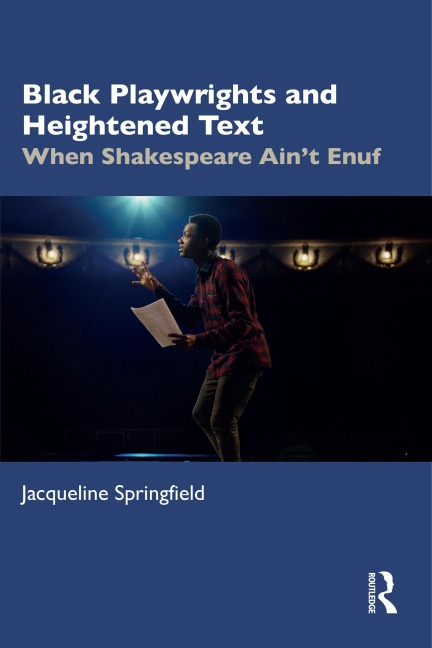
Black Playwrights and Heightened Text: When Shakespeare Ain't Enuf breaks down the misconception that heightened text sits only within a white tradition and brings the work of Black playwrights from across history to the forefront by highlighting the use of heightened dramatic text in their work. Interrogating the use of linguistic techniques often seen in heightened text, such as: enjambment, assonance, and consonance, author Jacqueline Springfield looks at the ways in which these techniques allow the text itself to have a kind of permanence in audiences' minds and works to reinforce a character's objective within the play. The book presents examples of works from a plethora of Black playwrights, including Langston Hughes, Lorraine Hansberry, Amiri Baraka, August Wilson, Katori Hall, Marcus Gardley, Tarell Alvin McCraney, and many more, as well as providing the context in which they're writing. Theatre artists who read, teach, direct and perform the work of Black playwrights answer key questions in their own words in interviews with the author. Interviewees include Dominique Morisseau, Ron OJ Parson, Mfoniso Udofia, Zora Howard and many other theatre practitioners. Taking a chronological approach, the book examines the history of heightened text in the works of Black playwrights and re-defines the ways in which theatre students and scholars can understand the techniques of heightened texts outside of a purely Eurocentric and white perspective. Ideal for students of theatre history, acting, playwriting, and text analysis, as well as researchers of African American theatre.
Jacqueline Springfield is an actor, director and educator. She currently serves as Assistant Professor in the Department of Theatre and Performance Studies at Kennesaw State University, USA. She is a certified Associate Instructor of Fitzmaurice Voicework and an Associate Editor of the International Dialects of English Archive.
Introduction Chapter 1. Defining and Re-defining Heightened Text Chapter 2. Rhythm and Blues: Scansion and the Nuances of African American Vernacular English Chapter 3. On Coming from Africa to America: From Phillis Wheatley to the African Grove Theatre Chapter 4. The Harlem Renaissance: The New Negro Era Chapter 5. The Legacy of Lorraine Hansberry's A Raisin in the Sun Chapter 6. Writing a Revolution: Theatre of the Black Arts Movement and the Creation of the Black Aesthetic Chapter 7. August Wilson: The Century Cycle and Wilson's Effect on the Post-Black Arts Movement Chapter 8. Take a Giant Step: Heightened Text at the Turn of the Century and Beyond Interviews: In Their Own Words Interviewees' biographies Define the term "heightened text" Discussing rhythm, meter and the intentionality of how language is used in playwriting On favorite Black playwrights and the legacy they leave How can we expand, re-define, and/or de-colonize the classical canon?
Dieses eBook wird im PDF-Format geliefert und ist mit einem Adobe Kopierschutz (DRM) versehen. Sie können dieses eBook mit allen Geräten lesen, die das PDF-Format und den Adobe Kopierschutz (DRM) unterstützen.
Zum Beispiel mit den folgenden Geräten:
• tolino Reader
Laden Sie das eBook direkt über den Reader-Shop auf dem tolino herunter oder übertragen Sie das eBook auf Ihren tolino mit einer kostenlosen Software wie beispielsweise Adobe Digital Editions.
• Sony Reader & andere eBook Reader
Laden Sie das eBook direkt über den Reader-Shop herunter oder übertragen Sie das eBook mit der kostenlosen Software Sony READER FOR PC/Mac oder Adobe Digital Editions auf ein Standard-Lesegeräte mit epub- und Adobe DRM-Unterstützung.
• Tablets & Smartphones
Möchten Sie dieses eBook auf Ihrem Smartphone oder Tablet lesen, finden Sie hier unsere kostenlose Lese-App für iPhone/iPad und Android Smartphone/Tablets.
• PC & Mac
Lesen Sie das eBook direkt nach dem Herunterladen mit einer kostenlosen Lesesoftware, beispielsweise Adobe Digital Editions, Sony READER FOR PC/Mac oder direkt über Ihre eBook-Bibliothek in Ihrem Konto unter „Meine eBooks“ - „online lesen“.
Schalten Sie das eBook mit Ihrer persönlichen Adobe ID auf bis zu sechs Geräten gleichzeitig frei.
Bitte beachten Sie, dass die Kindle-Geräte das Format nicht unterstützen und dieses eBook somit nicht auf Kindle-Geräten lesbar ist.