Und dann auf "Zum Home-Bildschirm [+]".

Stöbern
genialokal zum Startbildschirm hinzufügen
Installieren Sie die genialokal App auf Ihrem Startbildschirm für einen schnellen Zugriff und eine komfortable Nutzung.
Installieren Sie die genialokal App auf Ihrem Startbildschirm für einen schnellen Zugriff und eine komfortable Nutzung.

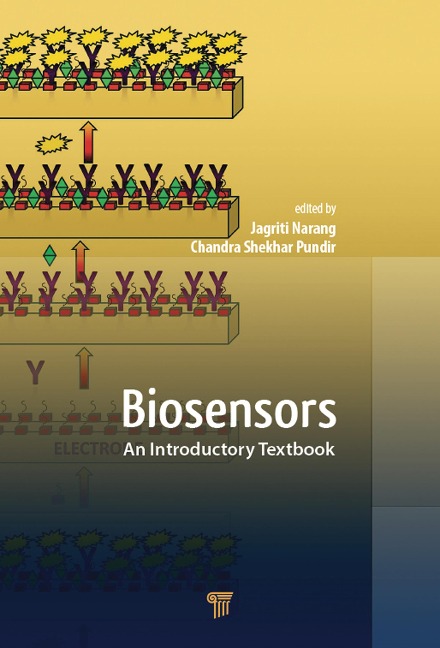
Nanotechnology is a budding field and has a pivotal role in sensing. Nanomaterials exist in various forms such as nanoparticles, nanoclusters, nanobelts, and nanospheres. These nanomaterials act as sensing interfaces and immobilization surfaces for various biomolecules such as enzymes, DNA, and antigens. Therefore, the preparation and characterization of these nanoparticles play an important role in sensing devices. This handbook has evolved from the authors' teaching and research experience in the field of nanoparticle biosensing. It encompasses protocols for the synthesis of various forms of metal oxide nanoparticles; study of the various characterizing techniques that help deduce the shape, size, and morphology of these nanoparticles; and applications of these nanoparticles in the field of biosensors. It presents voltammetry techniques such as cyclic, linear wave, wave pulse, and differential pulse voltammetry, throws light on the interactions of nanomaterials and biomolecules, and discusses microfluidic devices, which due to their unique capability of miniaturization fascinate many researchers. It is a practical and user-friendly textbook that introduces the various basic principles and practical information that will help undergraduate and advanced-level students and researchers understand the science behind nanoscale sensing.
Jagriti Narang is assistant professor at Amity Institute of Nanotechnology, Amity University, Uttar Pradesh, India, and has a work experience of more than 8 years. She has authored or coauthored 57 research papers in international peer-reviewed journals and holds 7 patents on biosensors and uses of nanotechnology in molecular techniques. Her current research interest involves the development of laboratory models that can be converted into commercial monitoring devices. Chandra Shekhar Pundir is emeritus professor of CSIR at the Department of Biochemistry, Maharshi Dayanand University (MDU), Rohtak, India, and has more than 36 years of teaching/research experience. He received his PhD in biochemistry from G. B. Pant University of Agriculture and Technology, Pantnagar, India. Earlier, he was professor and founder head of the Biochemistry Department and Dean of the Faculty of Life Sciences, MDU. He has authored/coauthored 249 research papers in international journals and 2 books on nanotechnology and holds 7 Indian patents and 1 international (PCT) patent in the fields of enzyme technology and biosensor technology. He is a fellow of the Royal Society of Chemistry, UK. His current research areas are analytical/clinical biochemistry, enzyme technology, biosensor technology, and bionanotechnology.
Nanomaterials. Synthesis of Nanomaterials. Characterization Techniques. Fabrication of Sensors for Electrochemical Determination. Electrochemical Techniques. Biosensors for Serum Metabolites. and Microfluidics: A Platform for Futuristic Sensors.