Und dann auf "Zum Home-Bildschirm [+]".

Stöbern
genialokal zum Startbildschirm hinzufügen
Installieren Sie die genialokal App auf Ihrem Startbildschirm für einen schnellen Zugriff und eine komfortable Nutzung.
Installieren Sie die genialokal App auf Ihrem Startbildschirm für einen schnellen Zugriff und eine komfortable Nutzung.
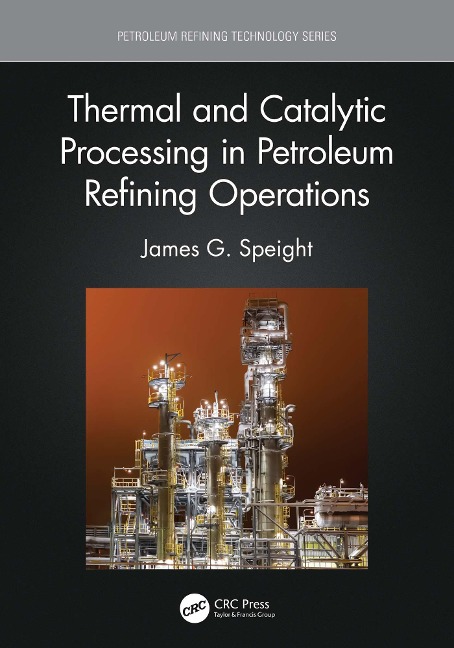
This book presents the thermal and catalytic processes in refining. The differences between each type of process and the types of feedstock that can be used for the processes are presented. Relevant process data is provided, and process operations are fully described. This accessible guide is written for managers, professionals, and technicians as well as graduate students transitioning into the refining industry. Key Features: - Describes feedstock evaluation and the effects of elemental, chemical, and fractional composition. - Details reactor types and bed types. - Explores the process options and parameters involved. - Assesses coke formation and additives. - Considers next generation processes and developments.
Dr. James G. Speight has doctorate degrees in Chemistry, Geological Sciences, and Petroleum Engineering and is the author of more than 95 books in petroleum science, petroleum engineering, and environmental sciences. He has more than fifty years of experience in areas associated with (i) the properties, recovery, and refining of reservoir fluids, conventional petroleum, heavy oil, and tar sand bitumen, (ii) the properties and refining of natural gas, gaseous fuels, (iii) the production and properties of petrochemicals, and (iv) the properties and refining of biomass, biofuels, biogas, and the generation of bioenergy. His work has also focused on safety issues, environmental effects, remediation, and safety issues as well as reactors associated with the production and use of fuels and biofuels. Although he has always worked in private industry which focused on contract-based work, he has served as Visiting Professor in the Department of Chemical and Fuels Engineering at the University of Utah and in the Departments of Chemistry and Chemical and Petroleum Engineering at the University of Wyoming. In addition, he was a Visiting Professor in the College of Science, University of Mosul, Iraq and has also been a Visiting Professor in Chemical Engineering at the following universities: University of Missouri-Columbia, the Technical University of Denmark, and the University of Trinidad and Tobago. Dr. Speight has received the Scientists without Borders Medal of Honor and the Einstein Medal for outstanding contributions and service in the field of Geological Sciences.
Chapter 1: Overview of Refining Processes. Chapter 2: Feedstocks and Feedstock Composition. Chapter 3: Feedstock Evaluation. Chapter 4: Thermal Cracking Processes. Chapter 5: Catalytic Cracking Processes. Chapter 6: Fouling During Thermal and Catalytic Processes. Chapter 7: Importance in the Refinery.
Dieses eBook wird im PDF-Format geliefert und ist mit einem Adobe Kopierschutz (DRM) versehen. Sie können dieses eBook mit allen Geräten lesen, die das PDF-Format und den Adobe Kopierschutz (DRM) unterstützen.
Zum Beispiel mit den folgenden Geräten:
• tolino Reader
Laden Sie das eBook direkt über den Reader-Shop auf dem tolino herunter oder übertragen Sie das eBook auf Ihren tolino mit einer kostenlosen Software wie beispielsweise Adobe Digital Editions.
• Sony Reader & andere eBook Reader
Laden Sie das eBook direkt über den Reader-Shop herunter oder übertragen Sie das eBook mit der kostenlosen Software Sony READER FOR PC/Mac oder Adobe Digital Editions auf ein Standard-Lesegeräte mit epub- und Adobe DRM-Unterstützung.
• Tablets & Smartphones
Möchten Sie dieses eBook auf Ihrem Smartphone oder Tablet lesen, finden Sie hier unsere kostenlose Lese-App für iPhone/iPad und Android Smartphone/Tablets.
• PC & Mac
Lesen Sie das eBook direkt nach dem Herunterladen mit einer kostenlosen Lesesoftware, beispielsweise Adobe Digital Editions, Sony READER FOR PC/Mac oder direkt über Ihre eBook-Bibliothek in Ihrem Konto unter „Meine eBooks“ - „online lesen“.
Schalten Sie das eBook mit Ihrer persönlichen Adobe ID auf bis zu sechs Geräten gleichzeitig frei.
Bitte beachten Sie, dass die Kindle-Geräte das Format nicht unterstützen und dieses eBook somit nicht auf Kindle-Geräten lesbar ist.