Und dann auf "Zum Home-Bildschirm [+]".

Stöbern
genialokal zum Startbildschirm hinzufügen
Installieren Sie die genialokal App auf Ihrem Startbildschirm für einen schnellen Zugriff und eine komfortable Nutzung.
Installieren Sie die genialokal App auf Ihrem Startbildschirm für einen schnellen Zugriff und eine komfortable Nutzung.
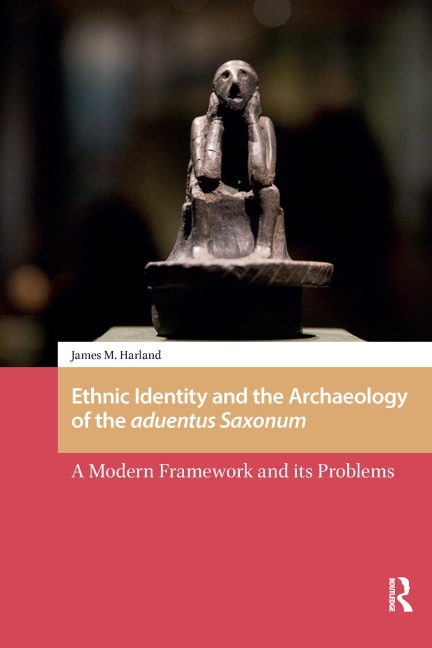
For centuries, archaeologists have excavated the soils of Britain to uncover finds from the early medieval past. These finds have been used to reconstruct the alleged communities, migration patterns, and expressions of identity of coherent groups who can be regarded as ethnic 'Anglo-Saxons'. Even in the modern day, when social constructionism has been largely accepted by scholars, this paradigm still persists. This book challenges the ethnic paradigm. As the first historiographical study of approaches to ethnic identity in modern 'Anglo-Saxon' archaeology, it reveals these approaches to be incompatible with current scholarly understandings of ethnicity. Drawing upon post-structuralist approaches to self and community, it highlights the empirical difficulties the archaeology of ethnicity in early medieval Britain faces, and proposes steps toward an alternative understanding of the role played by the communities of lowland Britain, both migrants from across the North Sea and those already present, in transforming the Roman world.
James M. Harland works on the history and archaeology of the late Roman Empire and its early medieval successor states. After receiving his PhD in History from the University of York, he took up a postdoctoral fellowship at the University of Tübingen. He is currently a Research Fellow at the University of Bonn.
Acknowledgements, 1 Introduction, Historical Approaches to the aduentus Saxonum, A Note on Terminology, The Structure of the Book, A Note on Contemporary Political Resonances, , 2 Ethnicity and Archaeology, Ethnicity: General Conception and Theorisation, Ethnic Theorisation and Archaeology, Ethnicity in Anglo-Saxon Archaeology, The Freiburg School, 3 Empiricism and Metaphysics, Differential Ontology, Derridean Deconstruction, Deleuze, Guattari, and the Rhizome, Applying Differential Ontology, Earlier Applications of Differential Ontology to Archaeological Interpretation, Some Final Methodological Principles, Selecting and Approaching the Case Studies, 4 Deconstructing Anglo-Saxon Archaeology, Introduction, John Hines and Culture History, Catherine Hills: The Migration Debate, Sam Lucy: 'Deconstructing' Ethnicity? Howard Williams: Remembering 'Germans' and 'Ancestors'? James Gerrard: Ethnicities or 'Ideologies'? Toby Martin: The Cruciform Brooch and 'Anglian' Identity, Conclusion, 5 The Material Evidence Reconsidered, Critical Issues, A Summary of the Present Evidence Base and Problems with Its Use, 'Germanic' Artwork? The Saxon Relief Style and Salin's Style I, Searching for Ethnicity in 'Folk' Costume and Weapon Burials, Non-Empirical Uses of Data in Action, Conclusion, 6 Building an Alternative, The Case Studies, Wider Implications from the Case Studies, The End of Roman Rule in Britain and the Transformation of the Roman World, 'Re-use' of Roman Material, Conclusion, 7 New Approaches and Final Reflections, New Approaches to Communal Organisation, Avenues for Further Research, Appendix: Spong Hill Data, Bibliography, Index.
Dieses eBook wird im PDF-Format geliefert und ist mit einem Adobe Kopierschutz (DRM) versehen. Sie können dieses eBook mit allen Geräten lesen, die das PDF-Format und den Adobe Kopierschutz (DRM) unterstützen.
Zum Beispiel mit den folgenden Geräten:
• tolino Reader
Laden Sie das eBook direkt über den Reader-Shop auf dem tolino herunter oder übertragen Sie das eBook auf Ihren tolino mit einer kostenlosen Software wie beispielsweise Adobe Digital Editions.
• Sony Reader & andere eBook Reader
Laden Sie das eBook direkt über den Reader-Shop herunter oder übertragen Sie das eBook mit der kostenlosen Software Sony READER FOR PC/Mac oder Adobe Digital Editions auf ein Standard-Lesegeräte mit epub- und Adobe DRM-Unterstützung.
• Tablets & Smartphones
Möchten Sie dieses eBook auf Ihrem Smartphone oder Tablet lesen, finden Sie hier unsere kostenlose Lese-App für iPhone/iPad und Android Smartphone/Tablets.
• PC & Mac
Lesen Sie das eBook direkt nach dem Herunterladen mit einer kostenlosen Lesesoftware, beispielsweise Adobe Digital Editions, Sony READER FOR PC/Mac oder direkt über Ihre eBook-Bibliothek in Ihrem Konto unter „Meine eBooks“ - „online lesen“.
Schalten Sie das eBook mit Ihrer persönlichen Adobe ID auf bis zu sechs Geräten gleichzeitig frei.
Bitte beachten Sie, dass die Kindle-Geräte das Format nicht unterstützen und dieses eBook somit nicht auf Kindle-Geräten lesbar ist.