Und dann auf "Zum Home-Bildschirm [+]".

Stöbern
genialokal zum Startbildschirm hinzufügen
Installieren Sie die genialokal App auf Ihrem Startbildschirm für einen schnellen Zugriff und eine komfortable Nutzung.
Installieren Sie die genialokal App auf Ihrem Startbildschirm für einen schnellen Zugriff und eine komfortable Nutzung.
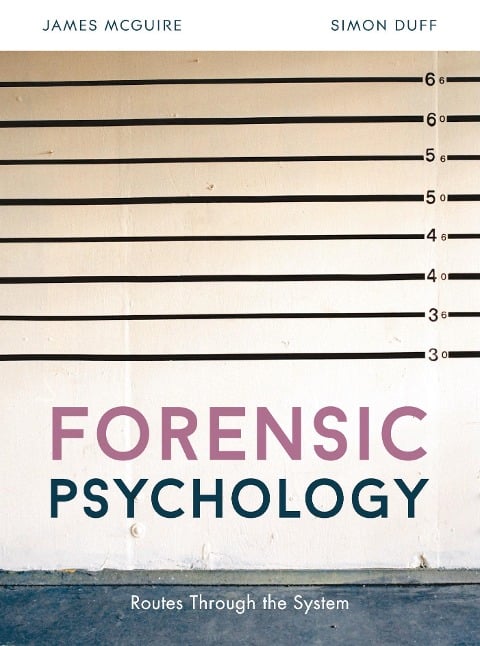
This brand new textbook provides a complete course in forensic psychology, covering the criminal justice system, law and legislation, and treatments and outcomes for offenders. It offers rigorous coverage of the major topics: from theoretical concepts and research methods to explaining criminal acts and patterns of crime. The authors, both from leading institutions and well-known in the field, guide readers through the interlocking systems of criminal justice, mental health and social service provision, providing a deeper critical appreciation of what motivates crime and how criminal behaviour can be understood, assessed and treated.
This text will be core reading for upper level undergraduates and postgraduates studying forensic psychology, either as a module on a BSc Psychology degree or on an MSc for trainee Forensic Psychologists. It will also be ideal for early career practitioners.
Accompanying online resources for this title can be found at bloomsburyonlineresources.com/forensic-psychology. These resources are designed to support teaching and learning when using this textbook and are available at no extra cost.
James McGuire is Emeritus Professor of Forensic Clinical Psychology at the University of Liverpool, UK. During his career, he worked as a psychologist in a variety of settings including intellectual disabilities services and a high security hospital, and he has carried out research in prisons, probation, addictions services, and the youth justice system. He has helped to develop guidelines on personality disorders for the National Institute of Health and Clinical Excellence (NICE), and is a member of the Correctional Services Advisory and Accreditation Panel, Ministry of Justice.
Simon Duff is a Chartered Forensic Psychologist and Deputy Director of Forensic Programmes at the University of Nottingham, UK, where he oversees the doctorate programme. His research interests focus primarily on aspects of sexual offending, stalking, fetishism and the impact of pornography. In addition to his academic career, he works with a variety of clients at Mersey Forensic Psychology Service.
PART ONE: BASIC CONCEPTS, METHODS AND THEORY
1.Setting the scene
2.Defining and surveying crime
3.Researching crime: methods and correlates
4.Explaining criminal offences and patterns
5.Criminal acts and actors
PART TWO: TYPES OF CRIME AND INFLUENCING FACTORS
6.Serious Violence: Assault and hate crimes
7. Serious crime: Single victim homicide
8.Extreme violence: multiple homicide
9.Sexual offences and partner assault
10.Substance-related offending and other serious crimes
11.Mental disorder and crime
PART THREE: INVESTIGATION, EVIDENCE AND SENTENCING
12.Police investigation and interviews
13.Profiling: methods and results
14.Court processes and legal decision making
15.Evidence: witnesses, experts and juries
16.Sentencing: principles and procedures
17.After sentencing
PART FOUR: PROFESSIONAL ACTIVITIES, STANDARDS AND SKILLS
18.Assessment in forensic psychology
19.Interventions to reduce re-offending
20.Ethical issues in practice
21.Professional training, competence and expertise.
Dieses eBook wird im PDF-Format geliefert und ist mit einem Adobe Kopierschutz (DRM) versehen. Sie können dieses eBook mit allen Geräten lesen, die das PDF-Format und den Adobe Kopierschutz (DRM) unterstützen.
Zum Beispiel mit den folgenden Geräten:
• tolino Reader
Laden Sie das eBook direkt über den Reader-Shop auf dem tolino herunter oder übertragen Sie das eBook auf Ihren tolino mit einer kostenlosen Software wie beispielsweise Adobe Digital Editions.
• Sony Reader & andere eBook Reader
Laden Sie das eBook direkt über den Reader-Shop herunter oder übertragen Sie das eBook mit der kostenlosen Software Sony READER FOR PC/Mac oder Adobe Digital Editions auf ein Standard-Lesegeräte mit epub- und Adobe DRM-Unterstützung.
• Tablets & Smartphones
Möchten Sie dieses eBook auf Ihrem Smartphone oder Tablet lesen, finden Sie hier unsere kostenlose Lese-App für iPhone/iPad und Android Smartphone/Tablets.
• PC & Mac
Lesen Sie das eBook direkt nach dem Herunterladen mit einer kostenlosen Lesesoftware, beispielsweise Adobe Digital Editions, Sony READER FOR PC/Mac oder direkt über Ihre eBook-Bibliothek in Ihrem Konto unter „Meine eBooks“ - „online lesen“.
Schalten Sie das eBook mit Ihrer persönlichen Adobe ID auf bis zu sechs Geräten gleichzeitig frei.
Bitte beachten Sie, dass die Kindle-Geräte das Format nicht unterstützen und dieses eBook somit nicht auf Kindle-Geräten lesbar ist.