Und dann auf "Zum Home-Bildschirm [+]".

Stöbern
genialokal zum Startbildschirm hinzufügen
Installieren Sie die genialokal App auf Ihrem Startbildschirm für einen schnellen Zugriff und eine komfortable Nutzung.
Installieren Sie die genialokal App auf Ihrem Startbildschirm für einen schnellen Zugriff und eine komfortable Nutzung.
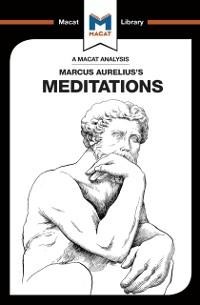
Despite being written between 170 and 180, Marcus Aurelius' Meditations often resonates with modern readers because of its remarkable resemblance to a self-help book. Written as a series of personal notes in the last decade of his reign as Roman emperor, the meditations were never intended for circulation. But they remain today among the classics of stoic philosophy - and as exquisite examples of problem-solving. Meditations sees a great leader engaged in solving one of the central problems of all philosophy: how to live a good life. Marcus Aurelius is quick to ask questions and generate solutions, all of which lead him to a greater understanding of what a good life really is. He makes the decision that philosophy is an important tool we can use every day to help us understand and deal with the world. The best way to get to the bottom of a problem, he records, is to analyze its different aspects with care - this will help to 'dissolve' the issue. To keep our minds well balanced, it is vital to keep our desire for the material and the sensual in check to avoid falling prey to negative behaviors like jealousy, quarrelling and indulgence. Philosophy, the Meditations show, can also help us to understand other people's problems and difficulties - acting as a continual spur to the consideration and resolution of problems, wherever they arise.
Dr James Orr holds a DPhil in the Philosophy of Religion from the University of Cambridge. He is currently the McDonald Postdoctoral Fellow in Theology, Ethics, and Public Life at Christ Church College, Oxford.
Ways in to the Text Who was Marcus Aurelius? What does Meditations Say? Why does Meditations Matter? Section 1: Influences Module 1: The Author and the Historical Context Module 2: Academic Context Module 3: The Problem Module 4: The Author's Contribution Section 2: Ideas Module 5: Main Ideas Module 6: Secondary Ideas Module 7: Achievement Module 8: Place in the Author's Work Section 3: Impact Module 9: The First Responses Module 10: The Evolving Debate Module 11: Impact and Influence Today Module 12: Where Next? Glossary of Terms People Mentioned in the Text Works Cited
Dieses eBook wird im PDF-Format geliefert und ist mit einem Adobe Kopierschutz (DRM) versehen. Sie können dieses eBook mit allen Geräten lesen, die das PDF-Format und den Adobe Kopierschutz (DRM) unterstützen.
Zum Beispiel mit den folgenden Geräten:
• tolino Reader
Laden Sie das eBook direkt über den Reader-Shop auf dem tolino herunter oder übertragen Sie das eBook auf Ihren tolino mit einer kostenlosen Software wie beispielsweise Adobe Digital Editions.
• Sony Reader & andere eBook Reader
Laden Sie das eBook direkt über den Reader-Shop herunter oder übertragen Sie das eBook mit der kostenlosen Software Sony READER FOR PC/Mac oder Adobe Digital Editions auf ein Standard-Lesegeräte mit epub- und Adobe DRM-Unterstützung.
• Tablets & Smartphones
Möchten Sie dieses eBook auf Ihrem Smartphone oder Tablet lesen, finden Sie hier unsere kostenlose Lese-App für iPhone/iPad und Android Smartphone/Tablets.
• PC & Mac
Lesen Sie das eBook direkt nach dem Herunterladen mit einer kostenlosen Lesesoftware, beispielsweise Adobe Digital Editions, Sony READER FOR PC/Mac oder direkt über Ihre eBook-Bibliothek in Ihrem Konto unter „Meine eBooks“ - „online lesen“.
Schalten Sie das eBook mit Ihrer persönlichen Adobe ID auf bis zu sechs Geräten gleichzeitig frei.
Bitte beachten Sie, dass die Kindle-Geräte das Format nicht unterstützen und dieses eBook somit nicht auf Kindle-Geräten lesbar ist.