Und dann auf "Zum Home-Bildschirm [+]".

Stöbern
genialokal zum Startbildschirm hinzufügen
Installieren Sie die genialokal App auf Ihrem Startbildschirm für einen schnellen Zugriff und eine komfortable Nutzung.
Installieren Sie die genialokal App auf Ihrem Startbildschirm für einen schnellen Zugriff und eine komfortable Nutzung.
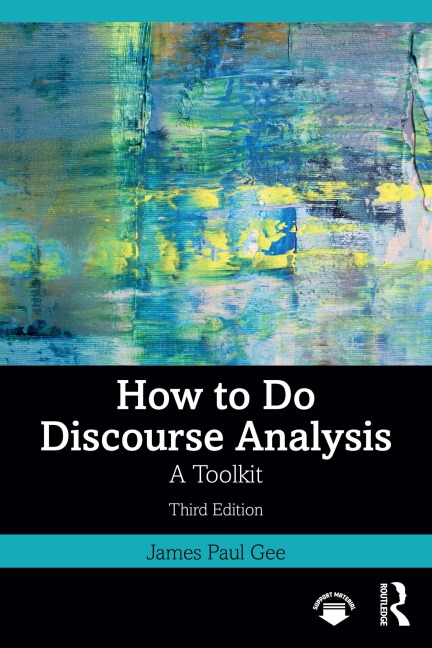
How to Do Discourse Analysis provides a comprehensive toolkit for conducting discourse analysis, offering 26 practical tools to examine how language is used to construct meaning, enact identities, and shape social realities. Written by renowned linguist James Paul Gee, it introduces key concepts like situated meanings, social languages, and Discourses, showing how language both reflects and creates social contexts. This essential textbook takes readers through a step-by-step process of analyzing texts and talk, from examining grammar and vocabulary to uncovering underlying ideologies and power dynamics. It covers a wide range of discourse types, from everyday conversations to political speeches and social media posts. Gee draws on diverse examples from education, politics, media, and popular culture to illustrate the tools in action. While grounded in linguistic theory, the book emphasizes hands-on application. Each tool is accompanied by sample analyses and practice exercises. This new edition incorporates recent developments in digital communication and updates examples for contemporary relevance, making it an ideal resource for advanced undergraduate and postgraduate students working in the areas of applied linguistics, education, psychology, anthropology, and communication. This bestselling textbook is the ideal companion to An Introduction to Discourse Analysis: Theory and Method also by James Paul Gee.
James Paul Gee is a Regents Professor, Emeritus, at Arizona State University and an elected member of the National Academy of Education. He is the author of many books and papers on linguistics, literacy, discourse analysis, and learning. His books include What Video Games Have to Teach Us About Literacy and Learning (2007), Introducing Discourse: From Grammar to Society (2017), and What Is a Human? (2020).
Introduction Unit 1: Language and Context 1.1 Grammar 1.2 Language Acquisition 1.3 Speed and Clarity 1.4 Context and Cultural Knowledge 1.5 Making the Taken-for-Granted New and Strange 1.6 Working with The Making Strange Tool 1.7 Deixis 1.8 Working with the Deixis Tool 1.9 Context 1.10 Working with the Fill-In Tool 1.11 Subjects and Predicates 1.12 Working with Subject Tool 1.13 Intonation 1.14 Working with the Intonation Tool 1.15 The Frame Problem 1.16 The Frame Problem in Action 1.17 Working with the Frame Tool Unit 2: Saying, Doing, and Designing 2.1 People Do things with Language, Not Just Say Things 2.2 Working with Doing and Not Just Saying Tool 2.3 Grammar as Tools for Structure and Meaning 2.4 Working with the Grammar as Choice Tool 2.5 Vocabulary 2.6 Working with the Vocabulary Tool 2.7 Topics and Themes 2.8 Working with the Topic and Theme Tool 2.9 Stanzas 2.10 Working with the Stanza Tool Unit 3: Building Things in the World 3.1 Building Tasks 3.2 Building Things with Language 3.3 An Example: A Collaboration around Oral History 3.4 The Context is Reflexive Tool 3.5 Working with the Context is Reflexive Tool 3.6 Working with the Significance Building Tool 3.7 Working with the Practices/Activities Building Tool 3.8 Working with the Identities Building Tool 3.9 Working with the Relationships Building Tool 3.10 Working with the Politics Building Tool 3.11 Working with the Connections Building Tool 3.12 Working with the Sign Systems and Knowledge Building Tool 3.13 Topic Flow or Topic Chaining Tool 3.14 Working with the Topic Flow or Topic Chaining Tool Unit 4: Theoretical Tools 4.1 Six Theoretical Tools 4.2 The Situational Meaning Tool 4.3 Working with the Situational Meaning Tool 4.4 The Social Languages Tool 4.5 Working with the Social Languages Tool 4.6 The Intertextuality Tool 4.7 Working with the Intertextuality Tool 4.8 The Figured Worlds Tool 4.9 Working with the Figured Worlds Tool 4.10 The Big "D" Discourse Tool 4.11 Working with the Big "D" Discourse Tool 4.12 Notes about Discourses 4.13 Notes about DiscoursesThe Big "C" Conversation Tool 4.14 Working with the Big "C" Conversation Tool 4.15 Conclusion
Dieses eBook wird im PDF-Format geliefert und ist mit einem Adobe Kopierschutz (DRM) versehen. Sie können dieses eBook mit allen Geräten lesen, die das PDF-Format und den Adobe Kopierschutz (DRM) unterstützen.
Zum Beispiel mit den folgenden Geräten:
• tolino Reader
Laden Sie das eBook direkt über den Reader-Shop auf dem tolino herunter oder übertragen Sie das eBook auf Ihren tolino mit einer kostenlosen Software wie beispielsweise Adobe Digital Editions.
• Sony Reader & andere eBook Reader
Laden Sie das eBook direkt über den Reader-Shop herunter oder übertragen Sie das eBook mit der kostenlosen Software Sony READER FOR PC/Mac oder Adobe Digital Editions auf ein Standard-Lesegeräte mit epub- und Adobe DRM-Unterstützung.
• Tablets & Smartphones
Möchten Sie dieses eBook auf Ihrem Smartphone oder Tablet lesen, finden Sie hier unsere kostenlose Lese-App für iPhone/iPad und Android Smartphone/Tablets.
• PC & Mac
Lesen Sie das eBook direkt nach dem Herunterladen mit einer kostenlosen Lesesoftware, beispielsweise Adobe Digital Editions, Sony READER FOR PC/Mac oder direkt über Ihre eBook-Bibliothek in Ihrem Konto unter „Meine eBooks“ - „online lesen“.
Schalten Sie das eBook mit Ihrer persönlichen Adobe ID auf bis zu sechs Geräten gleichzeitig frei.
Bitte beachten Sie, dass die Kindle-Geräte das Format nicht unterstützen und dieses eBook somit nicht auf Kindle-Geräten lesbar ist.