Und dann auf "Zum Home-Bildschirm [+]".

Stöbern
genialokal zum Startbildschirm hinzufügen
Installieren Sie die genialokal App auf Ihrem Startbildschirm für einen schnellen Zugriff und eine komfortable Nutzung.
Installieren Sie die genialokal App auf Ihrem Startbildschirm für einen schnellen Zugriff und eine komfortable Nutzung.

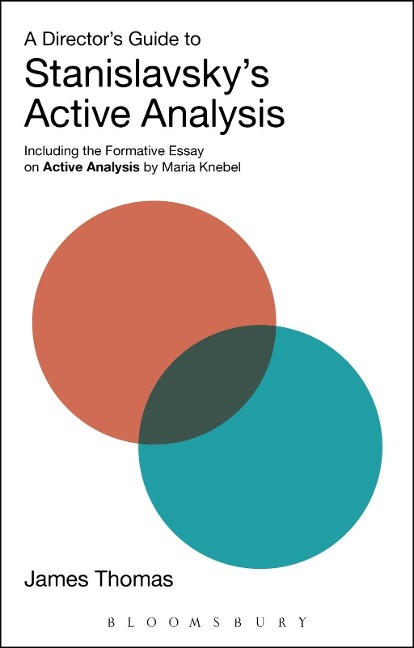
A Director's Guide to Stanislavsky's Active Analysis describes Active Analysis, the innovative rehearsal method Stanislavsky formulated in his final years. By uniting 'mental analysis' and 'études', Active Analysis puts an end to the problem of mind-body dualism and formalized text memorization that traditional rehearsal methods foster.
The book describes Active Analysis both practically and conceptually; Part One guides the reader through the entire process of Active Analysis, using A Midsummer Night's Dream as a practical reference point. The inspiration here is the work of the Russian director Anatoly Efros, whose pioneering work led the way for a reawakening of theatre in post-Soviet Russia. Part Two is the first English translation of Maria Knebel's foundational article about Active Analysis. Knebel was hand-selected by Stanislavsky to carry his final work forward in unadulterated form for succeeding generations of directors and actors.
A Director's Guide to Stanislavsky's Active Analysis provides the first detailed explanation of Active Analysis from the director's perspective, while also meeting the needs of actors who seek to enhance their creative involvement in the process of play production.
James Thomas is a Professor in the Department of Theatre and Dance at Wayne State University. He received his BA from St. Ambrose College, MA from Villanova University, and PhD from the University of Texas at Austin. He has taught at Mt. Holyoke College and Marquette University, and was Associate Dean of the School of Theatre at Florida State University. He was Chair of the Department of Theatre at Wayne State University from 1994-1999 and Interim Chair of the merged Department of Theatre and Dance 2010-2012. In 2001, he established a Study Abroad Program with the Moscow Art Theatre School, which program is now in its 15th year of continuous operation. He has translated the books of the legendary Russian director Anatoly Efros and is presently working on a translation of the rehearsal journals for Efros's ground-breaking production of Anton Chekhov's play, The Seagull. He is author of Script Analysis for Actors, Directors, and Designers, which is now in its fifth edition and the standard text in the field. His is recipient of the Service Award from the Association for Theatre in Higher Education, and the Outstanding Mentor Award and Murray Jackson Creative Scholar in the Arts Award from Wayne State University.
Preface
Introduction
PART 1: A DIRECTOR'S WORK WITH ACTIVE ANALYSIS
I. Choosing the Play
II. Director's Plan: General Challenges
III. Director's Plan: Action Analysis
IV. An Introductory Conversation with Stanislavsky about Active Analysis
V. Active Analysis in Rehearsal
VI. Further Active Analysis and Testing
VII. Conclusion: Rehearsal Realities
PART 2: ACTIVE ANALYSIS OF THE PLAY AND THE ROLE, by Maria Knebel
Preface
I. General Principles of Active Analysis
II. Details are Important
III. Main Advantages of Active Analysis
IV. Beyond Etudes
V. Active Analysis Compared to the Method of Physical Actions
VI. Conclusion
Bibliography