Und dann auf "Zum Home-Bildschirm [+]".

Stöbern
genialokal zum Startbildschirm hinzufügen
Installieren Sie die genialokal App auf Ihrem Startbildschirm für einen schnellen Zugriff und eine komfortable Nutzung.
Installieren Sie die genialokal App auf Ihrem Startbildschirm für einen schnellen Zugriff und eine komfortable Nutzung.
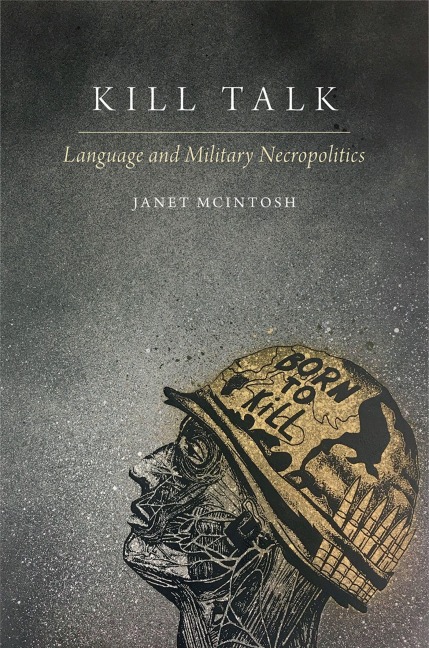
The language used by American military personnel can be intense and confrontational, yet the relationship between language and military violence is rarely examined in depth. This groundbreaking book offers a unique perspective on how language facilitates the work of combat infantry-the state's killable killers. Through vivid ethnographic research, Janet McIntosh meticulously traces the nuances of military kill talk as it permeates the vast nervous system of the military, from the first exposure to yelling in Marine Corps basic training to the dark humor and nihilistic expressions found in war zones in Vietnam and the Middle East. McIntosh reveals how military trainers use language to deindividuate, toughen, and masculinize recruits, while infantry soldiers develop distinct linguistic repertoires and attitudes to suppress empathy, dehumanize and racialize the enemy, cope with loss, and dwell in a moral gray zone. Kill Talk also addresses national debates over language use in a diverse world, exploring tensions between calls for sensitivity and restraint in military speech and the perception that these can threaten national security. The book highlights the contradictions between the rhetoric of military honor and moral integrity and the harsh, sometimes depraved, language of combatants, suggesting that these paradoxes enable military violence yet contribute to moral injury. It concludes with an exploration of veteran poets and artists who have found innovative ways to use language and other forms of expression to critique military institutions and begin the process of demilitarizing their psyches.
Janet McIntosh, Professor of Anthropology at Brandeis University, is a sociocultural and linguistic anthropologist. Her work in Kenya and the USA has explored personhood, religion, colonialism, right-wing ideologies, and militarization. Her previous ethnographies received the Clifford Geertz Prize in the Anthropology of Religion (2010), Honorable Mention in the Victor Turner Prize for Ethnographic Writing (2017), and Honorable Mention in the American Ethnological Society's Senior Book Prize (2018). She is co-editor, with Norma Mendoza-Denton, of Language in the Trump Era (Cambridge University Press 2020). Her work has been supported by the Fulbright Foundation, the ACLS, and the National Endowment for the Humanities.
SECTION I: ENTRY POINTS PREFACE CHAPTER 1: Introduction SECTION II: TRAINING CHAPTER 2: Yelling CHAPTER 3: Insults and Kill Chants CHAPTER 4: Broken Rules and Head Games CHAPTER 5: 'Mothers of America' and 'A Woke, Emasculated Military' SECTION III: COMBAT CHAPTER 6: Dehumanization in Combat CHAPTER 7: Language as a Shattered Mirror CHAPTER 8: Frame Perversion: The Twisted Humor of Combat SECTION IV: AFTER WAR CHAPTER 9: Poetry of Rehumanization CHAPTER 10: Combat Paper CODA: The Nervous System
Dieses eBook wird im PDF-Format geliefert und ist mit einem Adobe Kopierschutz (DRM) versehen. Sie können dieses eBook mit allen Geräten lesen, die das PDF-Format und den Adobe Kopierschutz (DRM) unterstützen.
Zum Beispiel mit den folgenden Geräten:
• tolino Reader
Laden Sie das eBook direkt über den Reader-Shop auf dem tolino herunter oder übertragen Sie das eBook auf Ihren tolino mit einer kostenlosen Software wie beispielsweise Adobe Digital Editions.
• Sony Reader & andere eBook Reader
Laden Sie das eBook direkt über den Reader-Shop herunter oder übertragen Sie das eBook mit der kostenlosen Software Sony READER FOR PC/Mac oder Adobe Digital Editions auf ein Standard-Lesegeräte mit epub- und Adobe DRM-Unterstützung.
• Tablets & Smartphones
Möchten Sie dieses eBook auf Ihrem Smartphone oder Tablet lesen, finden Sie hier unsere kostenlose Lese-App für iPhone/iPad und Android Smartphone/Tablets.
• PC & Mac
Lesen Sie das eBook direkt nach dem Herunterladen mit einer kostenlosen Lesesoftware, beispielsweise Adobe Digital Editions, Sony READER FOR PC/Mac oder direkt über Ihre eBook-Bibliothek in Ihrem Konto unter „Meine eBooks“ - „online lesen“.
Schalten Sie das eBook mit Ihrer persönlichen Adobe ID auf bis zu sechs Geräten gleichzeitig frei.
Bitte beachten Sie, dass die Kindle-Geräte das Format nicht unterstützen und dieses eBook somit nicht auf Kindle-Geräten lesbar ist.