Und dann auf "Zum Home-Bildschirm [+]".

Stöbern
genialokal zum Startbildschirm hinzufügen
Installieren Sie die genialokal App auf Ihrem Startbildschirm für einen schnellen Zugriff und eine komfortable Nutzung.
Installieren Sie die genialokal App auf Ihrem Startbildschirm für einen schnellen Zugriff und eine komfortable Nutzung.
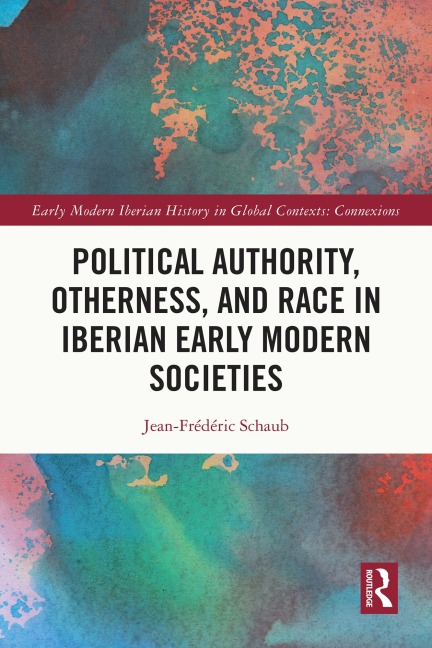
This book examines how the Iberian empires of the early-modern period were structured around population control, segregation, and racial policies rather than nation-state characteristics. Covering a variety of topics, Schaub analyzes the idea that the political regimes of the 15th-18th centuries did not have the characteristics of contemporary nation-states. It shows that control over populations, their description and the implementation of segregation played a central role in the structuring of these political systems. The focus is on the two Iberian monarchies in the early-modern period. The reader will find both theoretical propositions of wide relevance and empirical examples as case studies. There are detailed explanations of the political regimes in the 16th and 17th centuries, based on the example of the union of the crowns of Spain and Portugal. The book presents methods of managing the diversity of populations within imperial structures. It shows that the notion of the stain (macula) played an important role in disqualifying individuals and social groups. Finally, it draws on these empirical case studies to offer a general reflection on the history of race and colonization. In short, the book shows that it is impossible to understand the political structures of the ancien régime without giving a central role to the policies of race. Political Authority, Otherness, and Race in Iberian Early Modern Societies will be of value to students and researchers who wish to gain a better understanding of the empires of the early-modern period.
Jean-Frédéric Schaub is a historian and teaches at the EHESS. Recent publications include Nous avons tous la même histoire. Le défi des identités (2024) with Silvia Sebastiani; Histoire de la race dans les sociétés occidentales, xve-xviiie siècle (2021) and Pour une histoire politique de la race (2015).
Part I Authority 1. Authority and Obedience 2. Identification of the Lawyer: Conflicts of Authority in the Iberian Societies of the Seventeenth Century 3. Political Processes in Philip III's Portugal Part II Otherness 4. European Expansion and the Discovery of the Conqueror's Fragility 5. From Domestic Barbarity to the Black Jew; Experiences of Otherness from the Sixteenth to the Twentieth Century Part III Race and Colonialism 6. Race Relations in a Colonial, Not a Decolonial, Situation : The Iberian Empires 7. "Macula" as a Political Resource in Early-Modern Iberian Societies 8. Time and Race 9. Accepting Asymmetry: How Historians Deal with Pluralism and Inequality
Dieses eBook wird im PDF-Format geliefert und ist mit einem Adobe Kopierschutz (DRM) versehen. Sie können dieses eBook mit allen Geräten lesen, die das PDF-Format und den Adobe Kopierschutz (DRM) unterstützen.
Zum Beispiel mit den folgenden Geräten:
• tolino Reader
Laden Sie das eBook direkt über den Reader-Shop auf dem tolino herunter oder übertragen Sie das eBook auf Ihren tolino mit einer kostenlosen Software wie beispielsweise Adobe Digital Editions.
• Sony Reader & andere eBook Reader
Laden Sie das eBook direkt über den Reader-Shop herunter oder übertragen Sie das eBook mit der kostenlosen Software Sony READER FOR PC/Mac oder Adobe Digital Editions auf ein Standard-Lesegeräte mit epub- und Adobe DRM-Unterstützung.
• Tablets & Smartphones
Möchten Sie dieses eBook auf Ihrem Smartphone oder Tablet lesen, finden Sie hier unsere kostenlose Lese-App für iPhone/iPad und Android Smartphone/Tablets.
• PC & Mac
Lesen Sie das eBook direkt nach dem Herunterladen mit einer kostenlosen Lesesoftware, beispielsweise Adobe Digital Editions, Sony READER FOR PC/Mac oder direkt über Ihre eBook-Bibliothek in Ihrem Konto unter „Meine eBooks“ - „online lesen“.
Schalten Sie das eBook mit Ihrer persönlichen Adobe ID auf bis zu sechs Geräten gleichzeitig frei.
Bitte beachten Sie, dass die Kindle-Geräte das Format nicht unterstützen und dieses eBook somit nicht auf Kindle-Geräten lesbar ist.