Und dann auf "Zum Home-Bildschirm [+]".

Stöbern
genialokal zum Startbildschirm hinzufügen
Installieren Sie die genialokal App auf Ihrem Startbildschirm für einen schnellen Zugriff und eine komfortable Nutzung.
Installieren Sie die genialokal App auf Ihrem Startbildschirm für einen schnellen Zugriff und eine komfortable Nutzung.

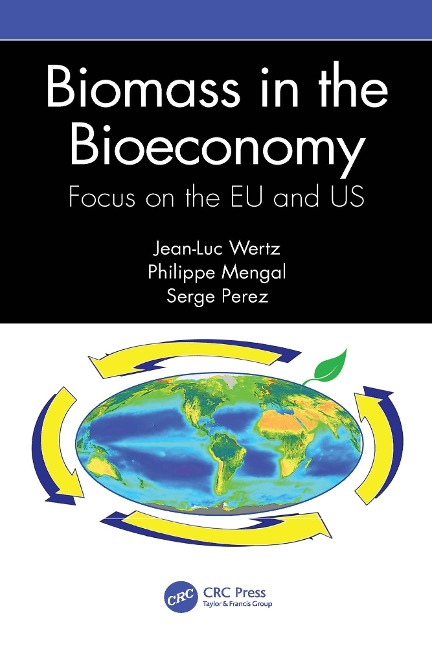
Biomass is the physical basis of the bioeconomy, the renewable segment of the circular economy, and as a CO2-neutral part of the carbon cycle, biomass is an efficient carbon sink. Demand for biomass is increasing worldwide because of its advantages in replacing fossil-based materials and fuels, which presents the challenge of reconciling this increased demand with the sustainable management of ecosystems, including forests and crops. This reference book discusses the role of biomass in the bioeconomy and focuses on the European Union and the United States, the first two regions to develop a bioeconomy strategy with an obvious effect on the bioeconomy developments in the rest of the world. Significant developments in other areas of the world are addressed. Features: - Provides strategies for optimal use of biomass in the bioeconomy - Defines and details sources, production, and chemical composition of biomass - Describes conversion, uses, and sustainability of biomass Biomass in the Bioeconomy: Focus on the EU and US will appeal to an interdisciplinary audience of readers working in the fields of chemical and environmental engineering.
Jean-Luc Wertz holds degrees in chemical, civil engineering and economic science from the Catholic University of Louvain, Louvain-la-Neuve, Belgium, and a PhD from the same university in applied science, specializing in polymer chemistry. He has had various international positions in R&D, including Spontex, where he was the worldwide Director of R&D. He holds several patents related to multiple products. In his last job before his retirement in 2016, he was a project manager in biomass valorization at ValBiom and worked for more than eight years on biobased products and biorefineries. He also wrote five books: Cellulose Science and Technology in 2010, Lignocellulosic Biorefineries in 2013, Hemicelluloses and Lignin in Biorefineries in 2018, Starch in the Bioeconomy in 2020 and Chitin and chitosans in the Bioeconomy. Philippe Mengal has been the Executive Director of the Bio-based Industries Joint Undertaking (BBI JU) since October 2015. BBI JU is a public-private partnership between the European Commission and the Bio-based Industries Consortium (BIC). He trained as an engineer in Chemistry and Bio-industry at Gembloux Agro-Bio Tech University and in Strategic Innovation Management at INSEAD - Fontainebleau. In his 25 years of professional experience before joining BBI JU, he held strategic managerial positions in Bio-Economy businesses in France & Belgium as CEO of three companies & Global R&D Director of a multinational company. He is a Scientific Advisor for VIVES Inter-University Fund, an early stage and multi-sectorial Fund and scientific advisory board member of the European Forum for Industrial Biotechnology. In the 90' he has given courses in a Master program in Chemical Engineering. He published 20 posters & scientific papers and applied for nine patents. Serge Perez holds a Doctorate es Sciences from the University of Grenoble, France. He had international exposure throughout several academic and industry positions in research laboratories in the U.S.A., Canada, and France (Centre de Recherches sur les Macromolecules Végétales, CNRS, Grenoble, as the chairperson and as Director of Research at the European Synchrotron Radiation Facility). His research interests span the whole area of structural glycoscience, emphasizing polysaccharides, glycoconjugates, and protein-carbohydrate interactions. He has a strong interest in the economy of glycoscience, and e-learning, for which he created the www.glycopedia.eu. He is actively involved in scientific societies, as President and past president of the European Carbohydrate Organisation. He is the author of more than 300 research publications, among which several are the subject of a large number of citations and references.
1. Introduction. 2. Biomass Definition. 3. Sources of Biomass. 4. Biomass Availability on Earth. 5. Chemical Composition of Biomass. 6. Uses of Biomass. 7. Conversion of Biomass. 8. Sustainability of Biomass. 9. Strategy for Optimal Use of Biomass in the Bioeconomy.
Dieses eBook wird im PDF-Format geliefert und ist mit einem Adobe Kopierschutz (DRM) versehen. Sie können dieses eBook mit allen Geräten lesen, die das PDF-Format und den Adobe Kopierschutz (DRM) unterstützen.
Zum Beispiel mit den folgenden Geräten:
• tolino Reader
Laden Sie das eBook direkt über den Reader-Shop auf dem tolino herunter oder übertragen Sie das eBook auf Ihren tolino mit einer kostenlosen Software wie beispielsweise Adobe Digital Editions.
• Sony Reader & andere eBook Reader
Laden Sie das eBook direkt über den Reader-Shop herunter oder übertragen Sie das eBook mit der kostenlosen Software Sony READER FOR PC/Mac oder Adobe Digital Editions auf ein Standard-Lesegeräte mit epub- und Adobe DRM-Unterstützung.
• Tablets & Smartphones
Möchten Sie dieses eBook auf Ihrem Smartphone oder Tablet lesen, finden Sie hier unsere kostenlose Lese-App für iPhone/iPad und Android Smartphone/Tablets.
• PC & Mac
Lesen Sie das eBook direkt nach dem Herunterladen mit einer kostenlosen Lesesoftware, beispielsweise Adobe Digital Editions, Sony READER FOR PC/Mac oder direkt über Ihre eBook-Bibliothek in Ihrem Konto unter „Meine eBooks“ - „online lesen“.
Schalten Sie das eBook mit Ihrer persönlichen Adobe ID auf bis zu sechs Geräten gleichzeitig frei.
Bitte beachten Sie, dass die Kindle-Geräte das Format nicht unterstützen und dieses eBook somit nicht auf Kindle-Geräten lesbar ist.