Und dann auf "Zum Home-Bildschirm [+]".

Stöbern
genialokal zum Startbildschirm hinzufügen
Installieren Sie die genialokal App auf Ihrem Startbildschirm für einen schnellen Zugriff und eine komfortable Nutzung.
Installieren Sie die genialokal App auf Ihrem Startbildschirm für einen schnellen Zugriff und eine komfortable Nutzung.
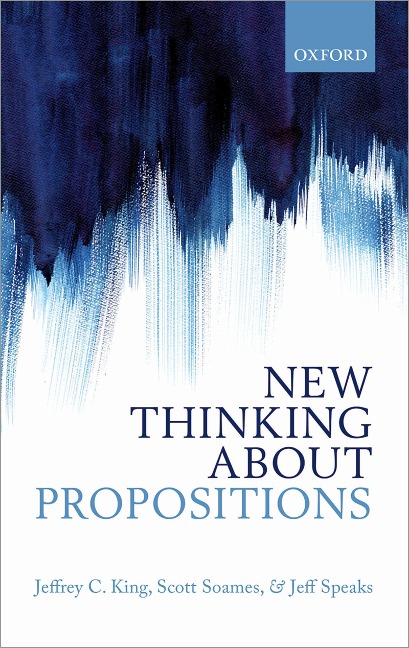
Philosophy (especially philosophy of language and philosophy of mind), science (especially linguistics and cognitive science), and common sense all sometimes make reference to propositions--understood as the things we believe and say, and the things which are (primarily) true or false. There is, however, no widespread agreement about what sorts of things these entities are. In New Thinking about Propositions, Jeffrey C. King, Scott Soames, and Jeff Speaks argue that commitment to propositions is indispensable, and that traditional accounts of propositions are inadequate. They each then defend their own views of the nature of propositions.
Jeffrey C. King is Professor II and Chair of the Department of Philosophy at Rutgers University. He is the author of Complex Demonstratives: A Quantificational Account (MIT Press, 2001), and The Nature and Structure of Content (Clarendon Press, 2007). Scott Soames is Distinguished Professor and Director of the School of Philosophy at the University of Southern California. A Fellow of the American Academy of Arts and Sciences, he taught for twenty-four years at Princeton University before moving to Southern California. He is the author of several books in the philosophy of language and the history of analytic philosophy. Jeff Speaks is Rev. John A. O'Brien Associate Professor of Philosophy at the University of Notre Dame. He is the author of several articles in the philosophy of language and the philosophy of mind.
- Introduction - Part I - Common ground - 1: Jeffrey C. King: What role do propositions play in our theories? - 2: Jeff Speaks: What's wrong with semantic theories which make no use of propositions? - 3: Scott Soames: Why the traditional conceptions of propositions can't be correct - Part II - Three theories of propositions - 4: Jeffrey C. King: Naturalized propositions - 5: Jeff Speaks: Propositions are properties of everything or nothing - 6: Scott Soames: A cognitive theory of propositions - Part III - Critical essays - 7: Jeffrey C. King: Criticism of Soames and Speaks - 8: Jeff Speaks: Representational entities and representational acts - 9: Scott Soames: Critique of two views: propositions as properties and propositions as facts - Part IV - Further thoughts - 10: Jeffrey C. King: Reply to Speaks and Soames - 11: Jeff Speaks: Representation and structure in the theory of propositions - 12: Scott Soames: Clarifying and improving the cognitive theory to meet its explanatory burden - Bibliography - Index
Dieses eBook wird im PDF-Format geliefert und ist mit einem Adobe Kopierschutz (DRM) versehen. Sie können dieses eBook mit allen Geräten lesen, die das PDF-Format und den Adobe Kopierschutz (DRM) unterstützen.
Zum Beispiel mit den folgenden Geräten:
• tolino Reader
Laden Sie das eBook direkt über den Reader-Shop auf dem tolino herunter oder übertragen Sie das eBook auf Ihren tolino mit einer kostenlosen Software wie beispielsweise Adobe Digital Editions.
• Sony Reader & andere eBook Reader
Laden Sie das eBook direkt über den Reader-Shop herunter oder übertragen Sie das eBook mit der kostenlosen Software Sony READER FOR PC/Mac oder Adobe Digital Editions auf ein Standard-Lesegeräte mit epub- und Adobe DRM-Unterstützung.
• Tablets & Smartphones
Möchten Sie dieses eBook auf Ihrem Smartphone oder Tablet lesen, finden Sie hier unsere kostenlose Lese-App für iPhone/iPad und Android Smartphone/Tablets.
• PC & Mac
Lesen Sie das eBook direkt nach dem Herunterladen mit einer kostenlosen Lesesoftware, beispielsweise Adobe Digital Editions, Sony READER FOR PC/Mac oder direkt über Ihre eBook-Bibliothek in Ihrem Konto unter „Meine eBooks“ - „online lesen“.
Schalten Sie das eBook mit Ihrer persönlichen Adobe ID auf bis zu sechs Geräten gleichzeitig frei.
Bitte beachten Sie, dass die Kindle-Geräte das Format nicht unterstützen und dieses eBook somit nicht auf Kindle-Geräten lesbar ist.